Why Warsh Will Hold in December

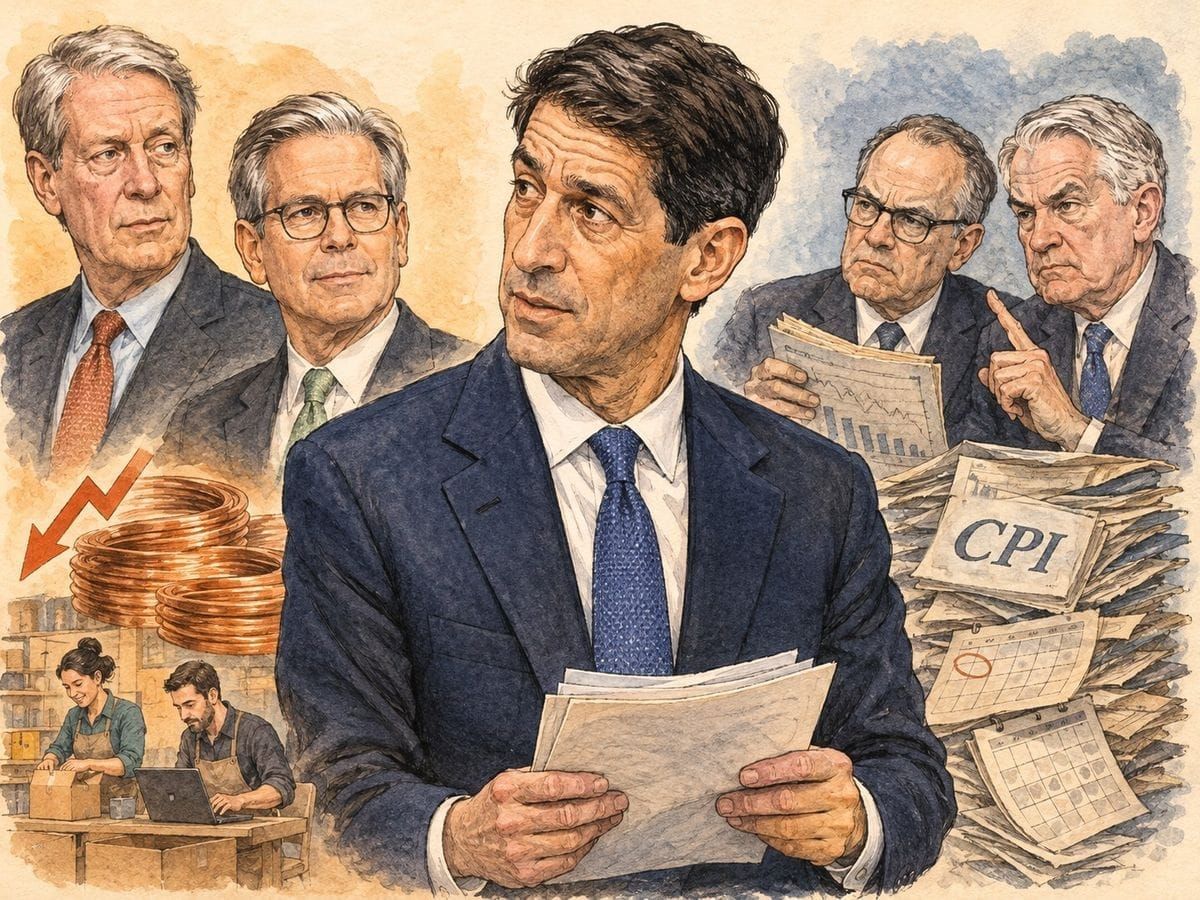
Who would you listen to? On Warsh's right: Stanley Druckenmiller and Scott Bessent, softer commodity prices and rising small-business productivity. On his left: old CPI data and recalcitrant Fed governors. We think Warsh will listen to the people and the evidence on his right.
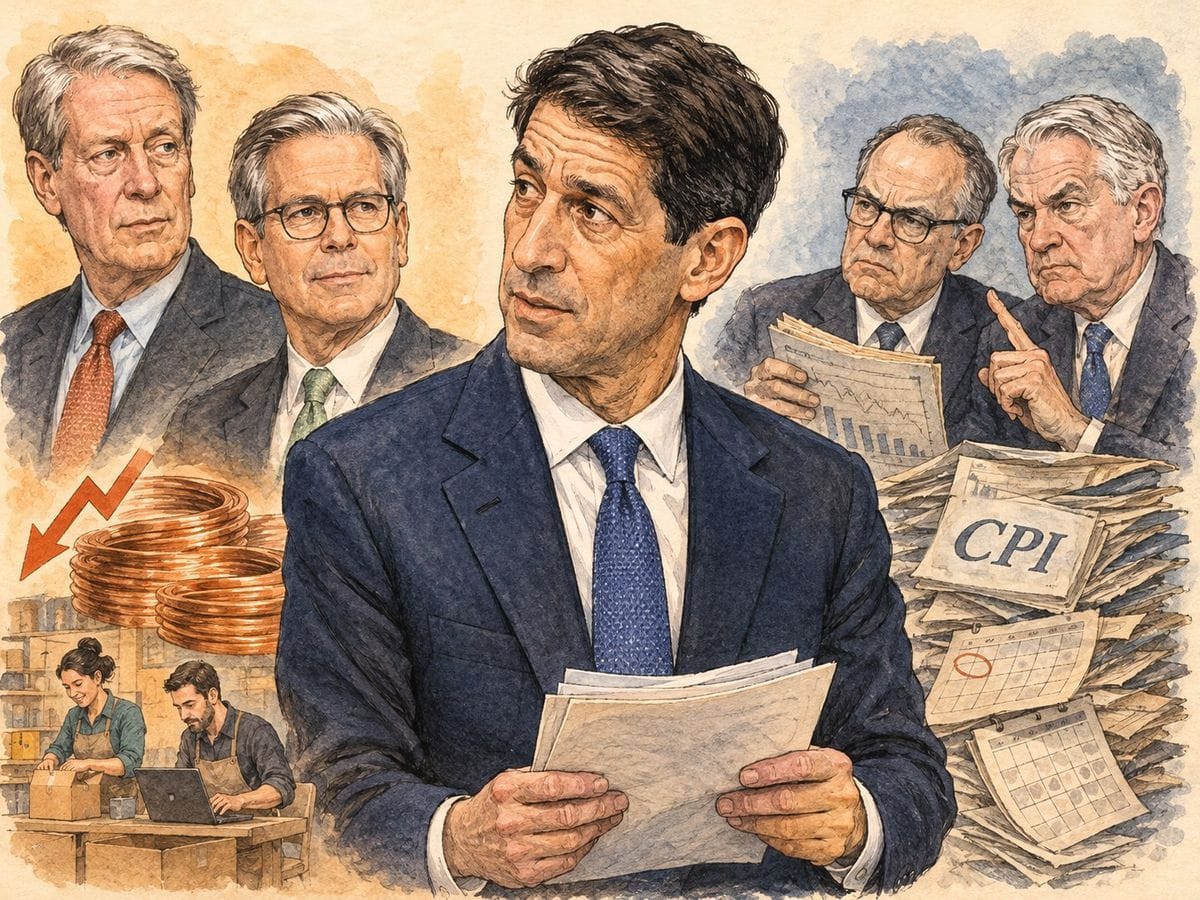
Two people who understand Warsh
Stanley Druckenmiller and Scott Bessent are, in our judgment, the two people best placed to understand how Kevin Warsh weighs new information. The distinction matters: we are reading a trade and a public argument, not reporting how the chair has decided to vote.
Druckenmiller changed sides on copper
On January 30, Druckenmiller told Morgan Stanley that he owned copper and kept rolling the near-term contracts. In September he still thought U.S. rates were too low. He called Warsh one of his closest friends, but said he was no longer allowed to speak to him. On November 17, he said, "we're now short copper." He paired that reversal with widening credit spreads and the possibility of disappointing growth in the second half of 2027. Warsh, he noted, had sat next to him for 15 years.
We suspect the reversal came after the September 16 hike. The disclosure establishes that he was short by November 17, not when he entered the trade. He did not blame the election or Jensen Huang, forecast outright deflation, or predict a December hold.
Bessent made the policy argument
Warsh told the Senate that he meets with Bessent weekly and talks to him between meetings, while defending the Fed's independence. On November 13, Bessent warned against hiking too far into a fading energy shock. On November 20, arguing against a large hike, he urged the Fed to "look forward, not backwards," Reuters reported.
We think Warsh respects how both men read markets. The copper trade raises a question about future demand; Bessent explains why yesterday's energy shock may be a poor reason to tighten today. The definite hold is our call, not theirs.
The next data center is not the next AI user
The project that has not been financed
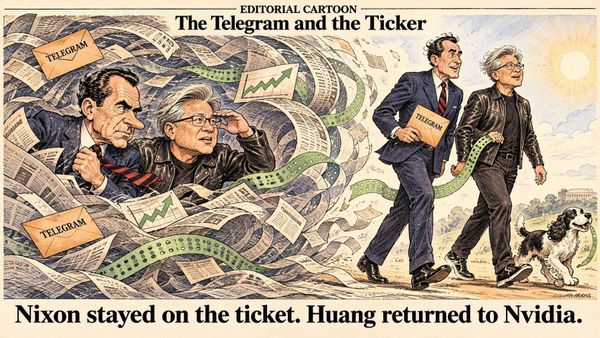
Our concern is the uncommitted 2029 to 2032 buildout, not a campus already under construction. The midterms increased pressure on developers to pay for the grid capacity they reserve. Then, on November 12, NVIDIA announced Jensen Huang's resignation. Its board said it expected existing customer commitments and the product roadmap to continue without interruption.
We think the change in political terms and the loss of Huang's leadership make the next speculative project harder to finance. A project that never breaks ground does not bid for copper, switchgear, electricians or power. That means less future price pressure than the original construction plans implied. Rystad Energy's counterargument is worth taking seriously: it expects the election to change who pays more than how much gets built.
What Warsh asked at the November 16 conference
Warsh moderated the panel at the San Francisco Fed conference and asked Stripe's Patrick Collison who would capture AI's gains: the big labs, or the businesses using the technology? Collison described startups letting AI agents do work incumbents hesitate to delegate. Affirm's Max Levchin described the prospects for solo entrepreneurs. In his opening remarks, Warsh also described a slowdown if expected investment returns disappointed. He called these scenarios, not predictions.
Why that settles our call. A ten-person firm can get more work done with AI it already has, even if the next data center never gets built. Less bidding for construction inputs and more output per worker both point toward lower inflation pressure.
Why the official record leans toward a hike
A quarter-point December increase is a reasonable reading of the committee's own record. The four Warsh-era decisions tell the story: broad agreement on waiting gave way to a unanimous hike and then a divided pause.
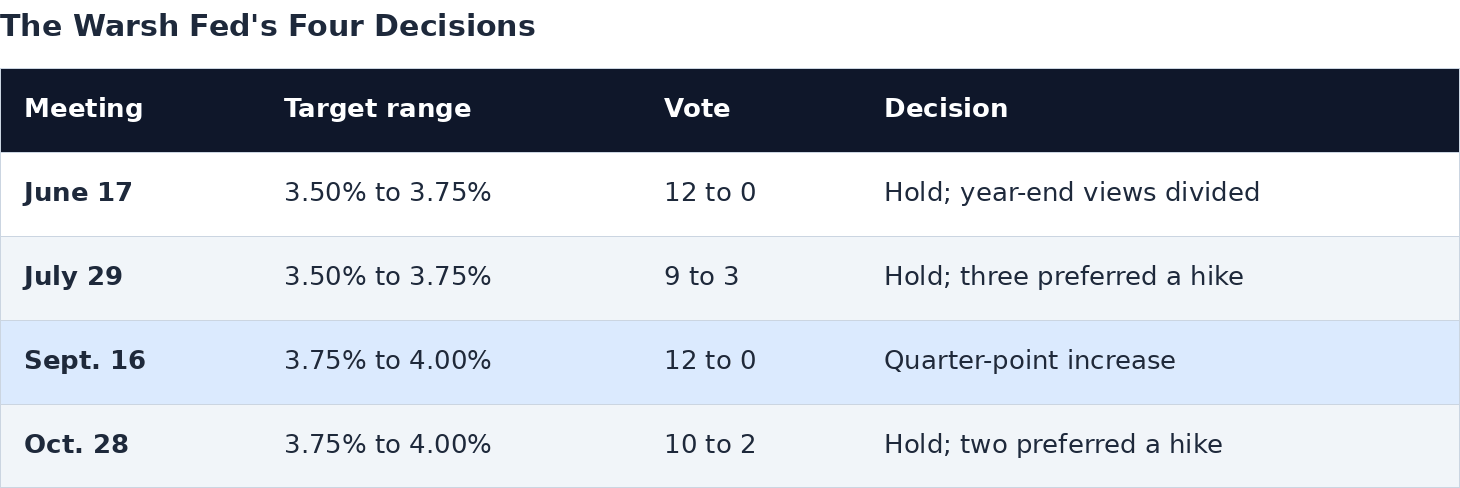
September's 18 year-end projections split 12 for another quarter point, four for a further half point in total, and two for no change. Those were individual projections, not December votes. In October almost all participants expected additional tightening under their baseline outlook. A majority also saw financing conditions tighten; a number said closer scrutiny of AI financing and returns could slow spending and ease inflation pressure.
The October hold itself was not the surprise: on October 16, futures put only a 15% probability on an October hike. The November 18 minutes nevertheless described a meeting that ended October 28, before the midterms and Huang's departure. Our call differs because of what changed after that meeting, not because the committee was secretly leaning toward a hold.
A governor's interview is not a Fed decision
Warsh wants a quieter Fed, not silent governors. He opposes advance promises that constrain the next vote. In October he declined to prejudge December and said colleagues could speak after the blackout. Fed rules let them explain their own views, not speak for others.
On November 18, Governor Christopher Waller called for half a point in December, or a quarter point with another move signaled for January. On November 20, Governor Lisa Cook remained unconvinced inflation was on a sustainable path. Futures priced at least a quarter-point hike; our hold would surprise that market.
What the committee can see before December 9
November 25. October PCE prices and real spending: does underlying inflation ease as demand cools?
December 4. November employment: a weakening labor market raises the cost of another hike.
December 8. Revised productivity and costs: more output per hour with slower unit labor costs supports waiting.
December 9. FOMC decision and projections. A hold keeps the range at 3.75% to 4.00%; a quarter-point hike would take it to 4.00% to 4.25%; a half-point hike to 4.25% to 4.50%.
December 10. November CPI comes after the vote. It cannot be the public release that decides the meeting.
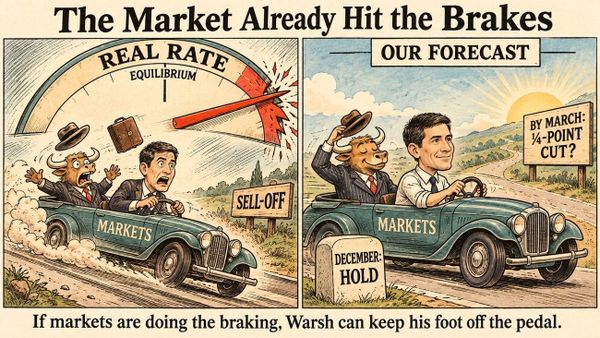
Our conclusion. If expected inflation falls while nominal borrowing rates hold steady, real borrowing costs rise. A hike would add to that restraint. September was the last hike in our forecast. December is a hold.
Research and analysis only, not personalized financial advice. Consult a qualified financial advisor before making investment decisions.
The authors hold positions in securities mentioned and reserve the right to buy or sell shares at any time without notice.