The Telegram and the Ticker

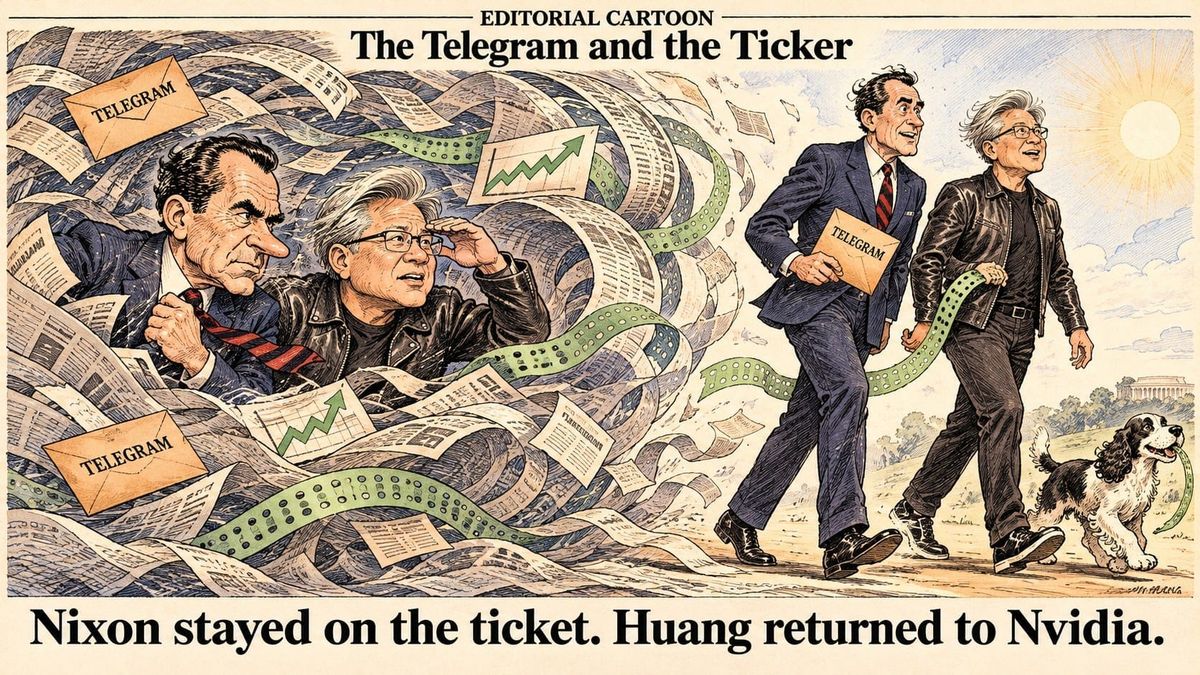
Nixon asked voters to wire the Republican National Committee. Huang didn't have to ask investors to reach Nvidia's board.
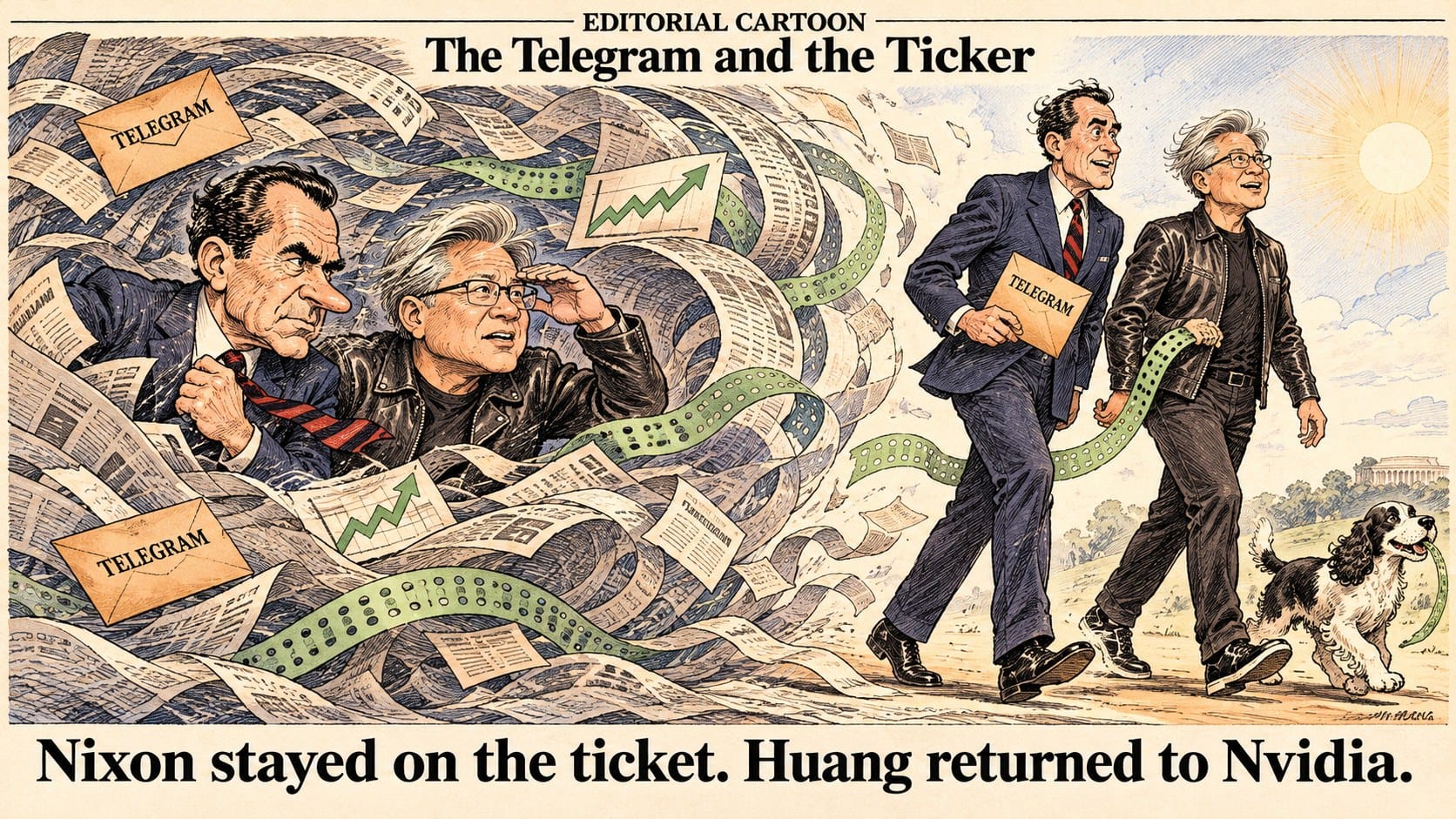
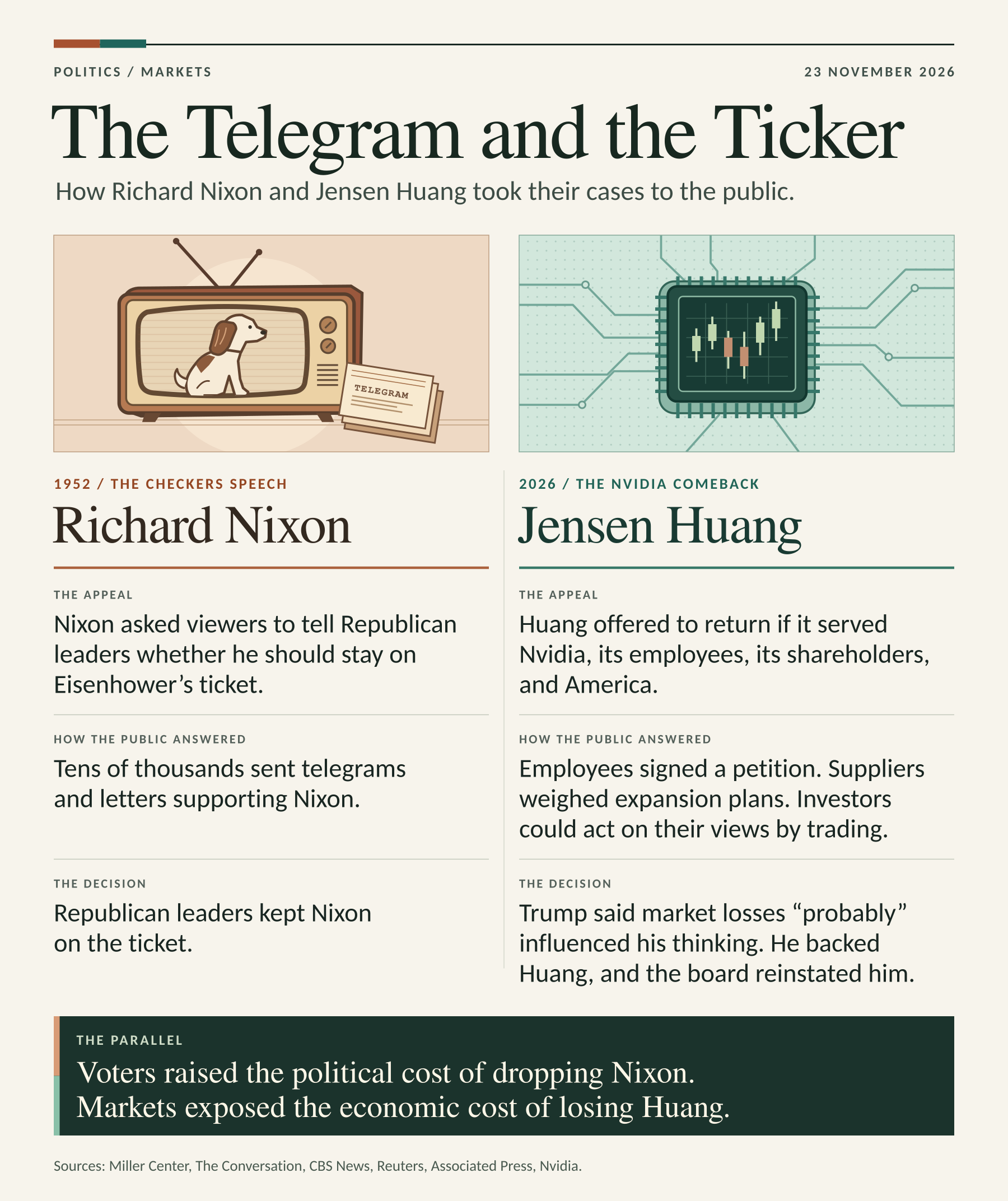
Everybody remembers the dog. We think the most important words Richard Nixon spoke that night came after the story about Checkers: "Wire and write the Republican National Committee." That's where we see Jensen Huang. Nixon asked voters to tell party leaders what they wanted. Huang didn't have to tell investors how to reach Nvidia's board. A sell order would get there without a stamp.
Nixon gave the voters a say
On September 23, 1952, Nixon went on television to deny that a private $18,000 political fund had paid his personal bills. He laid out his mortgages and debts. Then he told viewers about the gift his family really had received: a cocker spaniel his six-year-old daughter named Checkers. They were keeping the dog, as the Miller Center's transcript of the address records. The family story made people want to hear him out. The request for telegrams gave them something to do about it.
Tens of thousands wrote or wired their support, and Republican leaders kept Nixon on Dwight Eisenhower's ticket. Think about the choice they now faced. Dropping Nixon would mean answering not just to his critics, but to the voters whose telegrams were sitting on their desks.
Huang asked a bigger public
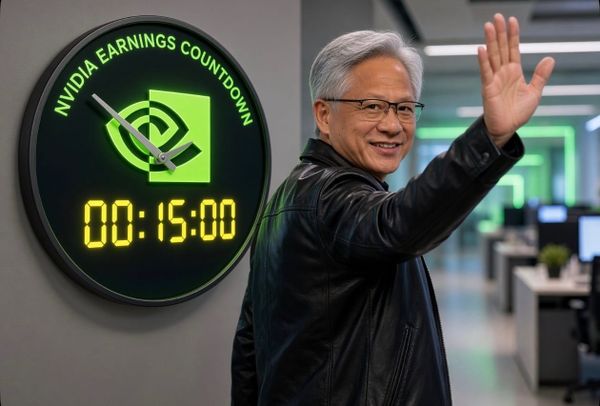
Huang had already resigned after acknowledging an affair. On November 17 he cited calls from employees, investors, business partners, and customers for his return. He would come back, he said, if it served "our shareholders, our employees, the company, and America." We'd underline those last two words. He left the vote to the directors and invited the rest of the country to consider what their decision would cost.
Who pays if the board says no?
Start with the people closest to the business. A petition for Huang's return drew more than 190,000 signatures, including thousands from Nvidia employees. On November 17 the board chair still said the directors did not intend to bring him back, CBS News reported. So the petition alone doesn't explain the reversal. For that, look beyond the signatures.
A Taiwanese supplier executive told Reuters that a successor might not book manufacturing capacity as aggressively as Huang, slowing the supplier's own expansion. Put yourself in that executive's chair. You don't have to approve of Huang's conduct. You have to decide whether to expand a factory. An investor looking at that same factory has a different decision to make: what price to pay for the business if those orders don't come.
That's how a personnel decision reaches people who never signed a petition or owned a share of Nvidia. President Trump, who pressed for Huang's return, said the previous week's market declines "probably" influenced his thinking, according to the Associated Press. On November 23 the board voted unanimously to reinstate Huang, citing its meetings with him and input from senior U.S. officials. Its independent investigation stayed open.
Nvidia shares surged when trading opened, and the Dow, S&P 500, and Nasdaq were all sharply higher by early afternoon. The timing matters. Monday's rally couldn't have caused a vote that had already happened. The evidence that the market mattered beforehand is what the president said about the selloff.
Our take. We put Huang's comeback alongside the Checkers speech because both men changed who had a say. We give Huang the edge in economic reach, not because a stock trade is a vote of approval, but because even people who wanted him gone could bear the cost of his absence. Nixon had to persuade Americans to send a telegram. Huang didn't need their permission for the ticker to speak.
Research and analysis only, not personalized financial advice. Consult a qualified financial advisor before making investment decisions.
The authors hold positions in securities mentioned and reserve the right to buy or sell shares at any time without notice.