
Why Some Women Are More Susceptible to HPV-Associated Cancers

Executive Summary
Human papillomavirus is one of the most common sexually transmitted infections. Almost all sexually active people encounter it at some point, usually without symptoms and usually with natural immune clearance. Yet the clinical burden is enormous. Persistent infection with carcinogenic HPV types leads to cervical precancer and cancer over time, and cervical cancer remains the fourth most common cancer in women globally — approximately 660,000 new cases and 350,000 deaths in 2022. In the United States, HPV drives an estimated 39,300 cancers annually, including 11,100 cervical cancers, 3,000 vulvar cancers, 700 vaginal cancers, and 5,300 anal/rectal cancers in women.
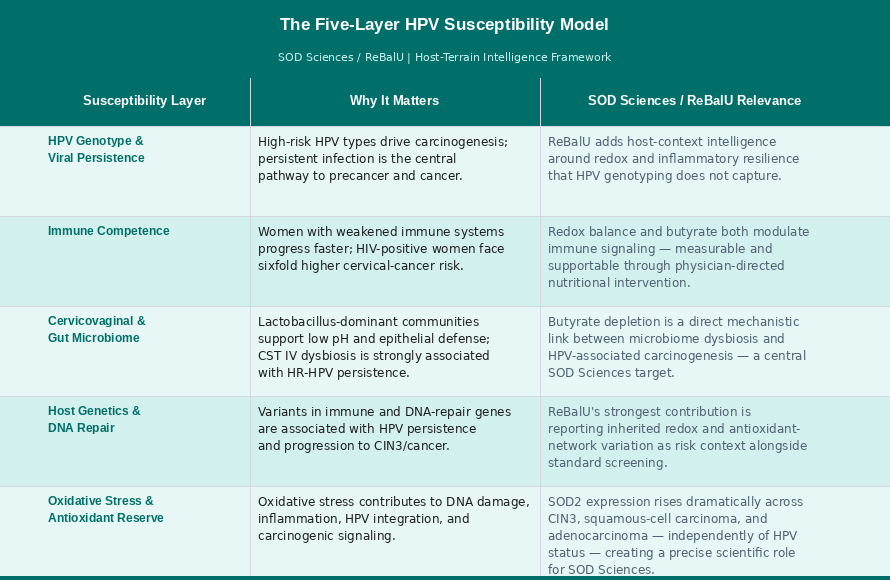
The defining scientific question is not whether HPV matters. It does. The more important question is why most women clear HPV naturally while a smaller subset develop persistent infection, recurrent abnormal Pap results, cervical intraepithelial neoplasia, or HPV-associated cancers of the cervix, vulva, vagina, anus, rectum, or oropharynx. Progression reflects a multi-layer susceptibility state involving HPV genotype, immune competence, cervicovaginal microbiome composition, host genetic variation, DNA-repair capacity, butyrate biology, and oxidative-stress defense.
This white paper frames ReBalU as an early redox-risk and host-terrain intelligence platform, and frames SOD Sciences medical-food solutions as physician-supervised nutritional support targeting two of the most biologically compelling and undermeasured layers of HPV susceptibility: antioxidant defense and butyrate-driven metabolic resilience. The science increasingly connects these two systems — oxidative stress, mitochondrial dysfunction, HDAC dysregulation, microbiome depletion, HPV persistence, DNA damage, immune evasion, and cervical carcinogenesis — in ways that create a precise, scientifically defensible commercial position for SOD Sciences.
The test–support–retest architecture of ReBalU adds host-terrain context that standard HPV and Pap testing does not provide: whether a woman's antioxidant-defense system and butyrate-producing microbiome are functioning at a level consistent with cellular resilience and immune competence.
The Women's Health Problem
HPV is nearly universal in exposure; HPV-associated cancer is selective in outcome. That selectivity is the scientific and commercial foundation for SOD Sciences.
The World Health Organization confirms that the immune system clears HPV naturally in the majority of cases, but persistent infection with carcinogenic HPV types can drive abnormal cervical cells toward cancer — typically over 15 to 20 years in women with intact immune systems, and as few as 5 to 10 years in women with compromised immunity. This prolonged window between initial infection and invasive disease creates a meaningful opportunity for host-terrain measurement, targeted nutritional support, and physician-supervised follow-up before disease reaches an irreversible stage.
The anatomical burden is broader than the cervix. CDC data indicate that HPV causes approximately 91% of cervical cancers, 75% of vaginal cancers, 69% of vulvar cancers, and 93% of anal/rectal cancers in American women. Women living with HIV face sixfold higher cervical-cancer risk than HIV-negative women, underscoring that immune competence — not viral exposure alone — determines who progresses.
The Core Scientific Frame: Host Terrain Determines Outcome
HPV is necessary but not sufficient. A large host-genetics study from the Guanacaste Costa Rica Natural History Study analyzed 7,140 tag SNPs across 305 candidate genes and found that host genetic factors influence which women with oncogenic HPV develop persistence and which progress to CIN3 or cancer. The same study found evidence that different genes govern two distinct transitions — persistence and progression — meaning a woman's biological terrain influences both whether HPV takes hold and whether it advances.
This is the strategic foundation for ReBalU. A modern women's health platform should ask not just whether HPV is present, but whether the host environment is permissive for viral persistence, DNA damage, integration, immune evasion, chronic inflammation, and abnormal epithelial repair.
Two measurable host-terrain components stand out in the scientific literature as central to that permissive environment: redox reserve (antioxidant-defense capacity) and butyrate availability (microbiome-derived metabolic and epigenetic protection). Both are undermeasured. Both are modifiable through targeted nutritional support.
Why Some Women Are More Susceptible: The Five-Layer Model
Butyrate: The Underrecognized Driver of HPV Susceptibility
Butyrate is a short-chain fatty acid produced by microbial fermentation of dietary fiber in the gut, and it represents one of the most mechanistically important yet clinically underrecognized factors in HPV-associated cancer susceptibility. Women with cervical cancer consistently show depleted populations of butyrate-producing gut bacteria — including Firmicutes, Roseburia, Ruminococcus, Blautia, Bifidobacterium, Coprococcus, and Faecalibacterium prausnitzii — while butyrate-producing species dominate the microbiome of healthy women. This is not a coincidental association. It is a mechanistically coherent connection that runs directly through the biology of HPV persistence, immune regulation, epigenetic control, oxidative stress, and epithelial barrier defense.
Butyrate as an HDAC Inhibitor: The Epigenetic Connection
The most pharmacologically significant property of butyrate is its potent inhibition of histone deacetylases (HDACs). Among all short-chain fatty acids, butyrate is the most potent HDAC inhibitor both in vitro and in vivo. HDACs condense chromatin and silence gene transcription; when butyrate inhibits them, chromatin opens and genes involved in growth regulation, differentiation, and immune response become accessible. In the context of HPV biology, this matters because HPV oncoproteins E6 and E7 already dysregulate DNA damage repair and cell-cycle checkpoints — and insufficient butyrate-driven HDAC inhibition leaves the host epigenetic environment more permissive to HPV oncogene activity and less capable of mounting an orderly cellular defense.
Research using exogenous butyrate in laboratory settings demonstrates that butyrate blocks proliferation of cervical carcinoma cells by inhibiting the G1-to-S transition of the cell cycle, with evidence of this effect across multiple HPV types, copy numbers, and integration sites. In direct laboratory testing against human cervical cancer cell lines (HeLa and CaSki), butyrate significantly inhibited cell viability in a concentration- and time-dependent manner, induced apoptosis, and triggered cell cycle arrest at the G1 phase. These were not marginal effects. A 2024 study — the first of its kind to characterize both vaginal and gut microbiome changes across cervical carcinogenesis — confirmed that butyrate inhibited cervical cancer cell proliferation and promoted apoptosis, and concluded that targeted modulation of butyrate may represent a future therapeutic avenue for cervical cancer. SOD Sciences' approach targets this biology through endogenous butyrate production — supporting the microbiome's own fermentation capacity rather than delivering exogenous butyrate directly.
Butyrate Depletion and the Gut-Cervix Axis
Emerging research has established a meaningful gut-cervix axis in cervical carcinogenesis. The gut and vagina share significant bacterial overlap — one study found that 44% of bacterial strains from pregnant women were present in both ecological niches, and 68% of paired vaginal and gut samples shared identical bacterial genotypes. Butyrate-producing bacteria depleted in the gut of cervical cancer patients are the same organisms whose metabolites protect epithelial barriers, modulate immune responses, and prevent inflammatory cascades from becoming chronic.
In a multi-cohort microbiome study using 16S rRNA sequencing data from 416 vaginal samples and 116 gut samples, a diagnostic model built on gut microbiome genus signatures achieved an AUC of 99.95% for cervical cancer detection — driven substantially by the depletion of butyrate-producing Firmicutes species in cancer patients. This predictive power reflects how profoundly the gut microbiome, and specifically its butyrate-producing capacity, tracks with cervical carcinogenesis.
The functional pathways enriched in cervical cancer patients include lipopolysaccharide biosynthesis, fatty acid metabolism, and biotin metabolism — while pathways enriched in healthy women correspond to stable fermentation, d-alanine metabolism, and carbohydrate homeostasis. The shift away from butyrate-producing ecology and toward LPS-dominant, pro-inflammatory ecology is a measurable host-terrain signature that ReBalU can capture.
Butyrate, Oxidative Stress, and Mitochondrial Defense
Butyrate's role in reducing oxidative stress is mechanistically connected to SOD Sciences' core redox thesis. Research demonstrates that butyrate significantly reduces reactive oxygen species levels, increases mitochondrial membrane potential, improves mitochondrial DNA integrity, and inhibits the release of mitochondrial cytochrome c under oxidative stress conditions. These effects are mediated through the AMPK-mitophagy pathway — a cellular housekeeping system that removes damaged mitochondria and preserves redox homeostasis. SOD Sciences amplifies this mechanism by pairing endogenously produced butyrate with refined European marine microalgae oil as a source of DHA. DHA augments butyrate's impact on mitochondrial membrane integrity and anti-inflammatory signaling, creating a compounded redox-protective effect that neither butyrate nor DHA produces as effectively in isolation.
Women with depleted butyrate-producing microbiomes therefore face a compounded susceptibility: less HDAC inhibition, weaker epithelial barriers, higher inflammatory tone, reduced mitochondrial quality control, and elevated reactive oxygen species — all simultaneously. These are not separate risk factors. They are interlocking biological cascades that converge on the same host-terrain vulnerability that ReBalU measures and SOD Sciences targets.
Butyrate, Immune Modulation, and HPV Persistence
Butyrate is one of the most studied regulators of mucosal immune homeostasis. It promotes regulatory T cell differentiation, reduces M2 macrophage polarization (associated with tumor progression), suppresses pro-inflammatory cytokines including IL-6, IL-12, and TNF-alpha, and stimulates IgA production in the large intestine — collectively creating an immune environment less permissive to chronic infection, chronic inflammation, and epithelial transformation.
In the context of HPV biology, this immune modulation is directly relevant. HPV persistence depends partly on viral immune evasion — and an immune environment already compromised by butyrate depletion, elevated IL-6 and TNF-alpha signaling, and reduced regulatory T cell activity is a more permissive host for chronic high-risk HPV carriage. Butyrate also strengthens tight junction proteins, reduces gut permeability, and stabilizes the hypoxia-inducible factor that regulates claudin-1, MUC2, and antimicrobial peptide production — all structural and immune defenses relevant to mucosal protection at the cervix.
What Butyrate Depletion Looks Like Clinically
Women with HPV persistence, recurrent abnormal Pap results, or progressive CIN are more likely to present with the following measurable host-terrain markers:
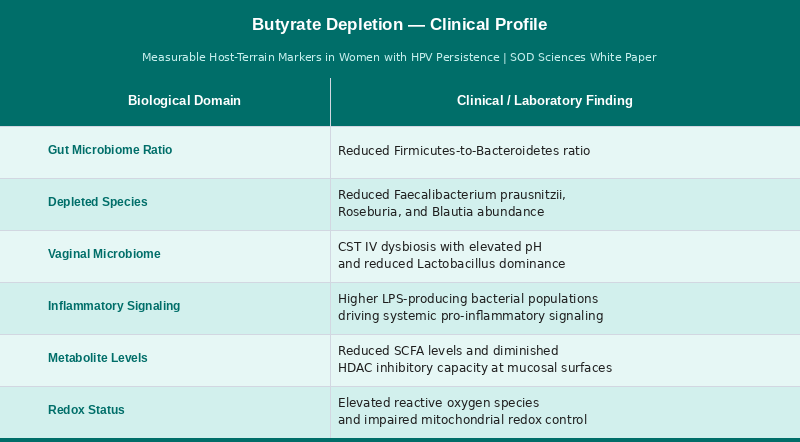
This clinical profile is measurable, and it is directly in the ReBalU and SOD Sciences wheelhouse.
The Redox Layer: SOD2 and the Mitochondrial Antioxidant System
Oxidative stress is a mechanistically active cofactor in HPV-associated carcinogenesis — not a secondary observation. A 2024 review concluded that oxidative stress independently contributes to genome instability, DNA damage, inflammation, and altered antioxidant enzyme activity in HPV-mediated carcinogenesis, and may facilitate HPV DNA integration into the host genome.
A Scientific Reports study of non-cancerous patient-derived cervical tissues found major inter-woman variability in reactive oxygen species levels and proposed that higher oxidative stress may increase the probability of HPV integration — helping explain why some HPV-infected women progress while others do not. Reactive oxygen species levels in transformation-zone tissues were equal to or higher than matched ectocervical tissues, which is consistent with the cervical transformation zone's known vulnerability as the primary site of HPV entry and malignant transformation.
The SOD2 Data
SOD2 — manganese superoxide dismutase — is the primary mitochondrial antioxidant enzyme, responsible for converting superoxide radicals into hydrogen peroxide. In a 297-sample cervical tissue study, strong SOD2 expression escalated dramatically and independently of HPV status across the disease spectrum:
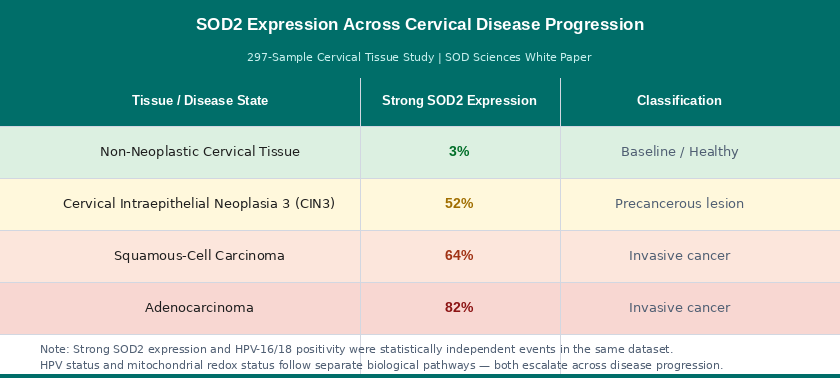
The critical finding is that strong SOD2 expression and HPV-16/18 positivity were statistically independent events in the same dataset. HPV status and mitochondrial redox status follow separate biological pathways — and both escalate across disease progression. This means that HPV testing and redox assessment are genuinely complementary risk indicators, not redundant ones.
ReBalU measures the redox terrain. SOD Sciences supports it.
The Microbiome Layer: Dysbiosis, Inflammation, and HPV Risk
The cervicovaginal microbiome has emerged as one of the strongest explanatory frameworks for differential HPV outcomes among women with identical viral exposures. Healthy vaginal microbiota dominated by Lactobacillus species maintain low pH, inhibit pathogen colonization, and support epithelial barrier integrity. CST IV dysbiosis — enriched in Gardnerella, Fannyhessea, Sneathia, Prevotella, and Megasphaera — is associated with high-risk HPV persistence, progression to CIN2/3, and elevated cervical cancer risk.
The mechanisms connecting dysbiosis to HPV progression include elevated pH, epithelial barrier disruption, TLR-mediated inflammatory signaling, cytokine elevation (IL-1β, IL-6, IL-8, TNF-α, IL-36γ), immune trafficking changes, oxidative stress, DNA damage, and epigenetic reprogramming. Critically, all of these mechanisms are also connected to butyrate depletion — because the same dysbiotic organisms that displace Lactobacillus are also displacing butyrate-producing Firmicutes, collapsing the host's most important endogenous HDAC inhibitor and epithelial-defense metabolite simultaneously.
The connection between gut dysbiosis, vaginal dysbiosis, butyrate depletion, redox stress, and HPV-associated carcinogenesis is not speculative. It is supported across multiple independent research programs examining the same biological terrain from different analytical angles.
The ReBalU Platform: Test, Support, Retest
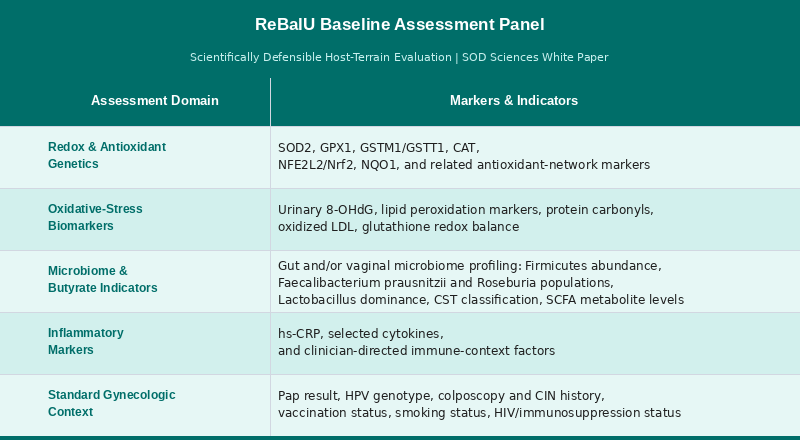
ReBalU is an early host-terrain intelligence platform designed for women with HPV-related risk concerns, abnormal Pap histories, recurrent high-risk HPV positivity, prior CIN history, or clinician-identified need for deeper biological risk stratification. The positioning is precise: standard tests identify the virus and visible cellular abnormality. ReBalU characterizes whether the host biological environment is under the kind of redox and metabolic stress that makes persistence, inflammation, DNA damage, and abnormal repair more likely.
Baseline Panel
A scientifically defensible ReBalU baseline assessment includes the following domains:
Nutritional Support
SOD Sciences medical-food solutions are designed for physician-supervised dietary management of distinctive nutritional requirements associated with oxidative-stress biology, antioxidant-defense insufficiency, and microbiome-driven butyrate depletion in defined patient populations.
The formulation targets butyrate biology through endogenous production rather than direct supplementation. The substrate combination of tagatose — a naturally occurring compound that functions as a prebiotic fiber and antioxidant rather than a conventional sugar — together with Fibersol-2 and pectin provides the fermentable fiber that resident butyrate-producing bacteria require to generate butyrate at the mucosal surfaces where it is needed. This approach supports the microbiome's own capacity to produce and sustain butyrate availability, working with the body's endogenous systems rather than bypassing them.
The formulation is further distinguished by the inclusion of refined European marine microalgae oil as a source of DHA. DHA is mechanistically synergistic with butyrate: it augments butyrate's impact on mitochondrial membrane integrity, modulates the same inflammatory signaling pathways that butyrate depletion dysregulates, and contributes independently to the anti-inflammatory and redox-protective environment that SOD Sciences is designed to support. The combination of endogenously generated butyrate and algae-derived DHA represents a more physiologically coherent intervention than either component alone.
Retest and Monitoring
The retest is the differentiator. ReBalU measures whether the host terrain changes over 8 to 12 weeks, 24 weeks, and 48 weeks of targeted nutritional support. Measurable endpoints include oxidative-stress biomarkers, glutathione redox status, inflammatory tone, microbiome markers, and SCFA indicators. HPV and Pap outcomes are tracked through standard clinician testing.
This architecture delivers something that no conventional HPV program provides: a baseline, a targeted support protocol, and a biological retest loop that shows whether the host environment shifted.
Proposed Platform Positioning
Medical-Food Framework
FDA defines a medical food as a product formulated for enteral consumption under physician supervision, intended for the specific dietary management of a disease or condition with distinctive nutritional requirements established by medical evaluation. SOD Sciences' strategic path is to document the distinctive nutritional requirements around redox-defense biology and butyrate depletion — both of which are scientifically substantiated, measurable, and clinically underaddressed. Physician supervision is built into the ReBalU program architecture, and product labeling is maintained within compliant boundaries.
Clinical Development Pathway
Phase 1: ReBalU Women's Health Registry
Enroll women with persistent high-risk HPV positivity, recurrent abnormal Pap results, prior CIN history, or clinician-identified HPV-related concern. Capture standard gynecologic data alongside redox genetics, oxidative-stress biomarkers, gut and vaginal microbiome profiling, SCFA metabolite levels, and SOD Sciences nutritional-support exposure. The objective is to determine whether ReBalU-defined redox and butyrate-risk strata correlate with HPV persistence trajectories, inflammation markers, and physician-observed outcomes.
Phase 2: Biomarker Pilot
Run a physician-supervised nutritional-support pilot in women with documented redox vulnerability and butyrate-depleted microbiome profiles. Primary endpoints include oxidative-stress biomarkers, glutathione balance, SCFA levels, microbiome shift, inflammatory markers, tolerability, and adherence. HPV and Pap outcomes are tracked through standard clinician testing.
Phase 3: Prospective Clinical Study
Test whether ReBalU-guided nutritional support produces sustained improvements in validated host-terrain biomarkers and whether those changes correlate with standard-of-care gynecologic outcomes over longer follow-up. This staged pathway builds the evidence base for expanded physician adoption and potential regulatory positioning.
The Scientific Thesis
HPV-associated cancers do not arise from viral exposure alone. They emerge when a common viral trigger encounters a host environment that is biologically permissive — where antioxidant defenses are depleted, butyrate-producing microbiome populations are disrupted, HDAC inhibitory tone is insufficient, inflammatory signaling is chronic, and mitochondrial redox control is compromised. Most women clear HPV because their host terrain is resilient. Some women do not because their biological environment — measurable and addressable — tips the balance toward persistence and progression.
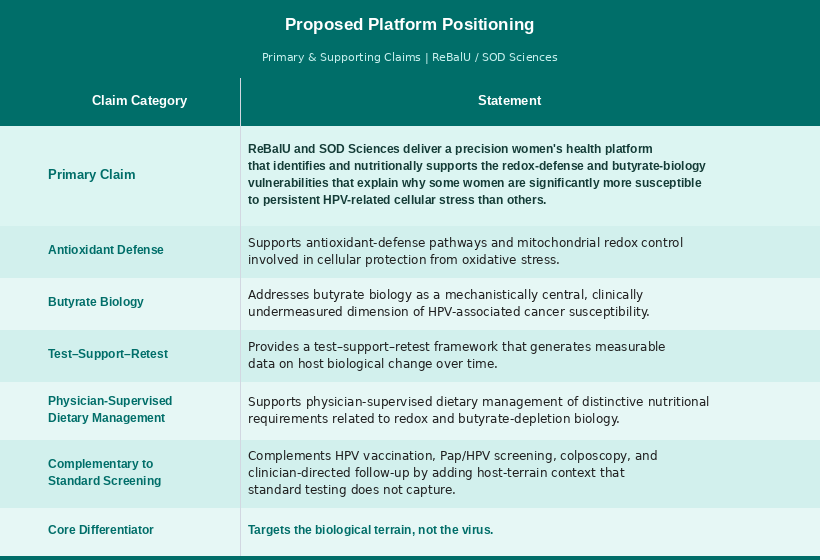
ReBalU measures that terrain. SOD Sciences supports it. Standard gynecologic care manages the downstream disease risk. The opportunity is to put a precision nutritional platform in the scientifically validated gap between "HPV is present" and "why is this woman not clearing it?"
One-Sentence Platform Positioning
ReBalU and SOD Sciences give women and their physicians a measurable redox-risk and butyrate-biology platform that complements HPV and Pap screening by identifying and supporting the host antioxidant and metabolic terrain that determines susceptibility to persistent HPV-related cellular stress.
SOD Sciences | All rights reserved