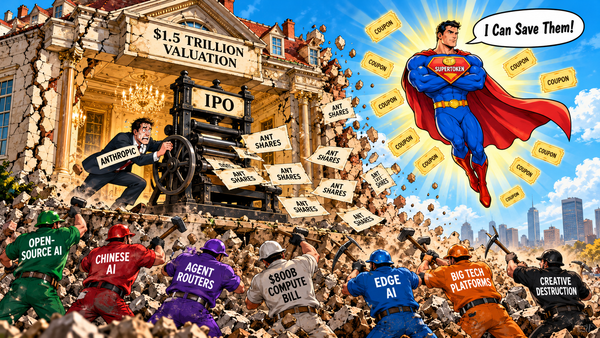
Who Gets Creatively Destructed

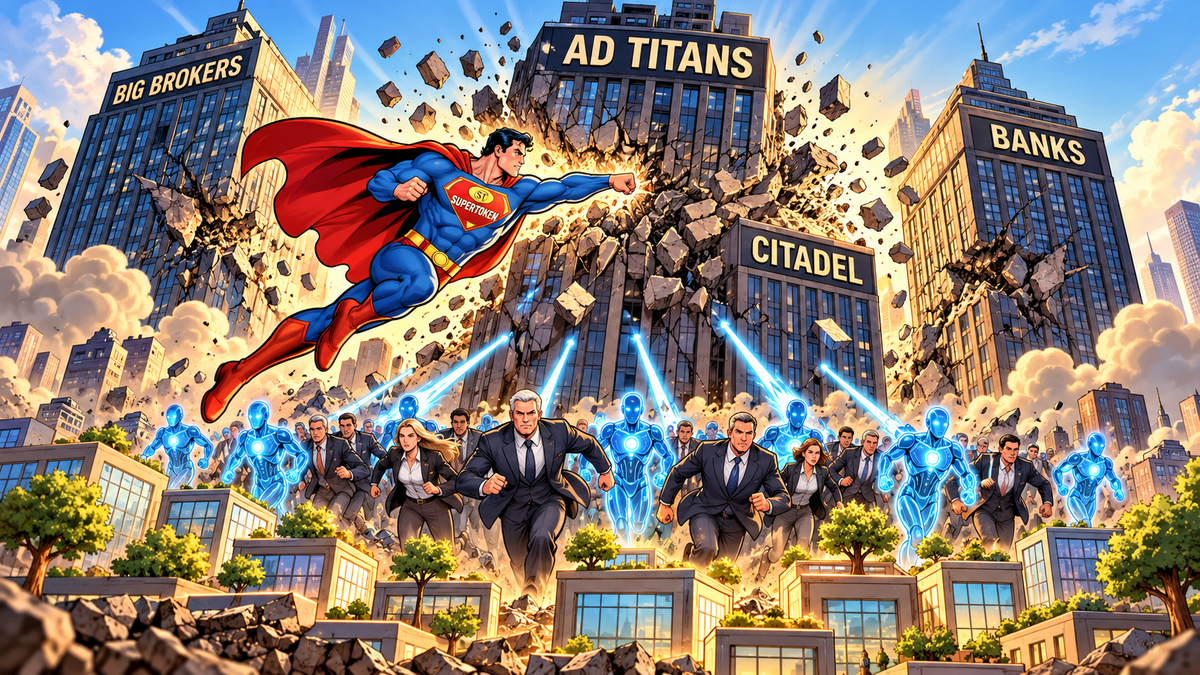
The final conclusion: agentic AI in the hands of experienced professionals comes for the big brokers, the banks and the ad companies. The 25-Year Small Public Company Descent to Hell, Part 4.
Summary
For three reports we have traced one phenomenon. For 25 years, greed, irresponsible regulation and brokerage firms adapting to whatever made money at the moment produced the small public company's descent to Hell, and left the true entrepreneurs, the people who build new companies, unable to get financing on fair terms. Part 1 showed the descent. Part 2 showed the answer. Part 3 showed how the game is played at the table today, and how a company can turn its cards face down.
This final report answers the question Joseph Schumpeter would ask: who gets creatively destructed?
The big brokers and banks, Citadel above all, whose franchise rests on research, distribution and financing that experienced professionals armed with agentic AI can now deliver at a fraction of the cost, without the conflicts.
The financiers who profit from the fall, whose model depends on cheap new shares, borrowable float and a company that shows its hand.
The advertising titans, who collect hundreds of billions of dollars a year for impressions and clicks, and who face a token whose advertisers pay nothing until a sale is made, and then pay the customer in a discount.
Their place is taken by an army of experienced professionals with unlimited AI agents trained by their own minds. Agentic AI, tokenization and blockchain, combined with that professional judgment, strike at the foundations of several industries at once by cutting out the middlemen. BCII is among the first of that army. It is recycling small public companies into hosts for promising high-technology private-company products, and in the process of their salvation those companies create demand for BCII's SuperCoupon Token. Agentic AI comes for the big brokers, the banks and the ad companies. Schumpeter is always right.
1. What Parts 1 to 3 showed
Part 1: The descent. Listing, quotation, research and broker rules removed the small brokers, analysts and market makers that once supported growth companies. Market making consolidated into a few large trading firms. The financing that remained came largely from funds that profit when a small company's stock falls. The smallest public companies trailed the S&P 500 by a widening margin, and among companies that more than tripled their share counts, the typical share price fell about 94 percent.
Part 2: There is now more than hope. Schumpeter's creative destruction, the new technology of agentic AI, and the new type of organization, a small fintech firm run by experienced market professionals. BCII's two products: the Coupon Token and SuperCoupon Token, and the Premium Convertible, first used by Vivos Therapeutics and SOD Sciences.
Part 3: The market maker has your hand. Order-flow payments and, in the authors' experience, private size limits, not-held discretion, non-deal roadshows, ATMs, equity lines and stop runs let the trading firms play every small company's cards. Fifteen years of the major public enforcement cases add up to about $153 million. The rules are on paper. In the authors' assessment, they are not being enforced.
2. The assets go home on the elevator
When Dan Walsh and I were working at Goldman Sachs and Montauk Financial, the partners had a saying: the assets go home on the elevator at night. The value of a brokerage firm or an investment bank was never really the building, the trading floor or the brand. It was the people: the analysts who understood an industry, the bankers who knew how to structure a deal, the brokers who knew their clients, the traders who knew how the plumbing worked.
For most of the last century, those people needed the firm. Research required a department. Distribution required a sales force. Structuring required a legal and capital-markets staff. Compliance required a back office. An experienced professional who left could take his judgment with him, but not the scale. So the firm kept the economics, and over 25 years the firm used them for whatever paid most at the moment: order flow, financing fees, trading against its own clients.
Agentic AI changes that bargain. The scale now goes home on the elevator too.
3. The army of professionals
Schumpeter wrote that the competition that matters comes from the new commodity, the new technology, the new source of supply and "the new type of organization," competition that strikes at the foundations and the very lives of existing firms rather than at the margins of their profits and outputs.
The new type of organization is an experienced professional with an unlimited number of AI agents, each trained by that professional's own judgment.
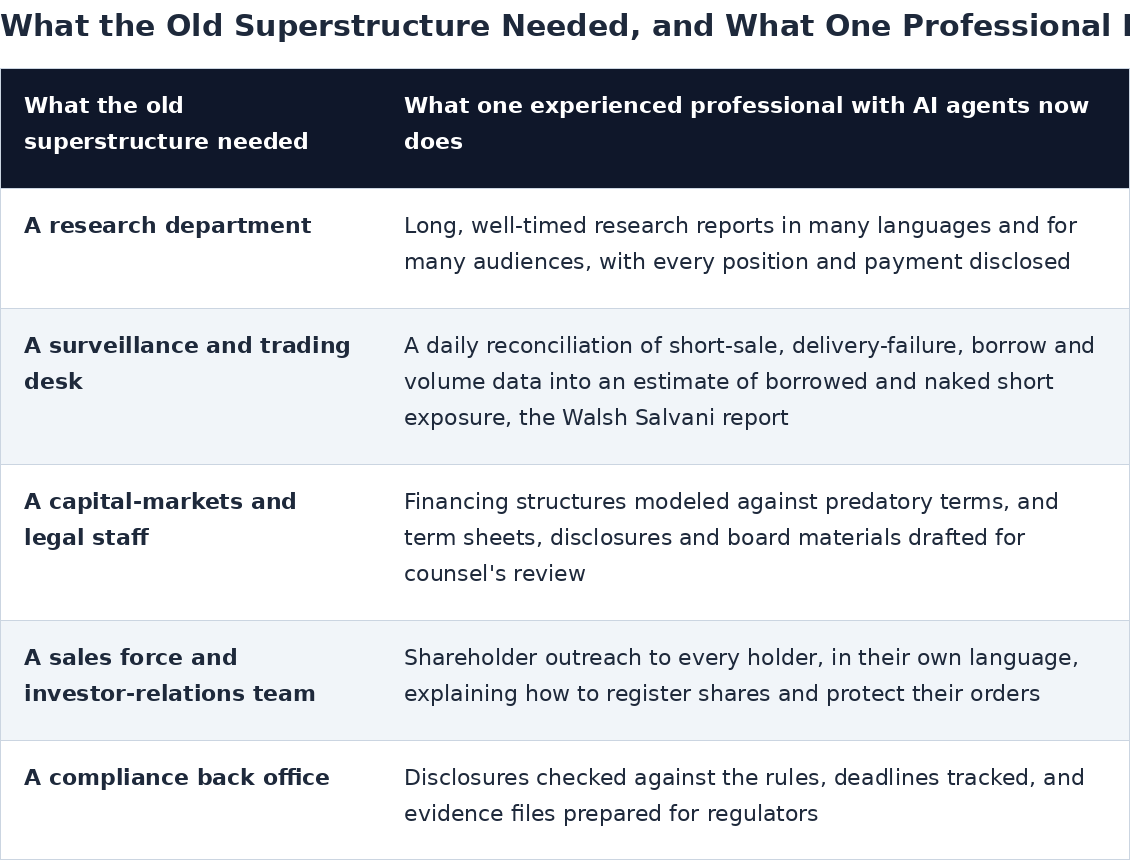
The agents supply the scale. The professional supplies what no model has on its own: decades of knowing which numbers can be trusted, how the plumbing really behaves and what a small company needs to survive. Multiply that by thousands of professionals leaving the large firms, or already outside them, and the old superstructure faces something it has never faced: competitors with its talent, its reach and none of its conflicts, at a fraction of its cost.
4. Who gets creatively destructed: the big brokers and banks
The large firms' small-company business rests on four franchises. Each is exposed.
Research. Decimalization and the 2003 research settlement broke the economics of small-company research years ago, and FINRA acknowledged in its 2025 Notice 25-06 that research coverage has diminished and is especially valuable to small issuers. What the large firms abandoned, professionals with AI agents now supply.
Order flow. In one quarter, at one retail broker, four wholesalers took more than 85 percent of small-company orders and paid about eight times as much for them as for S&P 500 orders, as Part 3 showed. That franchise depends on small companies' shareholders leaving their shares and orders in the flow. Shares registered at the transfer agent leave it.
Financing. In one quarter of 2025, one sales agent took on $21.8 billion of at-the-market commitments and one equity-line investor signed $3.2 billion. Every company that replaces a daily not-held offering with a fixed, above-market structure removes itself from that business.
The roadshow. The non-deal roadshow works only while the company needs the banker's room of investors. A company whose story is told in its own full-disclosure research, and whose capital comes from an aligned partner and treasury tokens, has no need for the room.
None of this requires a new rule or a regulator. It requires only that small companies, one at a time, stop needing what the big firms sell.
Citadel: the biggest tower
No firm stands taller in the small-company market than Citadel. Citadel Securities says it executes about 35 percent of US-listed retail volume. In the fourth quarter of 2025 it took 35.1 percent of Webull's small and mid-cap orders, more than any other wholesaler, on Webull's Rule 606 report. Its revenue reached $12.2 billion in 2025, with $5.4 billion in net income, according to The New Yorker. Ken Griffin controls both Citadel Securities and Citadel, the hedge fund, which manages about $68 billion. The two firms say they are run separately.
The public record shows what that position has meant for small companies' orders. FINRA found that from 2012 to 2014 Citadel Securities traded for its own account ahead of hundreds of thousands of inactive over-the-counter customer orders, and fined it $700,000 plus restitution. In 2023 the SEC found it had mismarked an estimated millions of orders over five years, labeling certain short sales as long sales and the reverse, and fined it $7 million. The firm attributed this to a coding error.
Citadel's franchise is the clearest example of the order-flow position this series describes: it buys the order flow, sees the orders and trades at the table every day. That is also why it has the most to lose. Every share registered at the transfer agent leaves the flow it trades against. Every company that replaces a daily ATM with a fixed-price structure takes away supply it would trade around. Every company that reads its own short position each day, through the Walsh Salvani report, stops playing blind. The tallest tower has the furthest to fall.
5. Who gets creatively destructed: the financiers who profit from the fall
The predatory financing model described in Part 1 has three inputs: a steady supply of cheap new shares to cover with, a borrowable float, and the ability to see the other side's orders. Companies using discounted convertibles lost an average of 34 percent within a year, on the Hillion and Vermaelen research. That was the business.
Each input is now under attack.
No cheap shares. The Premium Convertible converts only at a fixed price above market, with no resets and a 4.99 percent blocker. Coupon Token treasury sales raise cash without issuing a single share.
A shrinking float to borrow. Five years of Coupon Token allocations paid only to shares registered at the transfer agent keep pulling shares out of the lending pool.
No more hidden hands. The Walsh Salvani report shows the company, every day, an estimate of the short position it is playing against.
A financier who depends on a company's distress has nothing to work with when the company no longer needs emergency capital.
6. Who gets creatively destructed: the advertising titans
The largest prize is not on Wall Street. It is in advertising.
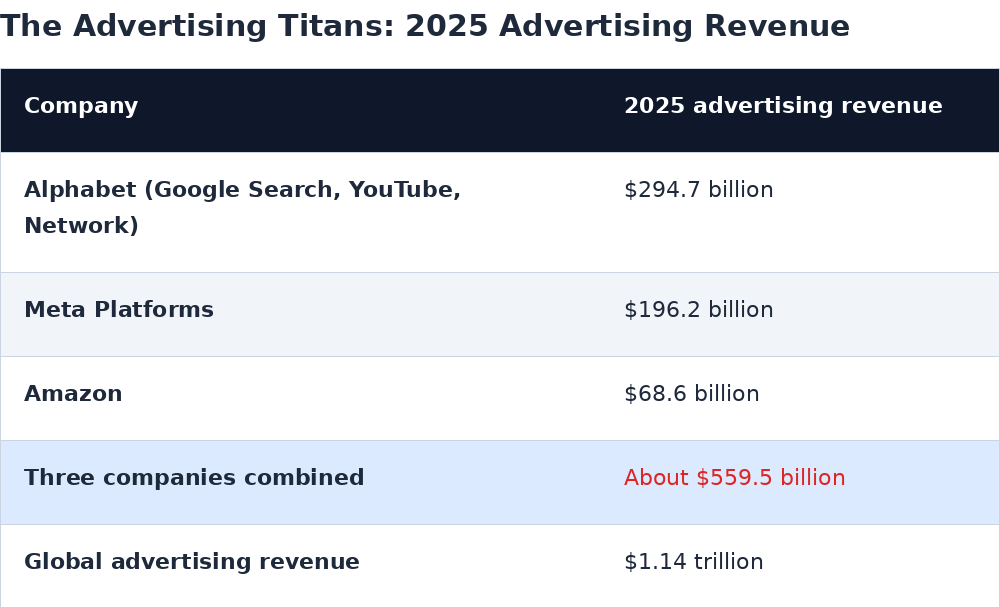
Three companies collected about half of all the advertising revenue in the world. Behind them sit the agency holding companies that buy the media. After Omnicom completed its acquisition of Interpublic in November 2025, the combined group became the world's largest, with more than $25 billion in revenue.
The model is the same everywhere: advertisers pay for attention, measured in impressions and clicks, and the platform and the agency keep the money whether or not the consumer buys anything. The consumer whose attention is sold receives nothing.
The Coupon Token and SuperCoupon Token reverse that flow. As Part 2 described, the token itself carries the coupon: discounts from participating advertisers, including the issuing company on its own products, which ride on the token until they are redeemed. The SuperCoupon Token carries coupons from many advertisers on one token.
The economics are the opposite of the titans' model.
One. The advertiser pays nothing up front. There is no charge for an impression, a click or a view.
Two. Payment happens only when a sale happens. When the individual holding the token uses a coupon to buy, the advertiser gets a real customer and that customer's identity, a verified buyer, not an anonymous click.
Three. The payment goes to the customer. What the advertiser gives up is the discount itself, and it goes to the person who bought, not to a platform or an agency.
Because the token is used to obtain a discount on a purchase rather than held for speculation, BCII's position is that it is a digital tool, the category the SEC's chairman has described for assets valued for their use.
The fastest-growing part of advertising is already commerce. WPP Media projects commerce advertising will reach $178.2 billion in 2025, surpassing all television advertising for the first time. Advertising is moving toward the point of purchase. The Coupon Token and SuperCoupon Token are built to sit exactly there, and to pay only when the purchase is made.
Cutting out the middlemen
This is where three new technologies meet experienced professional judgment.
Agentic AI supplies the scale: research, outreach, surveillance and structuring that once required a large firm.
Tokenization turns a coupon, a shareholder reward and a balance-sheet asset into a single digital tool that can be allocated, traded and redeemed.
Blockchain records every allocation, transfer and redemption, so the advertiser knows a sale was real and the shareholder knows the token is theirs, without a platform in the middle.
Combined with the judgment of professionals who know corporate finance, market structure and product marketing from the inside, these technologies strike, in Schumpeter's sense, at the foundations of the existing firms rather than at their margins. The foundation they strike at is the same in every industry this series has described: the middleman. The wholesaler between the investor and the market, the sales agent between the company and its capital, the banker between the entrepreneur and the public, and the platform between the advertiser and the customer. Each one is cut out.
Every advertising dollar that moves from paying a platform for attention to paying a consumer for a purchase is a dollar the titans do not collect. That is creative destruction of the advertising superstructure, and it does not require any titan's permission.
7. The recycling of small companies
The small public companies that fell into Hell are not worthless. Each one is a public listing, a shareholder base, a board, an audit history and a reporting system, the infrastructure a private company would spend years and millions of dollars to build. What most of them lack is a new product and a new story.
America has an enormous supply of both, locked inside private companies that cannot get funded. Part 2 showed that California companies took about 60 percent of US venture dollars in 2025, at an average of about $41 million per company, while the rest of the country's companies averaged about $13 million, on the NVCA 2026 Yearbook figures. Tracxn counts about 13,200 US AI companies, only a fraction of which raise money in any year.
BCII is recycling one into the other.
One. Find the private company with a real high-technology product and no fair path to capital outside the concentrated venture, private equity and large-brokerage establishment.
Two. Test the product by selling it into a BCII-managed company before anything goes public.
Three. Host it in a small public company through the Premium Convertible: the public company acquires a stake at a fixed, above-market conversion price, gains stockholders' equity and a new story, and markets the private company's product to its own customers.
Four. Protect the host with the Coupon Token, the Walsh Salvani report and fully disclosed research, so the new story is not shorted away before it can be told.
Vivos Therapeutics and SOD Sciences were the first case: a $12 million fixed-price convertible preferred for a stake in SOD and half of its pseudohypoxia test, an expected $10.38 million added to Vivos's stockholders' equity, and Nasdaq's confirmation that Vivos had regained compliance. The small company survives. The private company gets a public partner. The entrepreneur gets financed.
8. How salvation builds the SuperCoupon network
The two halves of BCII's work are designed to feed each other.
One. Each rescued company issues Coupon Tokens carrying its own discounts, and allocates them to shareholders who register their shares.
Two. Each one becomes an advertiser in the SuperCoupon network, and brings its hosted private-company products with it.
Three. More advertisers make every token more valuable, because a token's value is set by the buyer's perceived value of the discounts it carries.
Four. More valuable tokens build more equity for every company holding them under the CFO Squad accounting treatment, and bring in more treasury cash without new shares.
Five. More equity and more cash rescue more companies, and each brings more advertisers.
Every company saved from the descent adds demand for the SuperCoupon Token, and every gain in the token's value makes the next rescue easier. The salvation of small companies is the distribution channel for the product that challenges the advertising titans.
9. Who wins
The true entrepreneurs, who can reach public capital through a host company without surrendering to the establishment that ignored them.
The small public companies, which gain equity, a new story and protection from the practices that pushed them down.
Shareholders, who receive tokens for registering their shares and stop being the cards someone else reads.
Consumers, who are paid in discounts for buying instead of being sold as attention.
Experienced professionals, whose judgment, multiplied by AI agents, is finally worth more outside the old firms than inside them.
10. Schumpeter is always right
Schumpeter described capitalism as a process that continually revolutionizes the economic structure from within, destroying the old one and creating a new one, and he called creative destruction "the essential fact about capitalism."
For 25 years the superstructure of large brokers, banks, predatory financiers and advertising titans grew rich on a tilted field. It took the small companies' order flow, their financing fees, their shareholders' attention and their entrepreneurs' futures. It never imagined that the people who went home on the elevator at night could take the scale with them.
Now they can. Agentic AI in the hands of experienced professionals is coming for the big brokers, the banks and the ad companies. BCII is among the first of that army, recycling small companies into hosts for the next generation of American products and building the SuperCoupon network as it goes. The descent to Hell was the old order's last great harvest. The climb out is the new order's first.
Joseph Schumpeter is always right.
Method notes
Advertising revenue: Alphabet's figure is the sum of its four 2025 quarterly Google advertising lines, Meta's is its reported 2025 advertising revenue, and Amazon's is its 2025 advertising services revenue. Global advertising revenue is WPP Media's December 2025 estimate. The combined share is a simple ratio of these figures, and the providers' definitions differ.
Order-flow, financing and enforcement figures are from Part 3. Return, dilution and venture-concentration figures are from Parts 1 and 2. See those reports for their sources.
The assets go home on the elevator at night is a saying the authors heard from partners at the firms where they worked.
Descriptions of the Coupon Token, SuperCoupon Token and their network effects describe how the products are designed to work. The Coupon Token has not yet been tested in the market, and none of this is a forecast of any price or of any company's results.
Sources
Schumpeter and research: Princeton, quoting Schumpeter, via McCraw; Econlib on creative destruction; Hillion and Vermaelen on discounted convertibles; FINRA Notice 25-06; the NVCA 2026 Yearbook; Tool Directory, citing Tracxn.
Citadel: Citadel Securities' equities page; Webull's Rule 606 report for the fourth quarter of 2025; The New Yorker on Ken Griffin; FinanceFeeds on FINRA's 2020 action; SEC press release 2023-192.
Advertising: Digital Applied, summing Alphabet filings; Meta's fourth-quarter and full-year 2025 results; PPC Land on Amazon advertising revenue; WPP Media's December 2025 This Year Next Year report; Research Live on the Omnicom and Interpublic merger.
Digital assets and transaction: SEC Chairman Atkins' November 2025 speech on Project Crypto; GlobeNewswire and Business Insider on the Vivos Therapeutics transaction and Nasdaq compliance.
Disclosure. Joseph M. Salvani and Daniel J. Walsh are co-founders of BCII Enterprises, which developed and offers the Coupon Token, the SuperCoupon Token, the Premium Convertible and the Walsh Salvani report described in this report, and they therefore have a direct commercial interest in their adoption. SOD Sciences' management is the same as BCII's, so the Vivos Therapeutics transaction referenced here is a related-party transaction. The authors may hold positions in companies referenced and may buy or sell at any time without notice.
This report is market-structure analysis and opinion. It is not investment, legal or tax advice, and it is not an offer or solicitation regarding any security, token or service. The characterization of Coupon Tokens as digital tools is BCII's position, not a determination by any court or regulator. Statements about Citadel Securities are drawn from public regulatory findings and its own disclosures, and where Citadel offered an explanation, as with the 2023 marking matter, the text gives it. Part 3's descriptions of private size limits, trading ahead of client prints, end-of-day block printing and stop runs come from the authors' experience, and no regulator or court has found that Citadel or any other named firm engaged in those practices. Product descriptions and network effects reflect how the products are designed to work, and the products have not yet been tested in the market.