
Visceral Fat, Sleep, the Liver and Cancer Risk

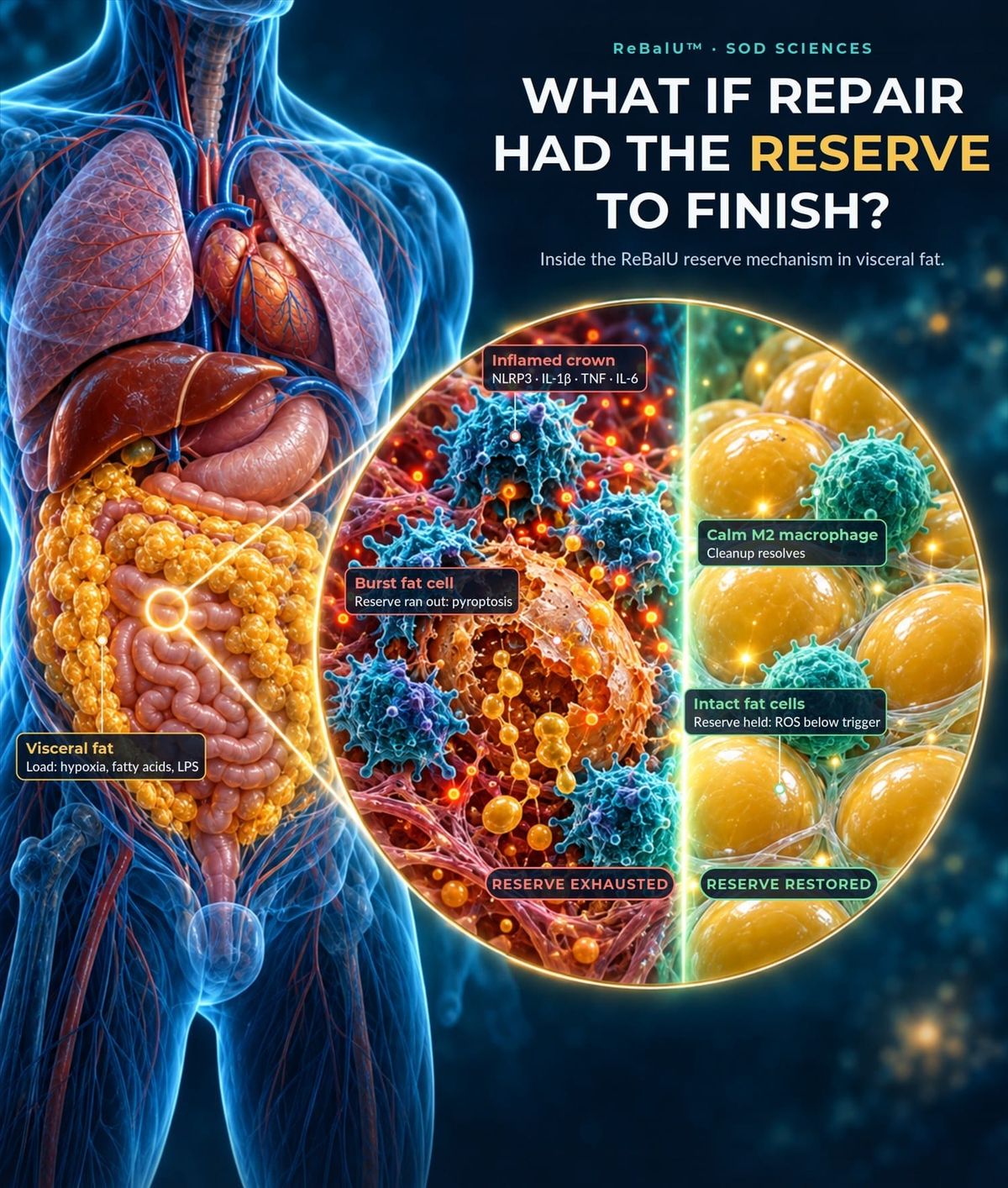
How portable ultrasound with AI and the ReBalU Primed Cell Test can work together. A plain-English evidence summary for longevity and wellness centers from SOD Sciences: how visceral fat causes damage, its ties to sleep apnea and insomnia, its causal and correlational links to cancer and fatty liver, and why a handheld AI ultrasound is a natural complement to the ReBalU protocol.

The short version
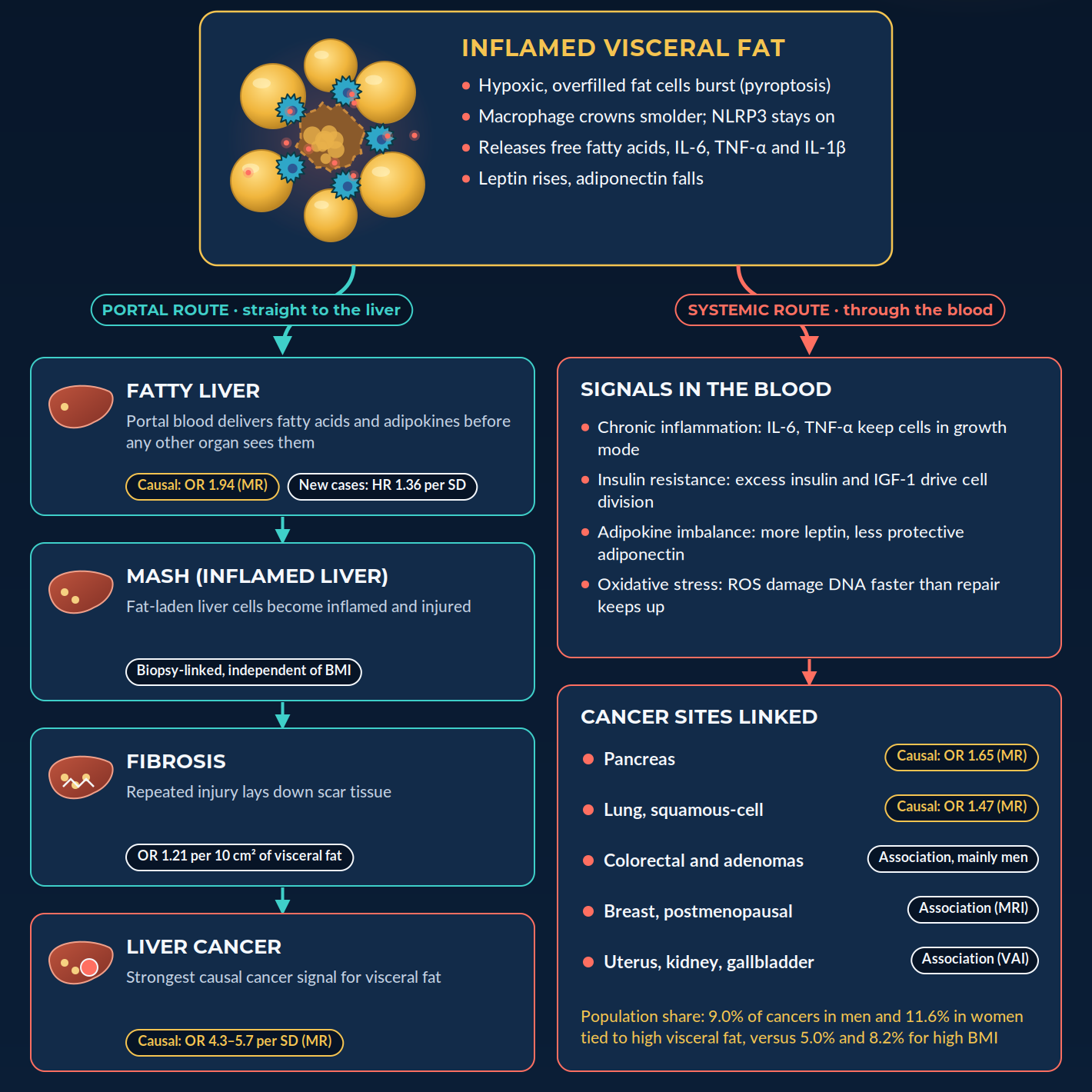
Visceral fat is the fat packed around the abdominal organs, as opposed to the fat under the skin. It behaves less like storage and more like an inflamed organ. When it outgrows its blood supply and its antioxidant reserve, its cells die in an inflammatory way, and the depot starts releasing fatty acids and inflammatory signals. Those travel first to the liver, through the portal vein, and then to the rest of the body.
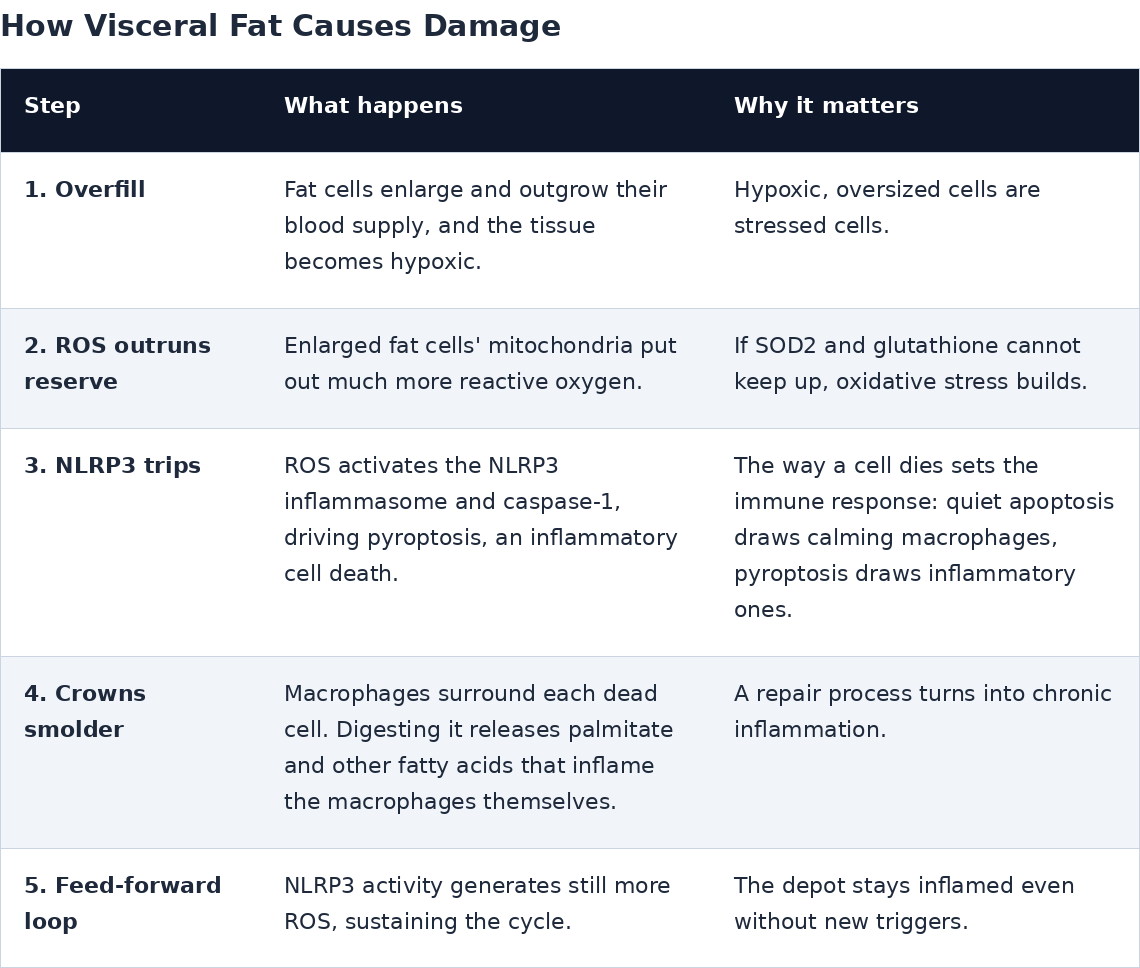
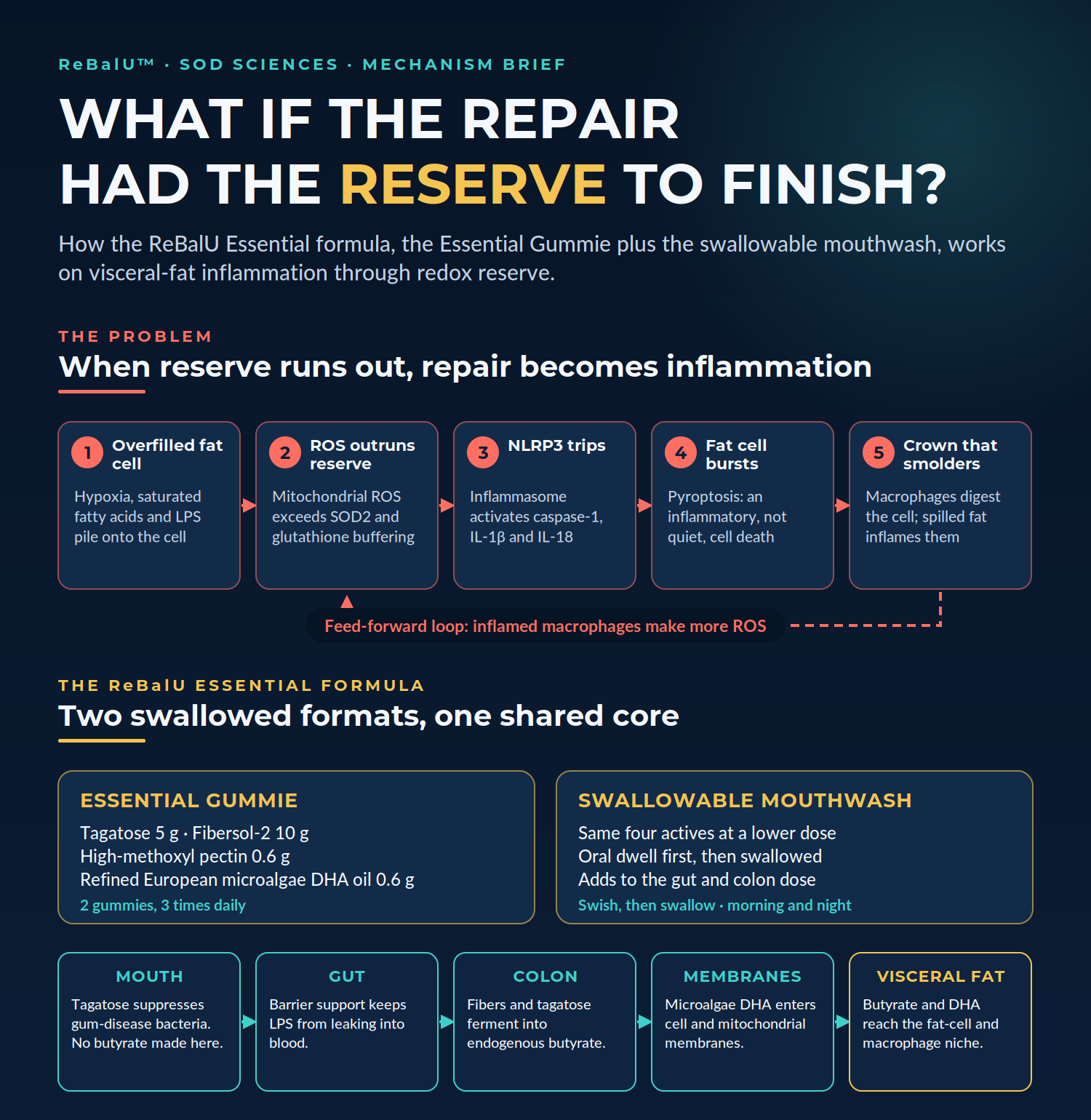
Damage. Overfilled visceral fat cells produce reactive oxygen faster than their SOD2 and glutathione reserve can clear it. That trips the NLRP3 inflammasome, the cells burst, and macrophages pile around them in smoldering crowns.
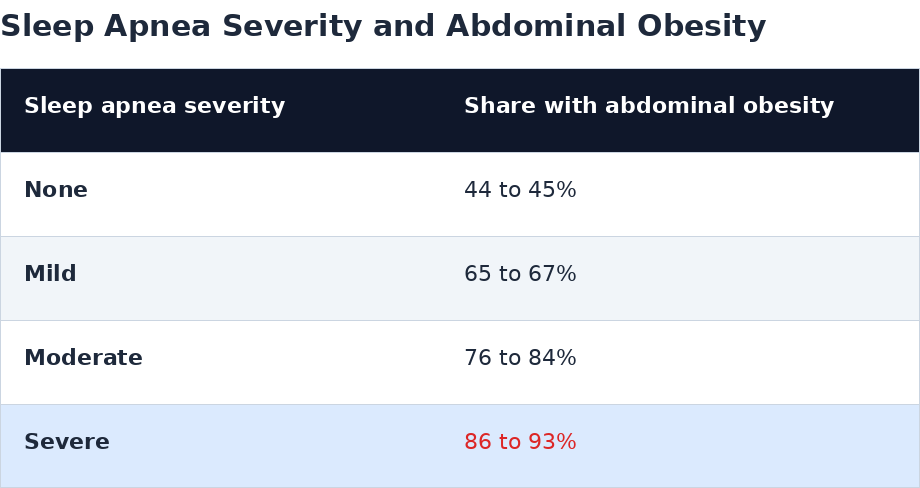
Sleep. Sleep apnea and visceral fat feed each other. Abdominal obesity rises from about 44 percent in people without sleep apnea to 86 to 93 percent in severe cases, and intermittent hypoxia directly inflames visceral fat. Insomnia's link is weaker, but insomnia often masks sleep apnea.
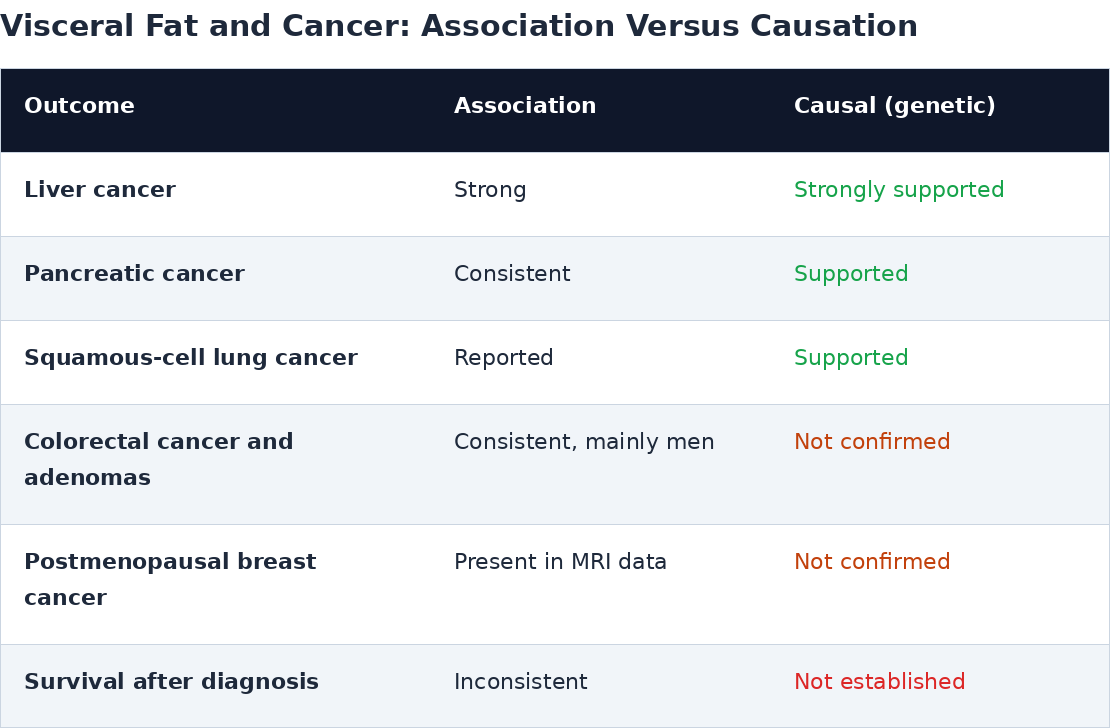
Cancer. High visceral fat is associated with more cancers than high BMI, and genetic Mendelian randomization studies support a causal role for liver, pancreatic and squamous-cell lung cancer. Visceral fat does not reliably predict survival once cancer is diagnosed.
Fatty liver. The evidence is stronger and more consistent here: visceral fat predicts new fatty liver, inflammation and scarring, and genetic studies support causation.
Measurement. Handheld ultrasound separates visceral from subcutaneous fat directly, without radiation, and AI already reads liver fat on ultrasound with high accuracy. Paired with the Primed Cell Test, it would show both the size of the depot and whether the body's reserve is keeping pace.
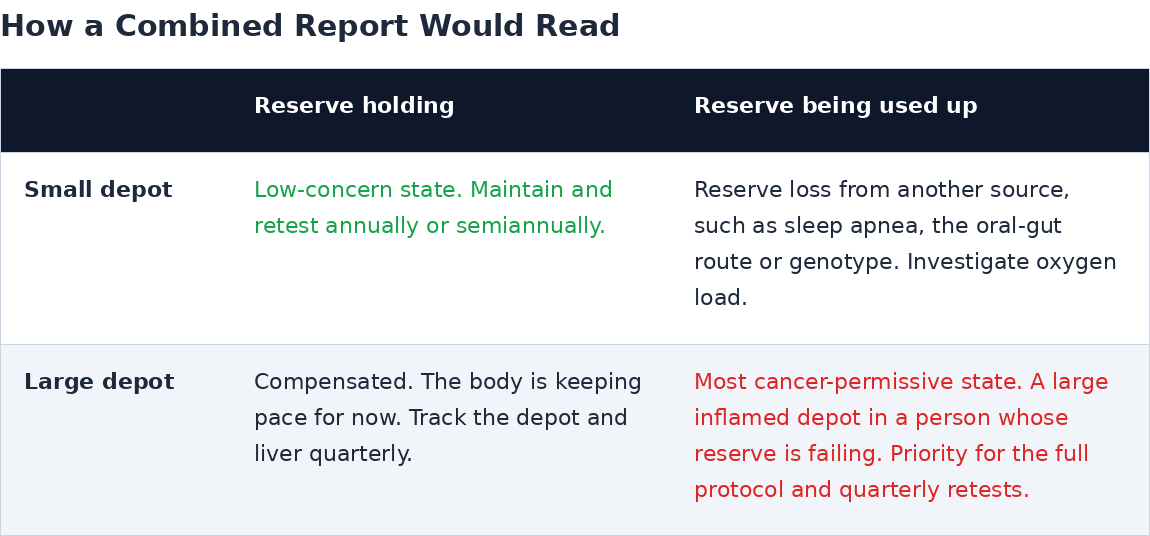
The claim boundary. Together, ultrasound and the Primed Cell Test can stratify a cancer-permissive state: a large, inflamed visceral depot in a person whose redox reserve is being used up. That is a risk-state measurement, not a cancer prediction. A validated cancer-risk score requires the SOD-USV-001, PHX-001 and PHX-002 studies and long-term outcome data.
Part 1: How visceral fat causes damage
Visceral fat becomes harmful through a sequence. Each step is established in cell or animal studies. The way ReBalU joins them into a single reserve story is the working hypothesis that the protocol tests.
Where the damage goes
Visceral fat is the only major fat depot that drains through the portal vein, so the liver receives its fatty acids and inflammatory adipokines before any other organ. From there, IL-6, TNF-α, excess insulin and IGF-1, a high-leptin and low-adiponectin profile, and oxidative stress circulate body-wide. These are the commonly cited routes linking visceral fat to cancer. This summary does not independently test them.
The two external triggers ReBalU targets
Gut and oral bacterial toxin. LPS from a leaky gut flips fat-tissue macrophages to the inflammatory M1 type. In mice, swallowed P. gingivalis, a gum-disease bacterium, produced crown-like structures and TNF-α, IL-6 and IL-1 signaling in fat tissue.
Overnight oxygen loss. Intermittent hypoxia from sleep apnea directly inflames visceral fat, covered in Part 2.
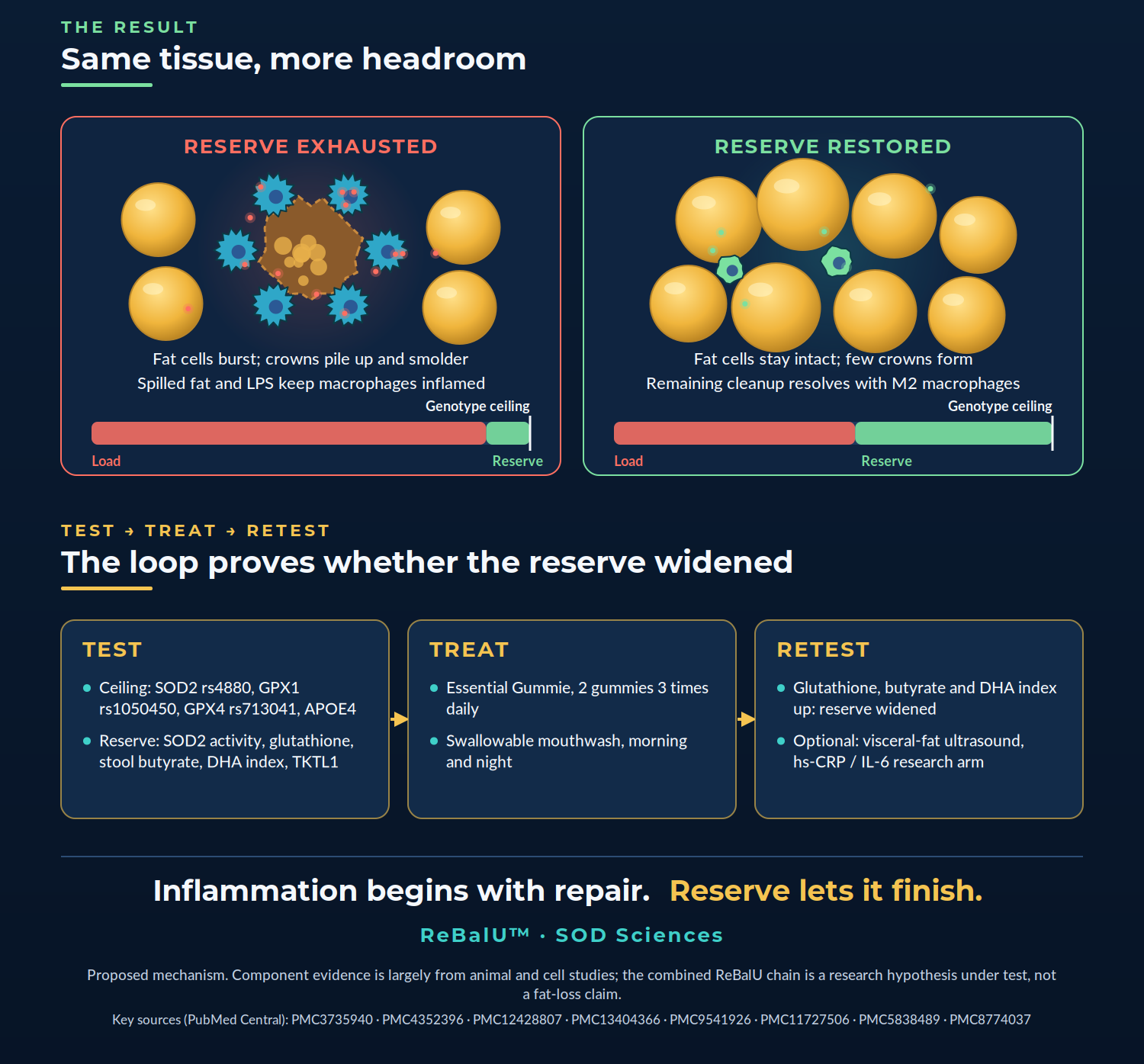
ReBalU hypothesis. Genotype sets a fixed ceiling on how much oxidative load a person can clear (SOD2 rs4880, GPX1 rs1050450, GPX4 rs713041, APOE4). Reserve is the headroom under that ceiling. ReBalU proposes that people whose reserve is exhausted tip their fat cells toward inflammatory death, and that widening the reserve tips them back toward quiet death and resolution. This is built from established parts but has not been demonstrated as a whole.
Part 2: Visceral fat, sleep apnea and insomnia
About 61 percent of US adults had abdominal obesity in 2023, 70 percent of women and 51 percent of men, on American Heart Association figures. That is roughly 150 to 160 million adults, using waist size as the stand-in, because no national survey reports visceral fat directly. Sleep problems are among the strongest, and most overlooked, drivers.
Sleep apnea: a two-way loop
Fat causes apnea. Abdominal and neck fat narrow the airway and reduce lung volume, so visceral fat is a major cause of sleep apnea.
Apnea inflames fat. In mice, intermittent hypoxia increased inflammatory M1 and CD36+ macrophages, ROS production and insulin resistance in visceral fat, even as fat mass fell. Three months of normal oxygen only partly reversed the changes. With identical oxygen lows, only the intermittent pattern of sleep apnea, not steady low oxygen, caused visceral-fat insulin resistance, macrophage infiltration and capillary loss.
Visceral fat as the bridge. Researchers increasingly view adipose inflammation as the route by which sleep apnea causes heart and metabolic damage.
Independent of weight. In a CT study, sleep apnea raised the odds of visceral obesity by 57 percent after adjusting for BMI, and combined with under 5 hours of sleep the odds were 4.4 times higher.
Insomnia and short sleep
Short sleep is a cause. In a Mayo Clinic randomized trial, three weeks of restricted sleep raised visceral fat by about 11 percent with only about a pound of weight gain. Adults under 40 sleeping 5 hours or less gained 13 cm² more visceral fat over 5 years than those sleeping 6 to 7 hours.
Insomnia itself is a weaker link. Central obesity was 58 percent with insomnia disorder versus 52 percent without. A 2026 review found only a weak insomnia-obesity relationship, partly because insomnia often coexists with undiagnosed sleep apnea.
What this means for a center. The Primed Cell Test already includes a home sleep test with oximetry. For insomnia referrals, surfacing hidden sleep apnea is a concrete benefit. For sleep-apnea patients, nearly all of whom carry abdominal fat, the question becomes which of them is cellularly primed, and that is where reserve markers and ultrasound add information.
Part 3: Visceral fat and cancer, correlation and causation
Two kinds of evidence matter. Cohort studies show visceral fat goes with more cancer. Mendelian randomization uses inherited gene variants that set visceral-fat level as a natural experiment, which strips out most confounding from diet and lifestyle and so tests causation.
What the cohort studies show
Visceral fat beats BMI. In UK Biobank, with 37,397 cancers over a median 12 years, estimated visceral fat predicted cancer independent of BMI and waist size. High visceral fat accounted for 9.0 percent of cancers in men and 11.6 percent in women, versus 5.0 and 8.2 percent for high BMI.
MRI-measured fat, by site. In 49,044 participants, visceral fat predicted postmenopausal breast cancer in women and colorectal cancer in men. Subcutaneous fat, not visceral, predicted endometrial and kidney cancer.
Six sites. Across more than 380,000 people, the visceral adiposity index was linked to uterine, gallbladder, kidney, liver, colorectal and breast cancer. For colorectal cancer, the top third carried 1.78 times the risk of the bottom third after adjusting for BMI.
Precancer. Each 25 cm² of visceral fat raised colorectal adenoma odds by 13 percent, and gaining visceral fat raised the risk of new and recurrent adenomas.
What the genetic, causal studies show
Liver cancer, the strongest signal.Genetically higher visceral fat raised liver cancer risk about 4.3-fold per standard deviation. A second study found 5.7-fold for visceral fat and 7.1-fold for liver fat, with no effect of BMI itself.
Pancreas and lung. Genetically higher visceral fat raised pancreatic cancer odds 1.65-fold and squamous-cell lung cancer 1.47-fold, with no causal effect on breast, colorectal, ovarian or prostate cancer.
The fat's metabolic profile matters.Metabolically unfavourable fat raised non-hormonal cancers, multiple myeloma and endometrial cancer, but lowered breast and prostate risk.
The limit
Across 10 cancer types, imaging-measured visceral fat did not consistently predict death or progression after diagnosis. The evidence concerns getting cancer, not outcomes once it is diagnosed.
Part 4: Visceral fat and fatty liver
Fatty liver, now called MASLD, for metabolic dysfunction-associated steatotic liver disease, is where the visceral-fat evidence is strongest. The portal vein delivers the depot's output straight to the liver, which makes the liver the first organ downstream.
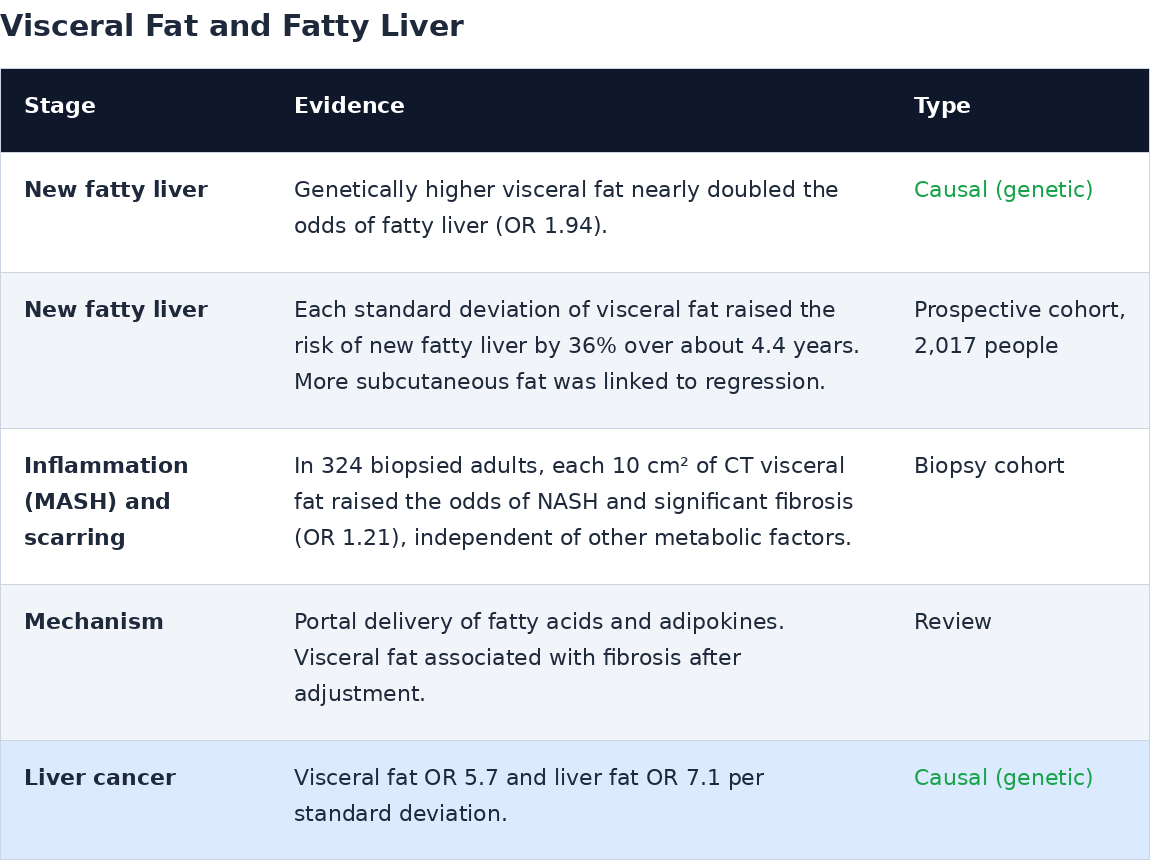
Caveat. Lean people can still develop MASH and fibrosis, so the exact role of visceral fat in progression is still debated. Visceral fat is a major driver, not the only one.
One chain, one scan. Visceral fat, liver fat and liver cancer form a single causal chain in the genetic data. A handheld ultrasound can image both ends of the upstream part, the visceral depot and the liver, in the same session. That makes the liver view a natural add-on to every visceral-fat scan.
Part 5: What handheld ultrasound with AI can measure
Ultrasound sees fat layers directly. The standard visceral reading is the distance from the inner surface of the abdominal muscle to the aorta, while subcutaneous fat is measured separately above the muscle. Ultrasound measurements correlate with CT at r = 0.75 to 0.87 and show high repeatability for a single operator.
Precision and timing
Repeat-scan precision. A single trained operator varies 3.4 to 4.0 percent between repeat visceral scans. Between scan days about a month apart, variation rose to 15 percent, and a meal inflated visceral readings by 13.7 percent for about an hour. Fasting morning scans and a fixed protocol are therefore essential.
How fast visceral fat changes. Aerobic exercise alone cut visceral fat by more than 30 cm² in women and 40 cm² in men within 12 weeks. Six months of moderate exercise cut it from 1.68 to 1.26 liters with no significant change in weight or BMI.
Practical cadence. Weekly changes sit inside measurement noise. Monthly changes are detectable during an active program, and quarterly readings are reliable. Frequent scans still help: averaging four weekly scans into a monthly trend roughly halves the noise.
Where AI is already proven
Liver fat. A meta-analysis of AI models for hepatic steatosis found pooled sensitivity of 91 percent, specificity of 92 percent and an AUC of 0.97. One deep-learning ultrasound score matched or beat FibroScan CAP and worked across three scanner brands.
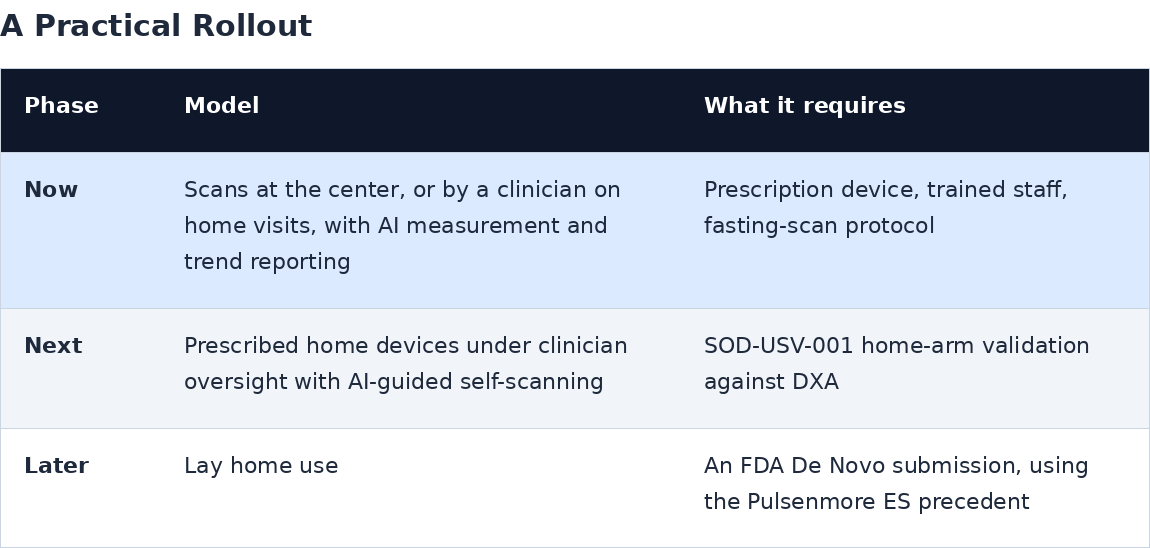
Regulated ultrasound AI exists. Ultrasound AI's validated product is obstetric, Delivery Date AI, cleared through FDA De Novo DEN250007. No FDA-cleared AI product for visceral-fat measurement exists yet, which is the gap SOD-USV-001 is designed to fill.
The hardware and the rules
Cost. A Butterfly iQ3 handheld probe lists at $3,899 plus a required software membership, and is labeled for prescription use.
Home use. Diagnostic ultrasound is a prescription device. The only FDA authorization for lay people to scan at home is Pulsenmore ES, cleared through De Novo for prescribed fetal imaging. That is a precedent, but no visceral-fat home device is authorized. The near-term model is center-operated or clinician-supervised scanning.
SOD-USV-001 in one line. A 400-participant pilot, 150 to train the model and 250 to validate it, with DXA as the reference and an MRI substudy of about 40, targeting concordance of at least 0.85 with DXA and repeat-scan variation of 5 percent or less, using two operators per participant: a sonographer and an AI-guided non-sonographer.
Part 6: Ultrasound AI plus the Primed Cell Test
The Primed Cell Test measures the body's capacity to handle oxidative load. Ultrasound measures the load-generating organ itself. Neither alone can tell a center whether a person's visceral fat is outpacing their reserve. Together they can.
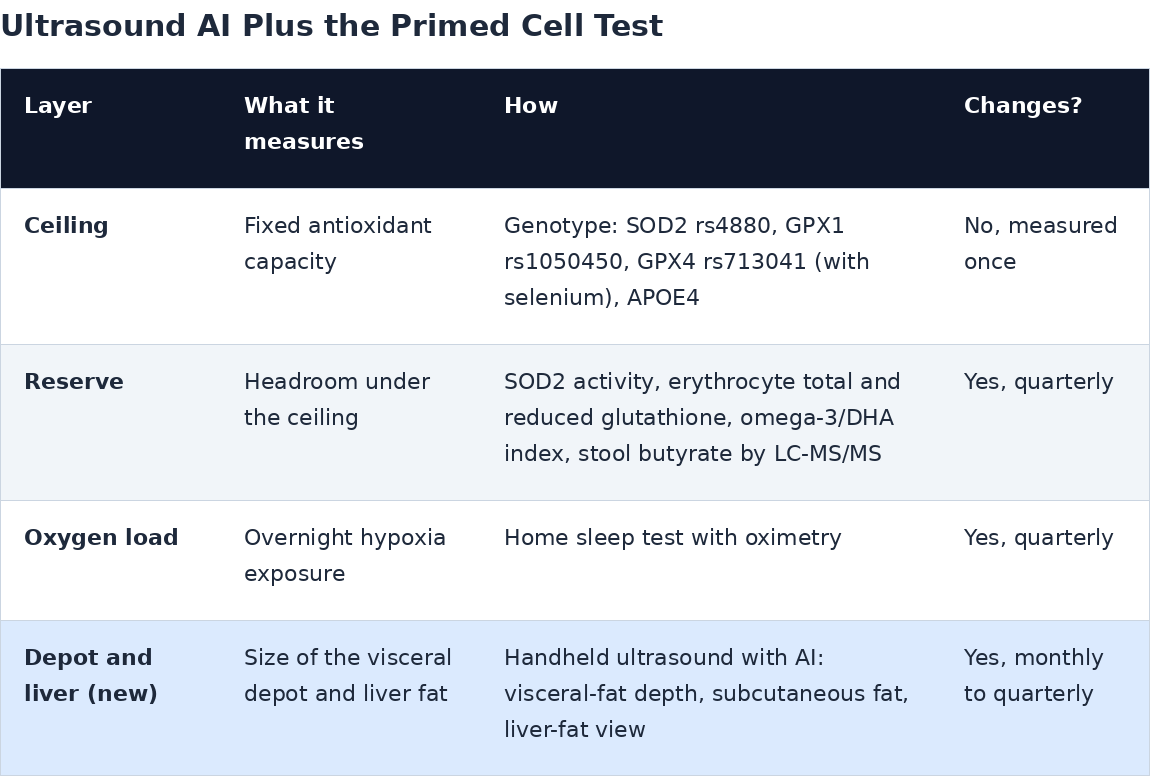
Why the pairing matters scientifically
It prevents the score from rediscovering obesity. In moderate-to-severe sleep apnea, roughly 75 to 90 percent of patients carry abdominal obesity, so reserve and oxygen markers will track waist size. Measuring the depot directly lets PHX-001 test whether genotype and reserve add value beyond visceral fat and the apnea index.
It attributes change correctly. Losing visceral fat lowers both the oxygen load and the reserve demand. Without a depot measurement, a quarterly improvement cannot be credited to the protocol versus weight change or a GLP-1 drug.
It closes the readout gap. The commercial Primed Cell panel shows that reserve widened. It does not show that the fat calmed down. Ultrasound adds a direct, repeatable tissue readout without adding IL-6 or hs-CRP to the commercial panel, which stay in research arms.
Cancer risk, stated carefully. Visceral fat is causally linked to several cancers at the population level, and liver fat is on the same causal chain. The combined test can therefore identify people in a state that the evidence ties to higher cancer risk. It cannot yet tell an individual their cancer risk. That requires score lock after PHX-001, intervention data from PHX-002 and long-term outcomes. A reported change counts only when it exceeds measurement noise.
Part 7: Where the ReBalU protocol acts
The ReBalU protocol is test, treat, retest. Treatment combines the Essential Gummie, made of tagatose 5 g, Fibersol-2 10 g, high-methoxyl pectin 0.6 g and microalgae DHA oil 0.6 g, taken as 2 gummies three times daily, with the swallowable mouthwash, which carries the same actives at a lower dose and is swished, then swallowed, morning and night. The ultrasound scan monitors what the protocol is designed to change.
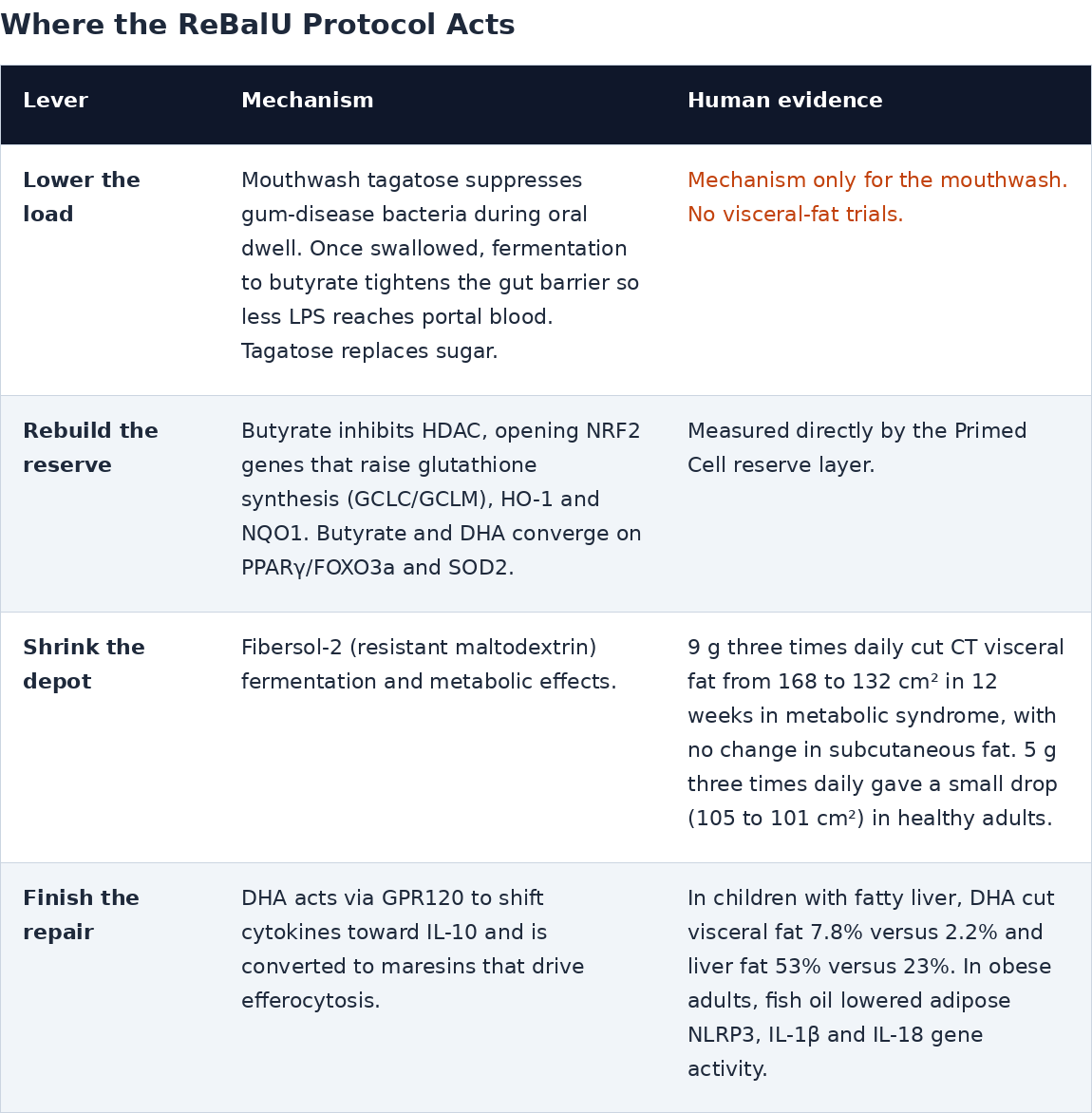
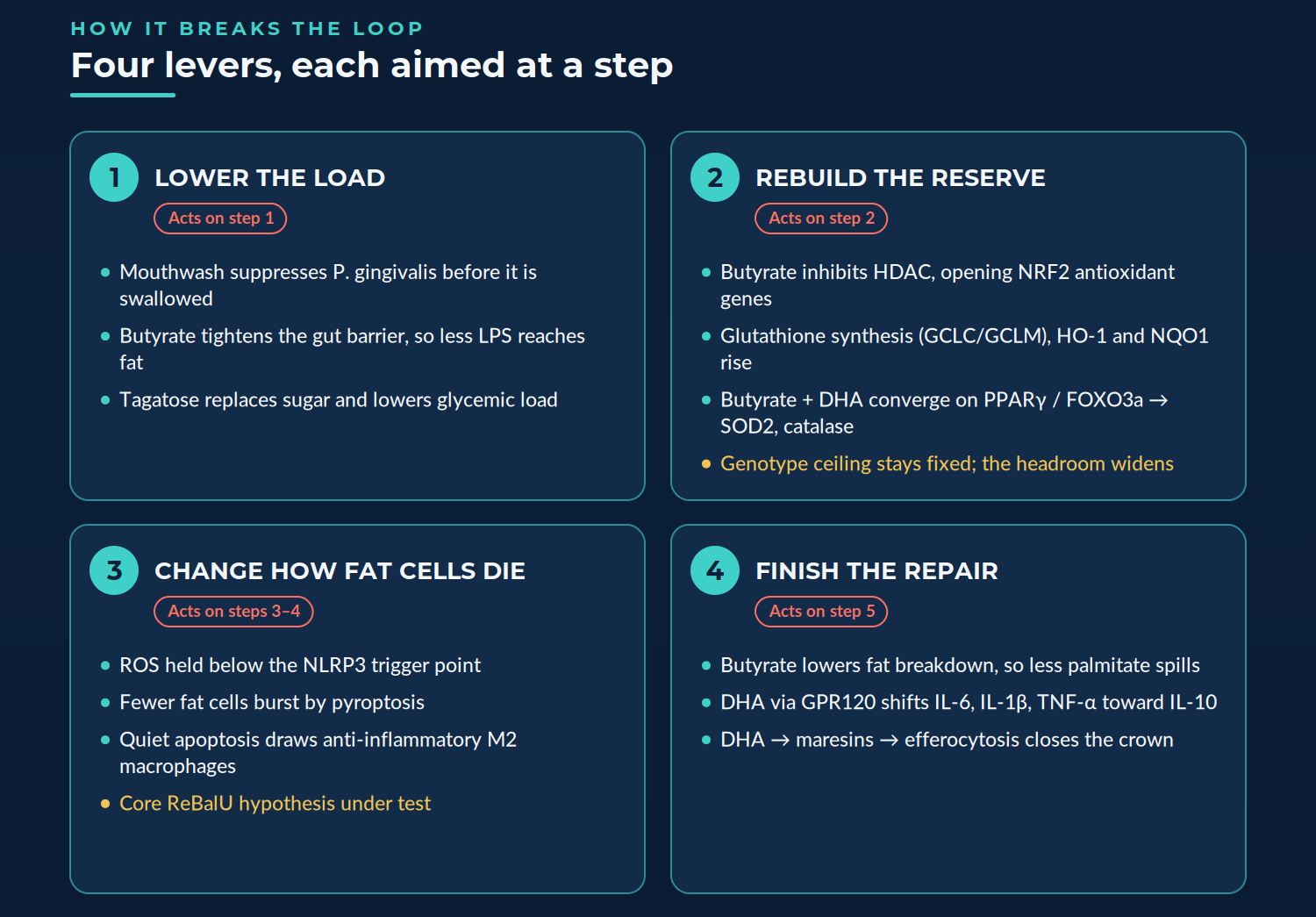
What the ultrasound should be able to see.The largest Fibersol-2 effect, about 21 percent in metabolic syndrome, would clear ultrasound noise within 12 weeks. The roughly 4 percent effect in healthy adults would not. Centers will see the clearest signal in people with high visceral fat or sleep apnea, the same group the protocol is built for. The core ReBalU claim, however, concerns the depot's behavior more than its size, so the reserve markers and the scan should be read together.
Tagatose's role here is as a sugar replacement, fermentation substrate and oral antibacterial. Placebo-controlled trials do not show a reliable weight effect from tagatose alone. ReBalU makes no fat-loss, liver or cancer-prevention claim.
Part 8: Why it fits a longevity and wellness center
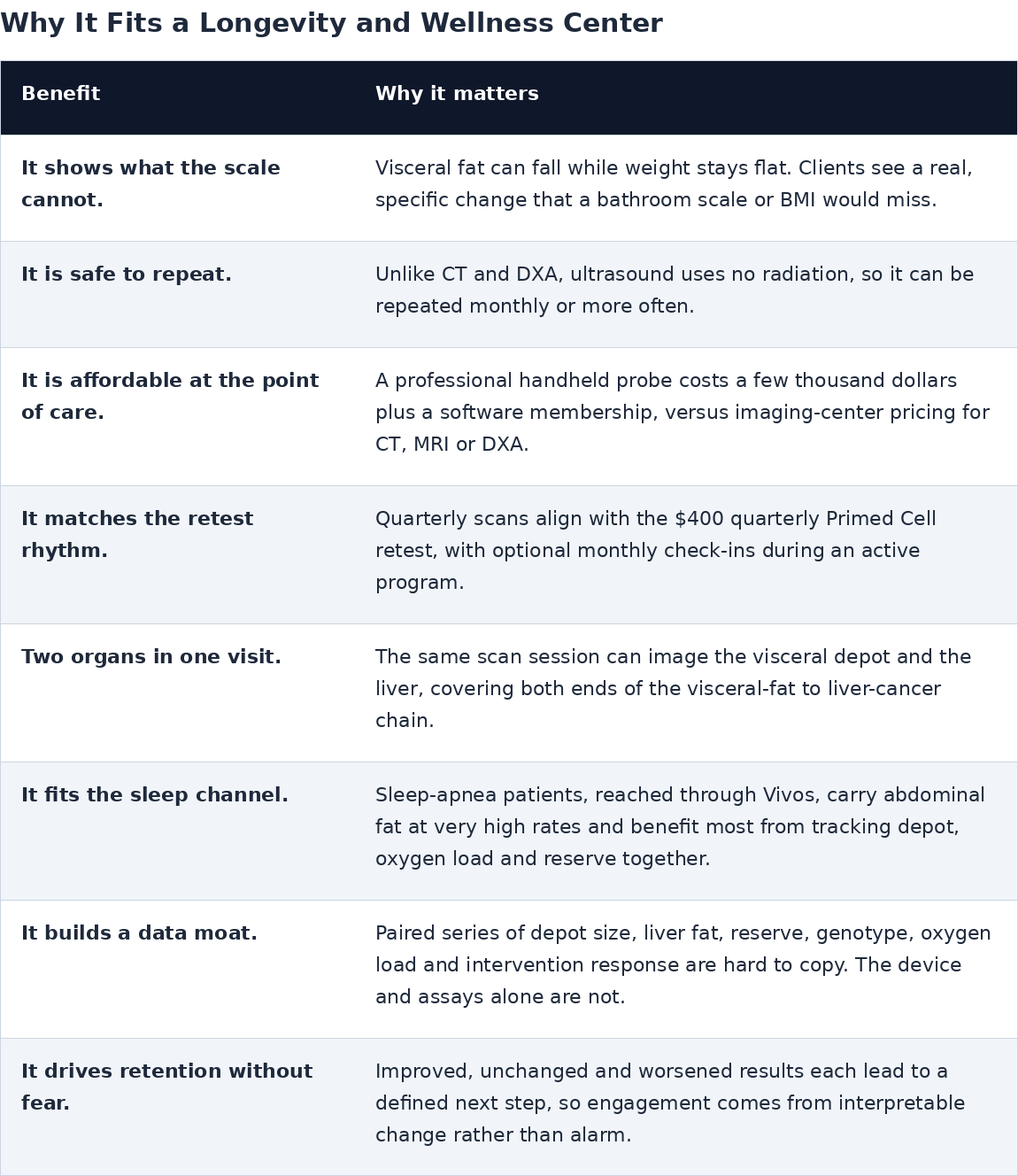
Bottom line. Visceral fat is a measurable, modifiable driver of fatty liver and of several cancers, and sleep apnea makes it worse. The Primed Cell Test shows whether the body's reserve is keeping pace. A handheld AI ultrasound shows the depot and the liver it feeds. Together they turn an invisible risk state into one a longevity center can measure, act on and retest.
Sources
Part 1, mechanism. Adipose tissue hypoxia and adipocyte stress; mitochondrial ROS in hypertrophic adipocytes; NLRP3, caspase-1 and adipocyte pyroptosis; cell-death type and the macrophage response; palmitate from dead adipocytes and macrophage inflammation; the NLRP3-ROS feed-forward loop in adipose inflammation; portal drainage of visceral fat and liver fibrosis; LPS and the shift of adipose macrophages to M1; swallowed P. gingivalis and adipose crown-like structures in mice. All via PubMed Central.
Part 2, sleep. American Heart Association on US obesity and abdominal obesity, 1999 to 2023; abdominal obesity by sleep apnea severity in 2,241 men, Oncotarget; prolonged intermittent hypoxia and visceral fat inflammation, SLEEP; mechanisms of end-organ injury in sleep apnoea; adipose tissue in obstructive sleep apnoea; sleep apnea, short sleep and CT visceral obesity in a Korean cohort; the Mayo Clinic randomized sleep-restriction trial; short sleep and five-year visceral fat gain; insomnia disorder and central obesity; insomnia, obesity and coexisting sleep apnea, review.
Part 3, cancer. UK Biobank visceral-fat estimate and cancer risk; UK Biobank MRI fat distribution and cancer, Institut national du cancer summary; the visceral adiposity index and six cancer sites; visceral fat and colorectal adenoma, meta-analysis; visceral fat change and incident and recurrent adenoma, CT cohort; Mendelian randomization studies of fat distribution and 12 cancers (Ludwig Oxford), of liver fat, visceral fat and liver cancer, and of visceral fat, pancreatic and lung cancer; metabolically unfavourable adiposity and cancer, International Journal of Obesity; visceral fat and survival after cancer diagnosis, meta-analysis.
Part 4, liver. Mendelian randomization of visceral fat and NAFLD, FinnGen; visceral fat and incident fatty liver in a 2,017-person cohort; CT visceral fat, NASH and fibrosis in 324 biopsied adults; the debate on visceral fat in fatty-liver progression and lean NASH.
Part 5, ultrasound. Ultrasound measurement of central adiposity guidelines, Obesity Reviews 2024; reproducibility of ultrasound visceral-fat measurement; exercise and visceral fat, meta-analysis; preferential visceral fat loss with exercise and no weight change, MRI; AI models for hepatic steatosis, meta-analysis; deep-learning liver-fat scoring across scanners against FibroScan CAP; Ultrasound AI clinical products; Butterfly Network iQ3 pricing and prescription labeling; home-use ultrasound regulation and Pulsenmore ES.
Part 7, protocol. Butyrate, HDAC inhibition and NRF2 antioxidant genes; resistant maltodextrin and visceral fat in metabolic syndrome, 2012 RCT, and in 140 healthy adults, 2020 RCT; DHA via GPR120 in obese adipose tissue; maresins and efferocytosis; DHA, liver fat and visceral fat in children with NAFLD, RCT; fish oil and adipose NLRP3, IL-1β and IL-18 genes in obesity.
This document presents a scientific hypothesis for discussion and an evidence summary for professional audiences. It is not medical advice. The ReBalU protocol and the Primed Cell Test have not been evaluated by the FDA and are not intended to diagnose, treat, cure or prevent any disease, including cancer, fatty liver disease or sleep apnea. ReBalU makes no fat-loss, liver or cancer-prevention claim. The combined ultrasound and Primed Cell approach describes a risk-state measurement that has not yet been validated against outcomes, and no FDA-cleared AI product for visceral-fat measurement currently exists.
Nothing here is a reason to delay or decline cancer screening, evaluation for sleep apnea, or care for liver disease that a physician has recommended. Anyone with symptoms of sleep apnea, liver disease or cancer should see their own clinician, and anyone considering the protocol should speak with their physician before starting any supplement, particularly if they take other medication.