
The Plague Shock: What a COVID-Lite Outbreak Costs


Contained, it costs almost nothing. Spread widely, it takes about 3 percent of world GDP. Scenario, not a forecast. Cause unconfirmed.
Nobody has confirmed plague. The WHO says a lab worker in Irkutsk died of severe pneumonia, the cause is not officially confirmed, and the patient's contacts have been identified and are being monitored with none showing symptoms. So this is a what-if. Suppose it turned into an outbreak half as contagious as COVID-19. In a contained case, nothing happens. In a spread case, the damage comes less from illness than from people and borders shutting down.
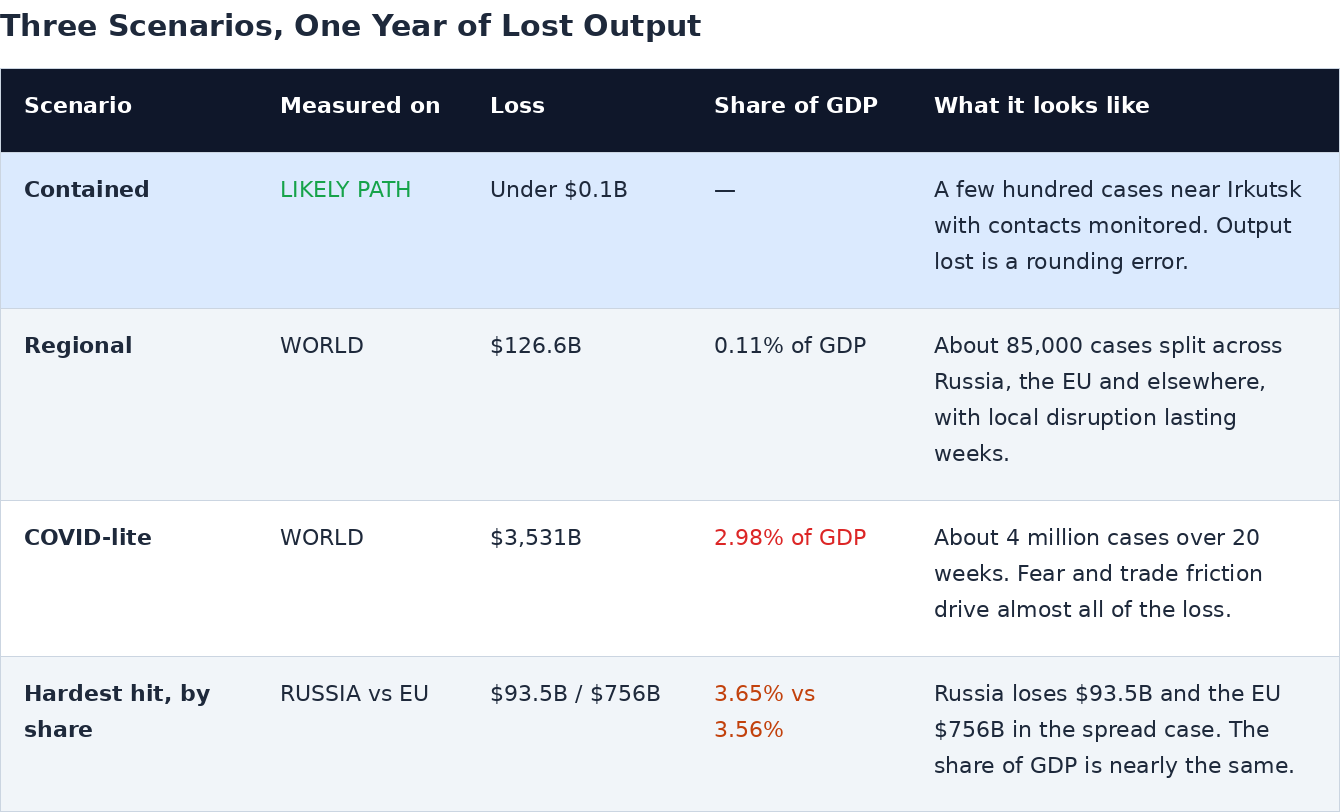
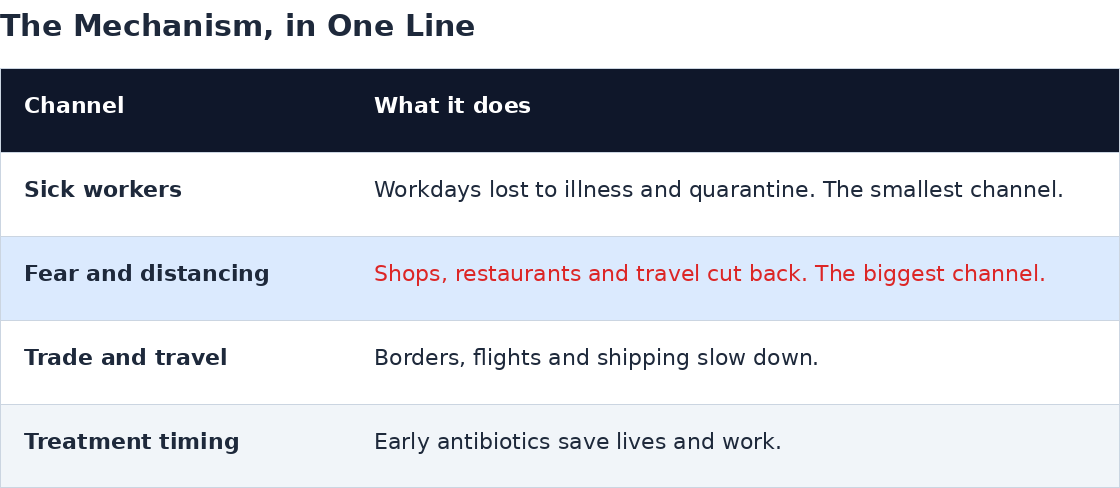
What the spread case costs, region by region
Treatment timing sets how long patients are out and how many die. Pooled records show 17 percent mortality with antibiotics against 98 percent without, though the authors warn of reporting bias and uneven data. The CDC says pneumonic plague needs antibiotics, preferably within 24 hours of first symptoms, and spreads from person to person only through direct, close contact. That is why the contained path is the most plausible one.
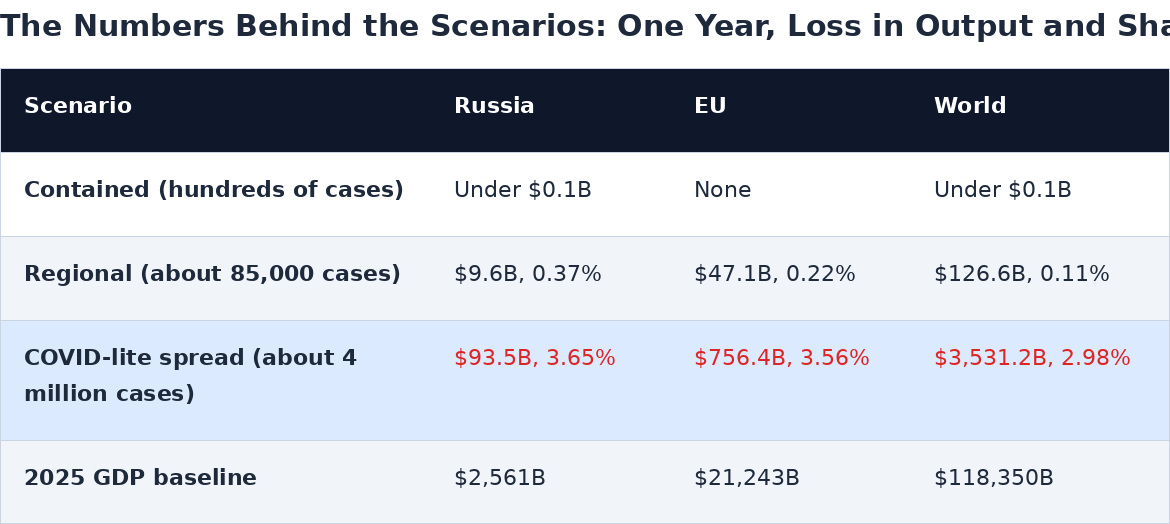
What drives the spread case
Fear and distancing. A model of voluntary isolation finds that healthy people cutting activity creates most of the recession, and that isolating only the infectious could avert up to 91 percent of the economic loss.
The model inputs are ours, not data. The spread case assumes 20 weeks of disruption, half of in-person service spending lost at the peak, 35 percent less cross-border activity, 8 contacts quarantined per case for 10 days, and only 35 percent of cases treated early. Change those and the answer moves a lot.
Escalates if. Lab testing confirms plague. Cases appear outside the monitored contact list. A resistant strain emerges. Governments impose blanket lockdowns.
Fades if. The monitored contacts stay symptom-free and testing finds no plague link. The economic cost stays near zero.
Sources
- CNBC, on the WHO statement regarding the Irkutsk lab worker, October 5, 2026.
- CDC Emerging Infectious Diseases, Deaths Associated with Pneumonic Plague, 1946 to 2017.
- CDC, Plague FAQ.
- Nature Communications, Disease-economy trade-offs under alternative epidemic control strategies.
- World Bank GDP, current US dollars, 2025.
For discussion purposes only. This is a scenario model built on illustrative inputs chosen by the authors. It is not a forecast, not epidemiological advice, and not investment advice. Figures are annual GDP shares as of October 5, 2026, and the case counts, durations and behavioral assumptions are hypothetical rather than projections of any actual outbreak.
Nothing here is health guidance. For current information on the Irkutsk situation and on plague generally, rely on the WHO, the CDC and your national public health authority. If you have symptoms of infection or believe you may have been exposed, seek medical evaluation without delay, and nothing in this analysis is a reason to delay or decline antibiotics or any other care you have been offered.