
Tagatose: Three Reader Perspectives

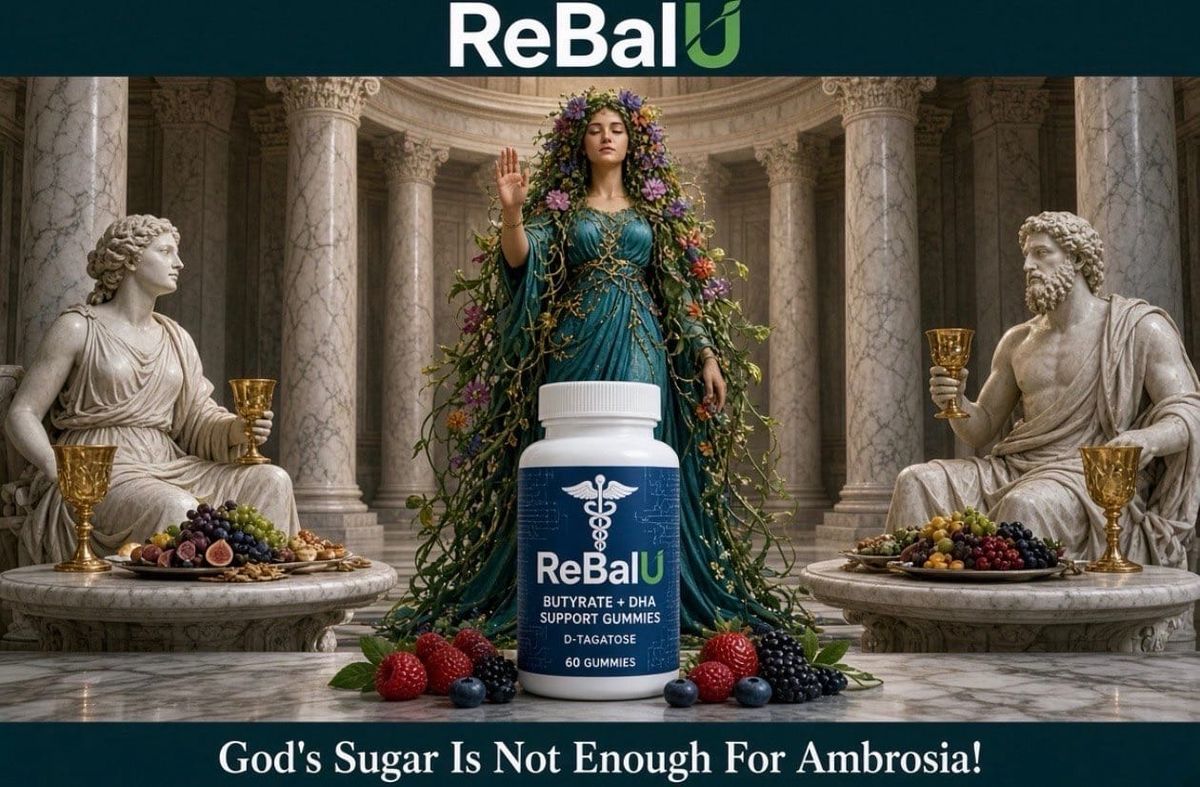
A companion to "Tagatose: A Natural Rare Sugar with a Systems-Level Health Case." Prepared for SOD Sciences and the ReBalU platform.
This brief presents the same thesis at three levels: a plain-English explanation, a scientific interpretation, and a partner-facing opportunity. The organizing idea is the God's Sugar narrative. Tagatose is the exceptional starting ingredient, and ReBalU is the system built around it.
For general readers: a sweet ingredient that can feed a useful factory
Tagatose is unusual because it can participate in a useful microbial process rather than acting only as a sugar substitute. Research by Venema and colleagues, pairing human tagatose intake with later testing of participants' intestinal microbes, found increased capacity to generate butyrate, an important product of bacterial fermentation.
Think of the intestinal microbiome as a collection of cooperating workshops, as Belenguer and colleagues describe it. Some bacteria break down food and release smaller products, and other bacteria use those products to make butyrate. This cooperation is called cross-feeding.
The right bacteria therefore means a functioning network, not one species that should simply be maximized. Van den Abbeele and colleagues found that tagatose responses differ among microbial communities, and that some communities direct more fermentation toward propionate rather than butyrate.
The butyrate paradox is that the same molecule can help fuel normal mature colon cells yet restrain growth in certain cancer cells, as Donohoe and colleagues showed. Different cells process butyrate differently, so the result depends on metabolism and exposure, not on butyrate somehow recognizing good and bad cells.
The tagatose paradox is an upstream way of telling that story: a sweet sugar can feed microbial production of a molecule with those opposing cellular effects. This is an explanatory name for the ingredient-to-metabolite hypothesis, not an established tagatose cancer-treatment phenomenon.
For scientific and clinical readers: separate the links in the chain
The strongest interpretation distinguishes substrate utilization, metabolite production, host exposure and tissue response. Evidence at one stage does not automatically validate the next stage.
Microbial production. A 30-person crossover feeding study by Venema and colleagues supports tagatose-associated microbial adaptation, with increased butyrate generation demonstrated in subsequent fecal incubations and a colonic model. It did not directly quantify whole-colon production inside participants.
Normal-cell support. Primary microglia experiments found increased NRF2-associated protective signaling with butyrate, while a mouse neurological-injury study found improved mitochondrial and antioxidant-enzyme measures, in work by Zhang and colleagues and by Li and colleagues. These are preclinical findings rather than finished-product clinical outcomes.
Tumor-cell vulnerability. Certain colorectal-cancer experiments by He and colleagues show that butyrate can reduce xCT and SLC7A11-related defenses and enhance ferroptosis sensitivity. Many of those experiments included additional ferroptosis-inducing agents.
DHA interaction. Kolar and colleagues found that DHA plus butyrate promoted oxidation-sensitive, mitochondrial-calcium-related apoptosis in colon-cell experiments. This is direct combination evidence, but it is not a human neurological-synergy trial or proof of the complete ferroptosis mechanism.
For neurological disease, the objective is to preserve vulnerable neurons and useful immune function, not to dismantle their antioxidant protection. DHA-derived neuroprotectin signaling offers one plausible survival pathway, as Lukiw and colleagues describe, although a large DHA trial in established Alzheimer disease reported by Quinn and colleagues did not slow overall decline.
The word synergy should be reserved for a defined interaction on a defined endpoint. Enhanced butyrate production and enhanced response to butyrate are separate claims requiring separate experiments.
For partners and investors: a broad ingredient with a system-level opportunity
The commercial proposition is that tagatose may combine practical food use, human glycemic evidence and microbial-metabolite generation in one ingredient. The FDA's labeling letter recognizes exclusion from Total Sugars and Added Sugars under enforcement discretion, use of 1.5 kcal per gram, and eligibility for the authorized dental-caries claim under its conditions.
The Phase 3 diabetes trial reported by Ensor and colleagues met its primary HbA1c endpoint and reported significant differences favoring tagatose at every subsequent measured visit through month ten in the intent-to-treat analysis. At ten months, 43.02 percent against 26.23 percent achieved HbA1c below 7 percent in the reported intent-to-treat analysis, using last-observation-carried-forward imputation.
The platform opportunity is to organize complementary functions around that ingredient-level foundation. The practical development task is to measure the finished formulation's advantage, rather than infer a valuation from ingredient reputation alone.
ReBalU: connect production with response
ReBalU is not simply tagatose with three additional ingredients. It is designed as a production-and-response system: tagatose, Fibersol-2 resistant maltodextrin and high-methoxyl pectin supply complementary microbial resources, while microalgae DHA adds membrane and signaling functions.
Tagatose provides a substrate with experimentally supported butyrogenic capacity and adaptation-related findings. It is the lead ingredient, not merely the flavoring system.
Fibersol-2 adds a distinct fermentable carbohydrate with human evidence, from Fastinger and colleagues, of a shift in short-chain fatty acid proportions toward butyrate. Separate human research by Ye and colleagues also found increased GLP-1 and PYY and improved satiety measures.
Pectin adds a complementary carbohydrate architecture and an acetate-rich fermentation route, described by Pascale and colleagues. Human isotope research by Boets and colleagues shows that microbial metabolism can convert acetate into butyrate.
DHA adds a downstream membrane and signaling partner rather than another fermentation substrate. Direct colon-cell experiments establish a DHA and butyrate interaction at the level of cellular response.
The synergy case rests on division of labor. Complementary substrates address the microbial production environment, while DHA contributes functions that the carbohydrate ingredients cannot supply.
Upstream, the mechanistic objective is a larger or more sustained butyrate response from a better-supplied microbial network. Downstream, the objective is to pair that mediator with membrane and signaling functions relevant to the responding tissue.
Component-controlled fermentation studies can quantify the production advantage, and tissue-response studies can establish which cellular effects follow at relevant exposures. These measurements distinguish greater total output, longer-lasting output and an interaction beyond an additive expectation.
ReBalU connects the supply side to the response side. The system is designed to nourish the producer, generate the mediator and equip the responding tissue. Tagatose is the exceptional starting ingredient. ReBalU is the system built around it. This is a coordinated biological strategy, not four ingredients making four unrelated promises.
SOD Sciences management's conclusion
SOD Sciences management's mechanistic conclusion is that the ReBalU treatment component of its test, treat and retest protocol offers a coordinated strategy: challenge antioxidant defenses co-opted by susceptible diseased cells, particularly malignant cells, while supporting useful defenses in normal tissue. Management interprets the component mechanisms as a potential route to restoring appropriate cell-death signaling, allowing apoptosis and ferroptosis to re-engage where abnormal survival has suppressed those processes.
Management also sees a complementary immune-support opportunity: strengthen useful T-cell responses, including expansion under suitable conditions, and improve selected macrophage defense functions. This interpretation draws on experimental findings of context-dependent T-cell enhancement and increased macrophage antimicrobial activity, rather than a general increase in every immune-cell activity.
Management views this combination of host support and vulnerability in susceptible abnormal cells as the broader significance of the butyrate and tagatose paradox. Tagatose provides an upstream microbial substrate. Butyrate is one of the downstream mediators, rather than another name for tagatose.
This is management's interpretation of component mechanisms, not a demonstrated outcome of the complete ReBalU protocol or proof that its ingredients selectively enter diseased cells. Selective cellular effects and selective delivery are different claims, and improved T-cell function does not necessarily mean increased T-cell numbers.
In management's words, "God's sugar is the key ingredient!" Tagatose is the starting point around which the ReBalU strategy is built.
This brief presents a scientific hypothesis and a commercial interpretation for discussion. It is not medical advice. The mechanisms described are drawn from laboratory, animal and early human studies of individual ingredients, and they have not been demonstrated as outcomes of the complete ReBalU formulation in people.
The ReBalU protocol has not been evaluated by the Food and Drug Administration and is not intended to diagnose, treat, cure or prevent any disease, including cancer, diabetes or any neurological condition. The FDA labeling position described here concerns nutrition labeling and a dental-caries claim under stated conditions. It is not an endorsement of any health benefit discussed in this brief.
Nothing here is a reason to delay, decline or discontinue cancer treatment, diabetes medication or any other care your physician has recommended. Speak with your own clinician before starting any supplement, particularly if you are undergoing treatment or taking prescribed medication.
The commercial statements in this brief are the authors' and management's views and are not investment advice, an offer to sell, or a solicitation of an offer to buy any security.