ReBalU Longevity and Wellness Center Program

A patient-friendly whitepaper on how an institution-backed test, treat and retest model could change the course of chronic disease and medical spending.
The central opportunity
The ReBalU Longevity and Wellness Center Program is designed around a different question: can we identify a person's biological strain, address the factors maintaining it, and document improvement before more expensive complications develop? Its organizing principle is test what matters, treat the limiting factors, and retest the response.
The program would bring together the Primed Cell Test, ReBalU's 81-profile and five-lane framework, measured antioxidant reserve, AI-assisted abdominal-fat ultrasound and ordinary disease-specific medical care. The goal is more years of useful health and function, with fewer complications and a lower ongoing cost of maintaining improvement.
This paper presents a mechanism-based program design supported by existing component studies and transparent economic scenarios. Institutional backing means a proposed partnership with established medical organizations for clinical oversight, measurement validation and independent outcome assessment. No particular institution is represented here as a confirmed ReBalU sponsor or endorser.
The economic proposition has two parts: reduce the burden that leads to expensive medical care, then move successful patients from intensive assessment into a less costly maintenance program. Better health must lead the financial argument. Changes in laboratory numbers alone do not pay medical bills.
Why this could change the spending curve
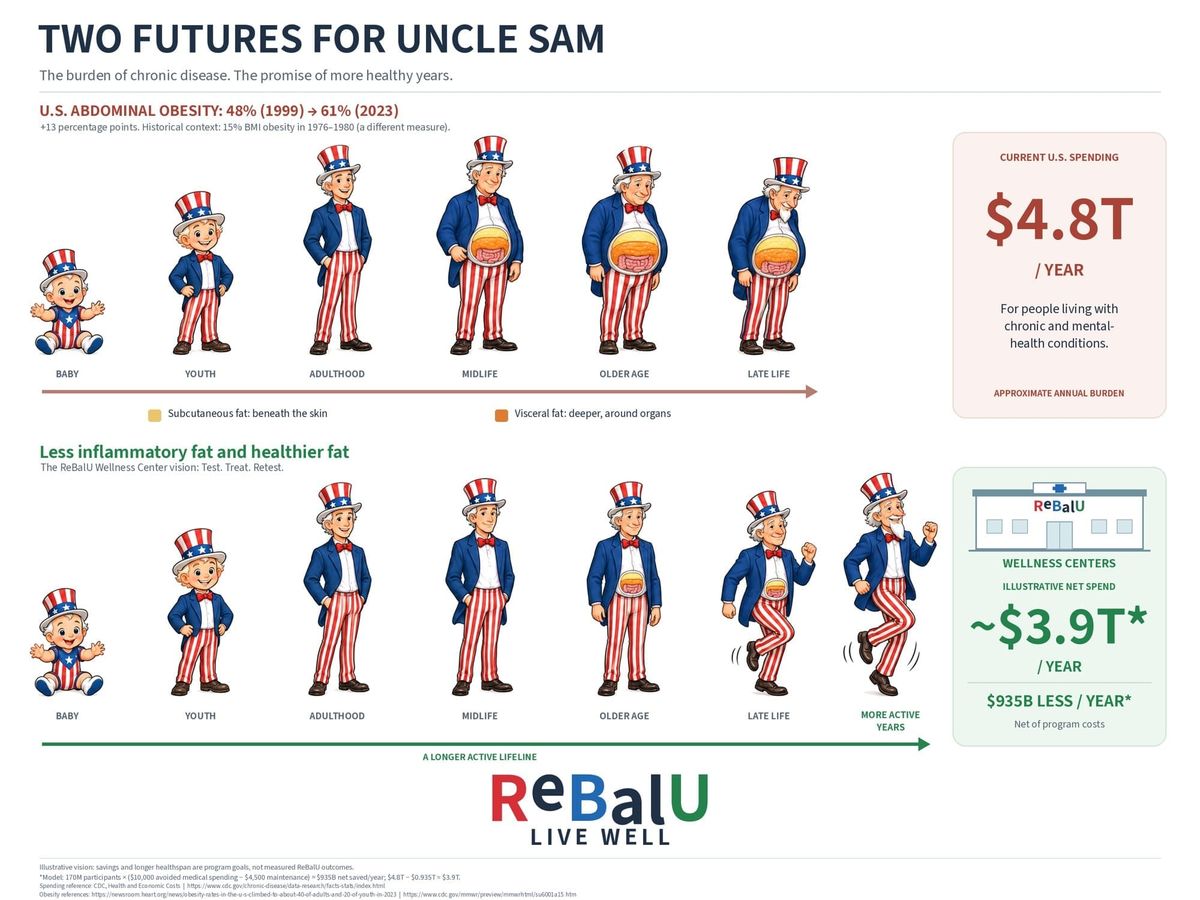
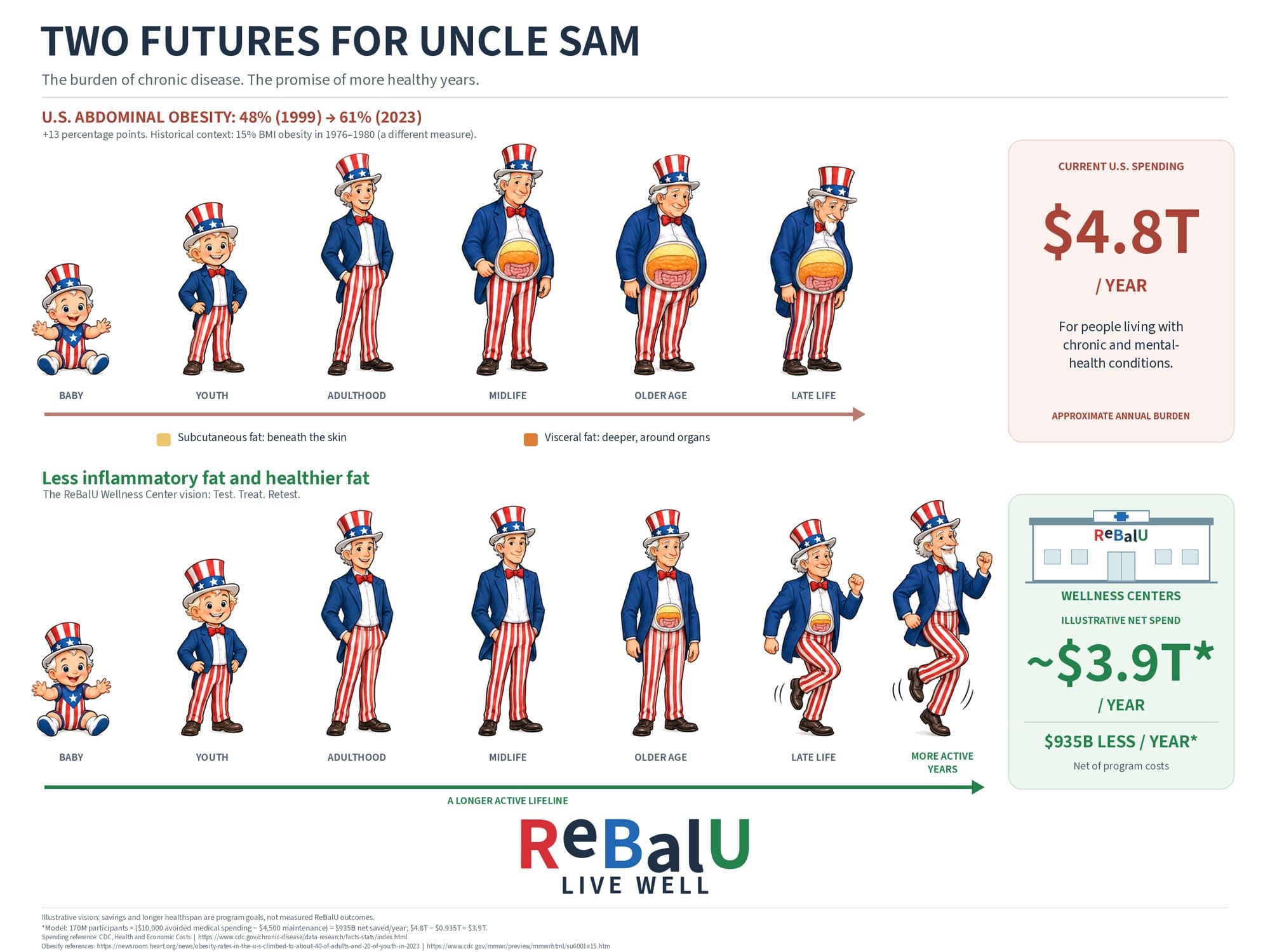
US healthcare spending reached $5.3 trillion in 2024, on CMS figures, and the CDC describes 90 percent of annual spending as being for people with chronic and mental-health conditions, approximately $4.77 trillion. This is spending for those people, not a claim that every dollar is caused by abdominal fat or can be eliminated.
The relevant medical opportunity is that obesity, diabetes, cardiovascular disease and kidney disease share interacting biological pressures. The American Heart Association describes this connected framework as cardiovascular-kidney-metabolic health. A program that improves a shared burden could therefore support several parts of a patient's care rather than addressing each diagnosis in isolation.
ReBalU's proposed contribution is a repeatable view of the patient's trajectory: inherited context, current reserve, abdominal-fat distribution and clinical results. The center would use that information to answer a practical question at each visit: what should change next, and what evidence would show that the change helped?
Fat quality matters as much as fat quantity
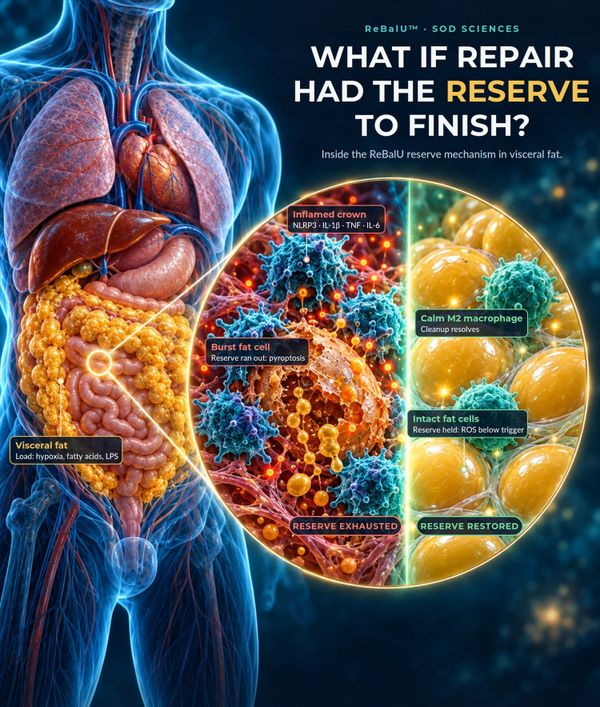
Fat tissue is a living organ, containing energy-storage cells, blood vessels and immune cells, and producing hormones that affect metabolism. Its health depends partly on whether storage demands remain matched to blood supply, repair and the ability to form functioning new fat cells.
Visceral fat. Fat deeper inside the abdomen, around internal organs, can contribute to insulin resistance and inflammatory signaling when excessive and dysfunctional.
Subcutaneous fat. Fat beneath the skin can provide useful storage capacity, but abdominal subcutaneous fat can also become unhealthy when enlargement is accompanied by inadequate blood supply, cell stress and scarring.
Safe storage. Functioning subcutaneous storage, especially in lower-body depots, can help buffer excess energy rather than allowing fat to accumulate in the liver and other organs.
The supporting community is called the stromal vascular fraction, or SVF. It includes blood-vessel cells, immune cells and cells capable of becoming fat cells. Fat cells also make adiponectin, a hormone supporting insulin sensitivity in muscle and liver, with expression highest in subcutaneous white fat.
The treatment objective is therefore not simply to make all fat smaller. It is to improve the environment in which fat is stored, reduce harmful spillover and support useful hormonal and immune function.
The two-way loop between low reserve and unhealthy fat
Cells need reactive molecules for normal signaling, but excessive oxidative stress can damage membranes, proteins and other structures. A balanced defense system controls that stress without trying to eliminate normal oxidation altogether.
Reduced glutathione, or GSH, is one important protective resource. Cells manufacture it from amino acids and recycle it after use, with recycling depending on metabolic resources including NADPH. In this paper, reserve means the protection available relative to current demands, not just the amount of one substance in a blood sample.
The relationship goes in both directions. In mouse experiments, reducing glutathione-making capacity in fat cells impaired healthy fat storage. Separately, inflammatory signaling reduced a glutathione-dependent detoxification pathway in fat cells.
An unhealthy fat environment can also attract macrophages, immune cells that participate in cleanup but can sustain inflammation when injury persists. ReBalU's working model is a reinforcing cycle: continuing injury increases defensive demand, low available reserve makes further injury harder to contain, and unresolved injury keeps demand high.
The proposed way out is also two-sided: reduce the continuing load while rebuilding the capacity to manage it. Supplying building materials without addressing ongoing injury would be like refilling a tank without investigating a persistent leak.
What the Primed Cell Test would tell the patient
The intended Primed Cell Test report brings together inherited context, current reserve-related measurements and demands such as metabolic disease or overnight oxygen stress. Primed describes vulnerability under strain. It is not a diagnosis of every cell or organ.
The report would organize three layers.
Inherited context. ReBalU's working framework combines four genetic inputs into 81 possible profiles and five lanes, helping organize potential biological constraints.
Current measured state. Direct reduced-GSH testing and selected supporting measures show the state of the sampled compartment now, rather than assuming a gene variant determines the result.
Current demand. Medical history, medications, nutrition, activity, disease control and appropriate sleep and oxygen assessment help explain what may be consuming reserve.
The five working labels are A, Resilient; B, Compensated; C, Monitor; D, Active Management; and E, Compound. The report should distinguish inherited context from the patient's changeable care-priority status.
When the program describes movement from C to E management needs toward A to C needs, it means an improved measured state and potentially lower care intensity, not a change in inherited DNA. A demanding inherited profile can remain the same while the person becomes healthier and easier to maintain.
Blood glutathione remains a measurement of the sampled blood compartment, not a direct reading inside abdominal fat. The patient-facing result should say: here is the pattern, here is the likely limiting factor, here is the plan, and here is what we will check next.
Treat the load, the supply and the repair environment
Treatment would be a coordinated plan rather than an identical supplement list for every patient. ReBalU products, clinician-selected companions and ordinary disease treatment would each have defined roles.
Reduce continuing sources of strain
Nutrition, physical activity and appropriate treatment of glucose, blood pressure and related conditions are central to integrated cardiovascular, kidney and metabolic care. Repeated oxygen drops in obstructive sleep apnea can also promote oxidative stress and inflammatory changes in fat tissue.
The center would therefore look for continuing demands rather than assuming every low-reserve result calls for more antioxidant intake. Strength, adequate nutrition and the patient's usual medical treatment remain part of the plan.
NAC: provide a building material
N-acetylcysteine, or NAC, can provide cysteine for glutathione production. Glutathione synthesis also requires glycine, glutamate and cellular energy. Its role is to address a relevant supply constraint, not replace the entire defense system.
In a randomized study of 40 adults before bariatric surgery, four weeks of oral NAC reduced selected stress, senescence and inflammatory markers in sampled visceral fat, while weight and waist changes did not significantly differ between groups. That human finding illustrates why the program would follow tissue-related biology and fat size as different outcomes.
Sulforaphane: support defense-building instructions
Sulforaphane can activate NRF2, a regulator of cellular defense genes, through the KEAP1 sensing system, and experimental work links NRF2 activity to glutathione production and recycling pathways. The simple distinction is that NAC supplies a material, while sulforaphane can help activate instructions for protective capacity.
A human diabetes study found that concentrated broccoli-sprout extract improved fasting glucose and HbA1c in the subgroup with obesity and poorly controlled type 2 diabetes. In mice, sulforaphane reduced diet-related obesity and shifted several white-fat immune markers toward a less inflammatory pattern.
The center would judge NAC and sulforaphane by preparation, tolerability, treatment context and measured response. They are potential clinician-selected companions, not assumed ingredients in every ReBalU product.
Endogenous butyrate and microalgal DHA: support the gut and resolution
ReBalU's nutritional concept combines support for endogenous butyrate, made by bacteria in the colon, with DHA from microalgae. The intended role is complementary: address parts of the environment that create continuing inflammatory demand.
Butyrate fuels colon-lining cells and influences barrier and inflammatory pathways, with much of the mechanistic evidence coming from laboratory and animal studies. DHA influences inflammatory signaling in experimental fat-cell and immune-cell models and supplies material for molecules involved in resolving inflammation and macrophage cleanup.
The combined treatment logic is to reduce new injury, support defenses and help normal cleanup reach completion. The center would retain components that produce a useful response rather than equating a longer product list with better care.
Ultrasound with AI: follow the anatomy over time
The proposed ultrasound layer would repeatedly measure visceral and abdominal subcutaneous fat using standardized views. AI would assist acquisition, boundary identification, measurement and comparison, with clinician review and documented image quality.
In 113 adults, ultrasound visceral and subcutaneous fat-depth measurements closely tracked MRI depth measurements. That supports a practical measurement pathway, while consistent landmarks, breathing and probe pressure remain important for repeatability.
The patient report would show each depot separately, as well as any ratio. A lower visceral-to-subcutaneous ratio could result from less visceral fat or more subcutaneous fat, so the ratio alone is not the target.
Ultrasound measures anatomy, blood tests address sampled biochemistry, and disease-specific measures address organ function. Together they provide a more informative trajectory than any one measurement, without treating ultrasound as a direct inflammation or glutathione test.
The building blocks exist now. Clinical laboratories list reduced and oxidized glutathione testing, and FDA-cleared AI guidance already supports handheld ultrasound acquisition for specific applications such as leg-vein clot assessment. The dedicated ReBalU fat-measurement workflow would need its own application-specific validation, since clearance for one ultrasound use does not transfer to another.
What a year at the center would look like
The first year would use planned review points, with additional care driven by clinical need. Inherited information would generally be reused, and changeable measurements would be repeated when they can influence the next decision.
Starting assessment. Review medical history and inherited context; measure reserve-related markers, fat distribution and relevant disease indicators; establish priorities and a baseline treatment plan.
About 8 to 12 weeks. Repeat selected blood measurements and review adherence, symptoms, tolerability and disease control; adjust support or address a continuing source of demand.
About six months. Reassess standardized imaging, selected blood measures, strength and function, and disease-specific results; decide whether to intensify, modify or simplify care.
About twelve months. Review the overall trajectory and total care use; choose the next year's monitoring and treatment intensity.
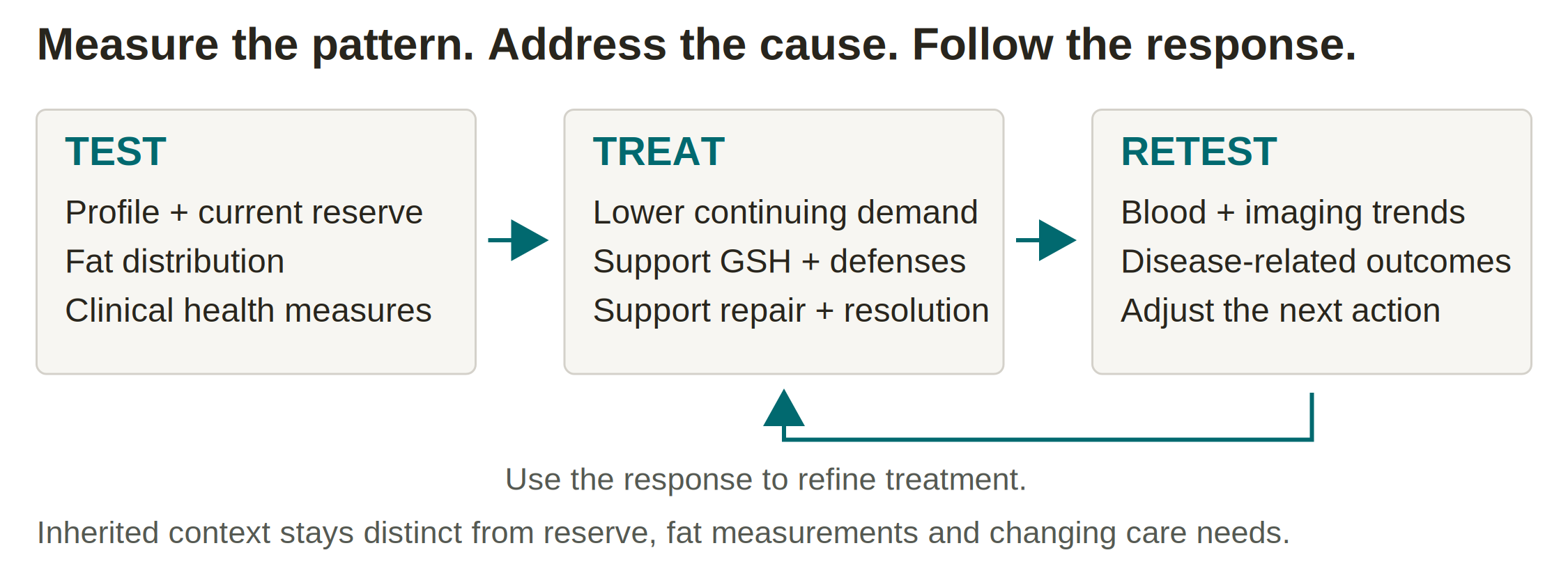
An early improvement in reserve could precede a change in fat size, while a smaller fat measurement might occur without improvement in every disease marker. The center's job is to interpret those patterns together and keep the next action understandable.
Why established medical institutions matter
Institutional backing should provide clinical and scientific infrastructure, not simply a recognizable name. The proposed partnership model would give established medical organizations clear responsibilities.
Clinical leadership. A medical director and appropriate specialists would supervise treatment decisions, coordinate existing care and establish escalation criteria.
Laboratory quality. Qualified clinical laboratories would standardize collection, stabilization, assay performance and reporting. CLIA establishes quality requirements for human laboratory testing used in health assessment and disease care.
Imaging validation. Radiology and ultrasound teams would test operator repeatability, compare measurements with appropriate reference imaging and define changes large enough to exceed measurement noise.
Independent research. Academic investigators and an appropriate research-ethics process would evaluate the combined pathway, including prespecified analyses by baseline reserve and lane.
Outcome verification. Independent clinical and health-economics teams would assess disease outcomes, total spending, nonresponse and the durability of improvement.
Consistent delivery. Training, documented protocols and quality review would make the service reproducible across centers, with appropriate consent and data protections.
There is a useful institutional precedent for changing a disease trajectory: the NIH-sponsored Diabetes Prevention Program found a 58 percent reduction in development of type 2 diabetes over about three years with its intensive lifestyle program versus placebo. That result belongs to the DPP intervention. Its broader lesson is that organized prevention and follow-up can change the course of a major chronic disease.
For ReBalU, an institution-backed center network would connect the proposed biological model to dependable measurements, clinical accountability and independently reviewed results. That is the bridge from a promising explanation to a service a medical system could evaluate and potentially adopt.
What improvement would mean across chronic diseases
The program would follow disease-specific results alongside reserve and imaging, reflecting the interconnected cardiovascular-kidney-metabolic framework. Candidate benefits and corresponding measures would include the following.
Prediabetes and diabetes. Seek easier glucose control and less progression, assessed with glucose, HbA1c and treatment requirements.
Fatty liver. Seek less harmful fat delivery and organ strain, assessed with appropriate liver blood tests and liver imaging.
Blood pressure, heart and kidney health. Seek lower shared metabolic burdens, assessed with blood pressure, kidney function, urine protein and relevant clinical events.
Sleep-related metabolic strain. Address overnight oxygen stress and its interaction with fat dysfunction, with appropriate sleep assessment and treatment follow-up.
Patient-centered outcomes would include daily function, strength, symptoms and the burden of managing illness. The economic question would be whether sustained improvement reduces expensive complications, hospital use and other medical spending.
Program pricing: intensive care followed by maintenance
SOD's planning price for the selected ReBalU gummie, swallowable mouthwash and vulva-wash protocol is $300 monthly, or $3,600 annually. This model treats that as the combined selected product-protocol price, not $300 for each product. Local wash formats concern their intended local compartments, while the abdominal-fat gut and DHA rationale centers on the oral components.
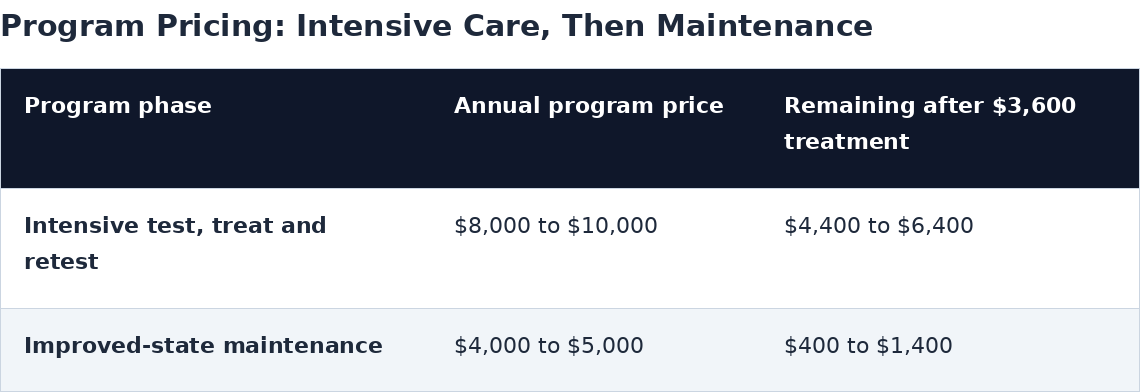
The service contract would specify included assays, imaging, clinical interpretation and any companion treatments. Ordinary prescriptions, specialist care and procedures would remain outside unless expressly included.
Maintenance requires a repeat-testing schedule and unit costs that fit the remaining allowance. Reusing inherited results and repeating the measures most likely to change care would help keep the program focused on useful decisions rather than test volume.
At midpoint prices, one $9,000 intensive year followed by four $4,500 maintenance years totals $27,000 over five years, or $5,400 annually on average. That compares with $45,000 for five years continuously at the intensive price: the response-guided delivery model itself reduces program expense as care needs fall.
The observed spending gap
An original population-weighted analysis of federal 2023 MEPS data illustrates the spending associated with differing burdens of selected chronic diagnoses. These are annual adult medical payments in 2023 dollars, including zero spenders, not an AHRQ-published results table or a cohort defined by visceral-fat imaging.
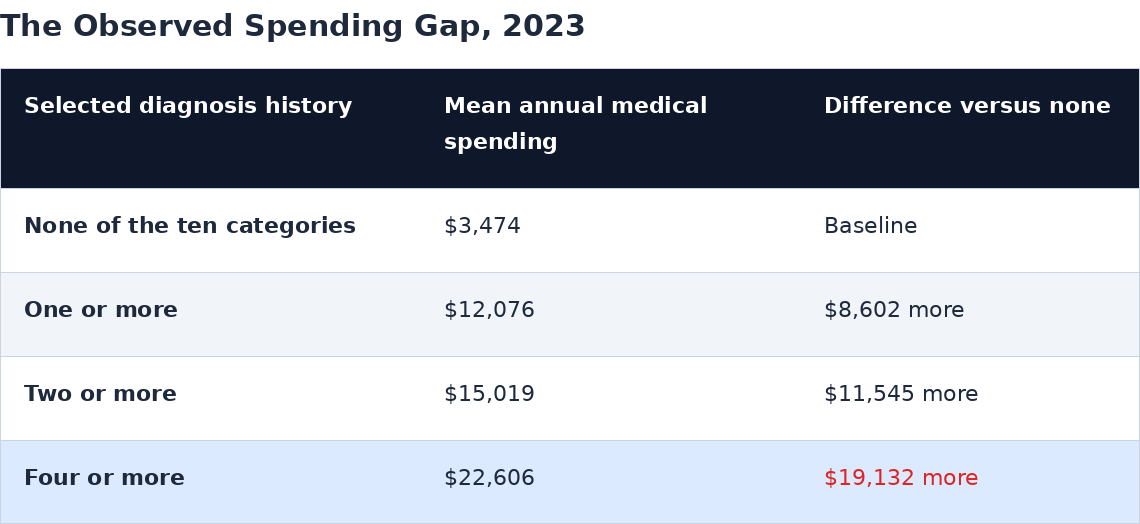
The categories are hypertension, heart disease, stroke, emphysema, chronic bronchitis, high cholesterol, cancer, diabetes, arthritis and asthma, and none does not mean absence of every chronic or mental-health condition. Age explains part of the difference: simple age and sex standardization leaves an approximately $6,844 gap between any selected diagnosis and none, still a descriptive difference rather than an estimate of recoverable savings.
The case is strongest where persistent disease burden and avoidable complications create room for improvement. In 2022, the top 5 percent of spenders accounted for 49.7 percent of personal medical spending, with mean annual spending of $67,321, on AHRQ figures.
National scale: what it costs and when it saves
SOD's working planning population is 160 to 180 million potential participants. This is an assumption, not a verified national count of imaging-defined visceral obesity. The United States had approximately 343 million residents in late October 2026, on the Census Bureau's population clock.
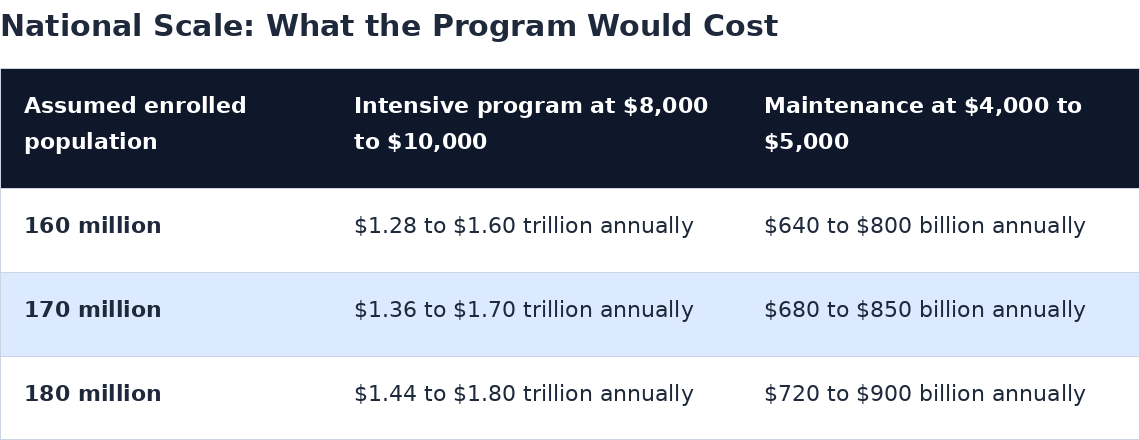
At the midpoint of 170 million participants, a $9,000 annual intensive program costs $1.53 trillion, while $4,500 maintenance costs $765 billion.
Net savings equal other medical spending avoided minus incremental program spending and any additional costs outside the bundle. The following conditional scenarios use the same 170-million-person cohort.
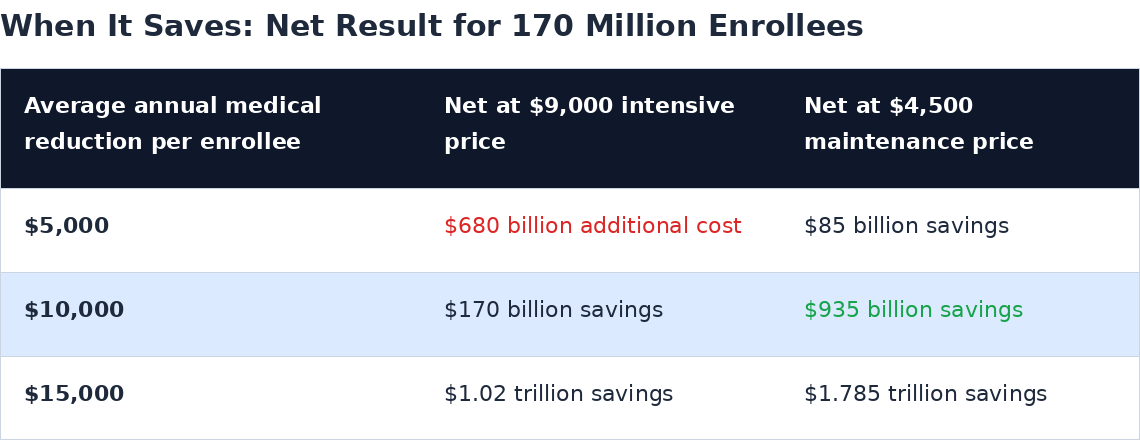
For example, a $10,000 average reduction produces $1.7 trillion of gross avoided medical spending. After program costs, the result is $170 billion net savings at intensive pricing or $935 billion at maintenance pricing.
The required average applies to everyone enrolled, including nonresponders, and must account for time to improvement. A mixed program with some patients in intensive care and others in maintenance would sit between the two price columns.
These scenarios show a large opportunity, but also why persistent high-cost patients are the strongest initial economic population. The $10,000 reduction is an illustrative assumption, not a deduction from the average diagnosis-group spending gap.
An outcome-based route from centers to a broader system
The practical first step would be institution-linked centers serving patients with concerning fat patterns, low measured reserve and substantial ongoing metabolic disease. The program would grow through demonstrated value, rather than assuming immediate enrollment of the entire planning population.
An institutional evaluation would answer four connected questions.
Measurement. Are the laboratory and ultrasound measurements repeatable, and can they distinguish meaningful change from ordinary variation?
Treatment response. Do reserve, fat patterns, disease measures and patient function improve, and which baseline profiles predict a useful response?
Durability. Can improvement be maintained with a less intensive program, and what proportion of patients actually reach maintenance?
Economic return. Is total medical spending, including the program, lower than with an appropriate comparison pathway over a defined period?
Early studies would establish measurement quality and treatment response, and longer follow-up would assess disease events and claims. Where feasible, randomized comparison of the integrated program with usual care would provide a stronger test than a before-and-after spending comparison alone.
Independent analysis should account for age, disease severity, nonresponse and the tendency of an unusually expensive year to be followed by a less expensive one. A lower medical bill is most persuasive when it accompanies better outcomes and exceeds what would have happened without the program.
Outcome-based payment could combine a defined service bundle with a portion of payment tied to independently verified results. Savings would be assessed across the full care pathway, so costs shifted to another provider or payer would not be counted as a system saving.
How ReBalU could alter the arc
The central proposition is a change in trajectory: identify biological vulnerability and unhealthy storage patterns, address continuing demands and limiting protective capacity, document a useful response, and maintain that response with less intensive care. Established medical institutions could supply the clinical responsibility, measurement discipline and independent evidence needed to make that model credible and scalable.
The program would not need every patient to reach the same laboratory value or lose the same amount of fat. It would need to help enough appropriately selected patients avoid enough costly disease burden, for long enough, to justify the initial investment and support a lower-cost maintenance phase.
That is how the ReBalU Longevity and Wellness Center Program could change the course of medical spending: not by adding another layer of testing indefinitely, but by using repeated measurement to earn better health and progressively lower care intensity. The meaningful result would be more healthy, functional years for patients and a slower accumulation of expensive complications for the system.
Note on the spending analysis
The descriptive MEPS analysis used 14,492 adults with positive survey weights and complete classification across ten selected diagnosis categories. 276 records were excluded, representing approximately 2.15 percent of the weighted adult population. It applied the person weight PERWT23F to total annual medical payments TOTEXP23, combined heart-disease components into one category, and standardized age and sex comparisons using three adult age bands and recorded sex.
MEPS personal medical payments and CMS national expenditure totals have different coverage and should not be mechanically equated. Program prices, population sizes and savings assumptions in this paper are SOD planning inputs or explicitly labeled arithmetic scenarios.
Sources
Spending and population: CMS national health expenditure fact sheet and historical accounts; CDC, health and economic costs of chronic disease; AHRQ 2023 MEPS household component file HC-251 and its documentation; AHRQ Statistical Brief 560; US Census population clock; American Heart Association and CDC on US obesity and abdominal obesity trends.
Clinical frameworks and precedent: American Heart Association scientific statement on cardiovascular-kidney-metabolic health; NIDDK on the Diabetes Prevention Program; CMS clinical laboratory standards under CLIA.
Fat biology and reserve: Corvera and colleagues on adipose tissue biology; Kahn and colleagues on adipose tissue and insulin sensitivity; Sies and colleagues on oxidative stress; a review of glutathione metabolism; Okuno and colleagues on oxidative stress and healthy adipose expansion; Curtis and colleagues on adipose glutathione S-transferase; Clària and colleagues on macrophages and resolution; a review of sleep apnea and adipose tissue.
Treatment components: a review of NAC and metabolic dysregulation; Sohouli and colleagues, 2023, on NAC before bariatric surgery; reviews of sulforaphane, NRF2 and glutathione pathways; Axelsson and colleagues, 2017, on broccoli-sprout extract in type 2 diabetes; Çakır and colleagues, 2022, on sulforaphane in mice; a review of butyrate and metabolic health; Oh and colleagues on DHA signaling.
Measurement: an ultrasound and MRI comparison in 113 adults; Philipsen and colleagues on ultrasound repeatability; Stanford laboratory catalog listing for glutathione testing; FDA clearance K260338 for ThinkSono Guidance.
This document presents a program design and a scientific hypothesis for discussion. It is not medical advice. The ReBalU protocol, the Primed Cell Test and the proposed AI ultrasound workflow have not been evaluated by the FDA for these uses and are not intended to diagnose, treat, cure or prevent any disease. No medical institution is a confirmed sponsor or endorser of this program. The economic figures, including the $935 billion scenario shown on the cover, are conditional arithmetic built on SOD planning assumptions about enrollment, pricing and avoided medical spending, not measured or projected outcomes.
Nothing here is a reason to delay, decline or replace care for diabetes, heart disease, kidney disease, fatty liver, sleep apnea or any other condition your physician is treating. Speak with your own clinician before starting NAC, sulforaphane or any other supplement, particularly if you take prescription medication.