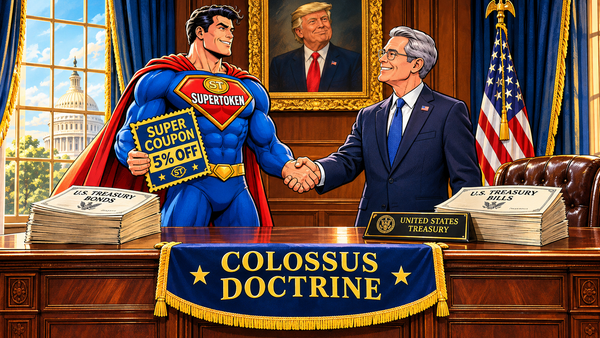
Merge in Texas, Build in Florida

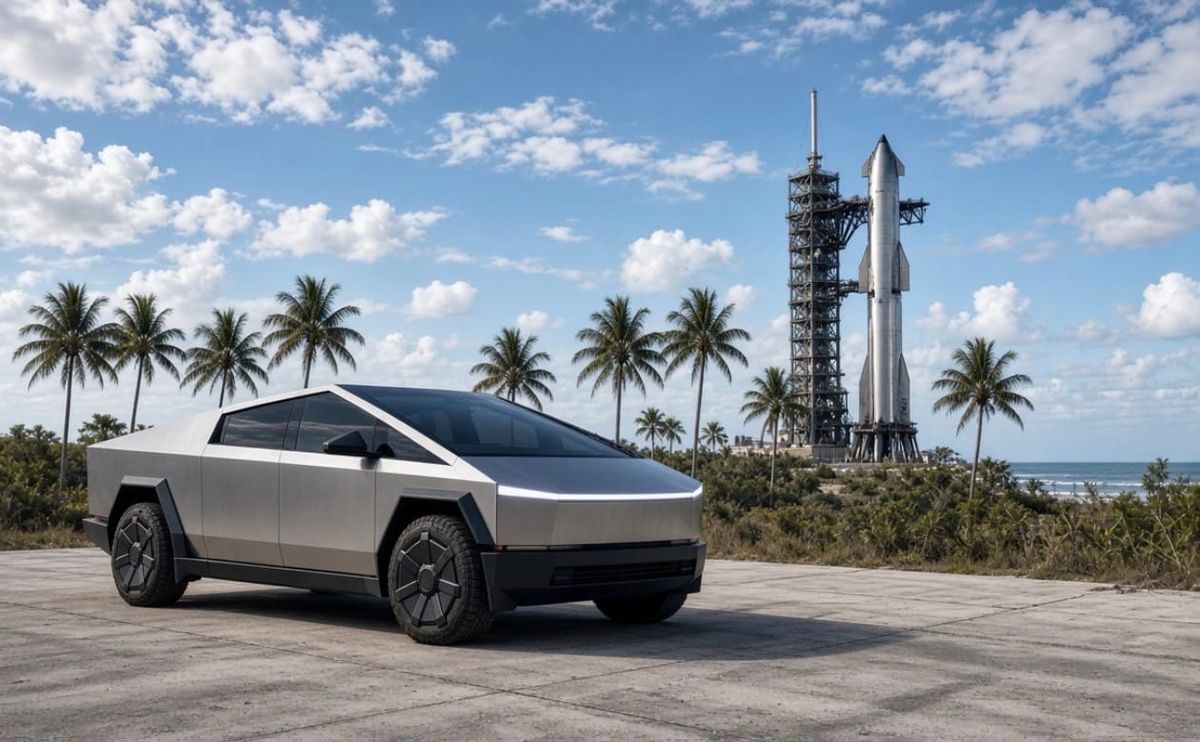
Why the midterms make the Tesla and SpaceX merger more urgent, and why the growth is heading to Florida. TSLA, SPCX.
The governor who moved corporate America
In 1913, New Jersey was where American companies incorporated. Its general corporation law had made it the legal home of the great trusts. Then Governor Woodrow Wilson, on his way to the White House, pushed through seven bills that became known as the Seven Sisters, which tightened the state's rules on corporations and trusts, as the Villanova Law Review recounts. As CSC, one of the oldest corporate service firms in the country, puts it in its own history, the decision "drives companies from New Jersey to Delaware."
New Jersey tried to undo the damage. Under Governor Edward Edwards, the legislature repealed the last of the Seven Sisters in the hope of luring the companies back. A Jersey City history of the period sums up what happened next: "once offended, few returned." Delaware has held the lead for more than a century, as Vice Chancellor Travis Laster has written in the Journal of Corporation Law.
There is a scholarly caveat. Columbia's Sarath Sanga finds that most of New Jersey's decline happened in the decade before 1913, which suggests the state was already losing ground. That point strengthens the lesson for today rather than weakening it. Capital does not leave because of one bill or one governor. It leaves when the direction of a state becomes clear, and it rarely comes back once it has rebuilt somewhere else.
On Tuesday night, Texas changed direction. The question for Tesla and SpaceX shareholders is not whether Elon Musk packs up the charter. It is where the next $100 billion of concrete, launch pads and data centers gets poured. My thesis is simple. The midterms make a Tesla and SpaceX merger more urgent, not less, and they push the growth of the combined company toward Florida. The legal domicile stays in Texas for now. The center of gravity moves east.
What changed on Tuesday
The results were not close. Democrat Gina Hinojosa beat Governor Greg Abbott 52.8 percent to 45.7 percent, becoming the first Democrat to win the Texas governorship since 1990, the AP reported. James Talarico beat Ken Paxton for the US Senate seat. Democrat Nathan Johnson won the attorney general's race after saying he would investigate whether Starlink was unfairly awarded rural broadband grants, CNN reported. Democrats also flipped the Texas House, while Republicans held the Texas Senate 19 to 12. Nationally, Democrats took both chambers of Congress.
Musk spent at least $474 million on the cycle, about $224 million of it in Texas, according to CNBC. His first public response the next morning was telling: "Data centers in space looking pretty appealing right now."
The specific threat is not taxes or the corporate code. It is permits. Hinojosa campaigned on a promise to issue "a moratorium, a ban, on all data center approvals" until the Legislature passes laws to protect Texans, Fortune reported. SpaceX plans to build Colossal 3 outside Brownsville, and unlike most AI companies it already earns money renting out compute. Dan Ives, a bull on both stocks, told CNN the issue is more with the Texas governor.
The market sold first. As of midday Thursday, Tesla traded at $341.09, down 11.5 percent on the day and 14.4 percent below its $398.50 close on election day. SpaceX traded at $125.51, below its $135 IPO price and about 44 percent under its $225.64 high. Together, the two companies lost more than $130 billion in value as Democrats swept Texas, Business Standard reported, and the selloff landed during a broader AI rout that sent the VIX up 39 percent.
The merger is already in motion
Before the election, the merger moved from speculation to process. On SpaceX's October 20 earnings call, Musk called a combination "a good idea" and confirmed that both companies had formed special committees of independent directors at the request of shareholders. He described himself as conflicted, said terms were not agreed, and warned that the deal needs a majority of all outstanding Tesla shares, which he called a high hurdle, Reuters and CNN reported.
The same quarter changed the balance of power between the two companies. SpaceX reported third-quarter revenue of $14.58 billion, up 161 percent, with operating income of $2.79 billion and net income of $4.40 billion, its first profit as a public company, driven by renting AI compute, AFP and Bloomberg reported. Tesla reported $28.05 billion in revenue but only $718 million of operating income and $787 million of net income. SpaceX now earns more than five times Tesla's profit on about half the revenue. In a stock deal, the company with the stronger earnings and the stronger currency sets the terms.
Bank of America's Alexander Perry laid out the structure in an October 29 note: an all-stock acquisition of Tesla by SpaceX. He estimated Tesla holders would receive about $449 a share at a 20 percent premium and $486 at 30 percent, with Musk keeping 51.6 percent of the vote even in the richer case. Perry pointed out that the companies still have to agree how to split the cost of Terafab, the joint chip project Musk expects to exceed $100 billion, and that a merger "would remove that negotiation." He also forecasts negative Tesla free cash flow of $4.6 billion this year and $11.3 billion in 2027. He rates Tesla a Buy with a $460 price objective.
Bloomberg reported a push to announce a deal in the first half of 2027 and described Musk as trying to lock it in before President Trump leaves office. Reuters found that Wall Street now treats a deal as close to inevitable, with the argument shifting to the size of the premium.
Why the election speeds up the deal
The selloff reads like a vote against the companies. I read it as a reason to move faster, for three reasons.
The federal window is now fixed. A Democratic Congress takes its seats in January. It cannot block a stock merger on its own, but it can hold hearings, send letters and raise the political cost of reviews involving national security, China and defense contracts. Ars Technica's Eric Berger noted that Congress could slow the merger but that a deal could still close while Trump controls the White House. That window closes in January 2029. Large deals take time to sign, file, vote and close. The calendar now argues for signing in the first half of 2027, not later.
One company handles a hostile state better than two. Today Tesla and SpaceX negotiate Terafab, power, compute and Megapack supply between themselves. SpaceX bought $626 million of Tesla Megapacks through the third quarter, $221 million of it in the third quarter. Each of those dealings is a related-party transaction that a skeptical attorney general can examine. Inside one company, they become internal transfers. A combined company can also choose which state gets each new project from a single capital budget, which makes it a much stronger negotiator with any governor.
The selloff made a premium cheaper to pay. At midday prices the at-market exchange ratio is about 2.72 SpaceX shares per Tesla share, down from about 2.97 on October 30, when TheStreet calculated that Tesla holders would own about 46 percent of a combined company with no premium at all. Tesla is now about 9 percent cheaper relative to SpaceX than it was a week ago. A 9 percent premium today costs SpaceX no more stock than an at-market deal would have cost last Thursday. Business Standard reported that the election result may bring the deal timeline forward. A board that wants to lock in a combination on terms both committees can defend has a better starting point today than it did before the vote.
Keep the charter in Texas, for now
The obvious response to a blue Texas is to reincorporate in Florida. That would be a mistake for now, and the reason is in SpaceX's own bylaws.
SpaceX routes internal disputes to the Texas Business Court and then to ICC arbitration, with a jury waiver, a class-action ban, a 3 percent ownership threshold for derivative suits and fee-shifting for frivolous claims. Texas Senate Bill 29 is what allows these provisions. Florida does not. Section 607.0208 of Florida's statute bars bylaws that require arbitration or exclude Florida courts entirely, and Florida prohibits shifting legal fees onto shareholders, the law firm Lowndes notes. Florida has modernized in other ways, including director exculpation and business courts in Miami-Dade and Orlando, but moving the charter would mean giving up the protections Musk moved to Texas to get.
The election also did not give Texas Democrats the power to take those protections away. Repealing SB 29 would require both chambers and the governor. The Democratic House and Governor Hinojosa can block new pro-management bills. They cannot repeal existing law without the Republican Senate. The corporate code is safe for the 2027 session.
The risk is predictability. Texas sold itself to corporate America as a one-party state with a fixed direction. It is now a divided state that can change course in 2028. New Jersey teaches what to watch. The trigger was the statute, not the governor. As long as the Texas Senate holds and SB 29 stands, the charter stays. If the corporate code becomes a live bill, the charter question reopens.
Build in Florida
A charter is a piece of paper. The real decision is where capital gets spent, and that decision was moving toward Florida before Tuesday.
SpaceX already runs LC-39A and SLC-40 at Cape Canaveral, with Starship pads at LC-39A and two more at SLC-37. Governor Ron DeSantis's office described Project Hinton as SpaceX's new Starship operations headquarters on the Space Coast, with at least $1.8 billion of investment and 600 jobs. A proposed 400-acre campus on Roberts Road at Kennedy Space Center would hold about 3,300 workers by 2045 alongside the Gigabay production complex, WESH reported. Byron Donalds's office has said Starship operations will primarily take place in Florida, starting at LC-39A in 2026 and SLC-37 in 2027.
Florida's politics moved the other way from Texas. Donalds, whom Musk endorsed early, won the governorship 50.0 percent to 48.7 percent, the AP reported. His platform calls for "Fast-Track Space Hubs." Republicans swept the statewide races and kept control of the Legislature. On election night, DeSantis answered a post about Musk moving his companies to Florida with "LFG! Can he do a large Tesla SUV while he's at it?" Tesla is already there too. Its robotaxis operate in three Florida cities as well as four in Texas.
Louisiana is the second leg. In August, SpaceX announced Starbase Louisiana in Vermilion Parish: a planned $100 billion, 125,000-acre site with 10 launch pads, construction starting in 2027 and a first launch targeted for 2029, CNBC reported. The state put roughly $27.5 billion of incentives on the table. Berger expects no headquarters move soon, but he wrote that the result may speed up Louisiana and that Starbase Louisiana could eventually become the headquarters.
The cost difference is modest. Florida levies a 5.5 percent corporate income tax, and neither Florida nor Texas has a personal income tax. For a company spending tens of billions of dollars a year, permit timing and launch cadence matter far more than the tax rate. Florida offers a Republican governor focused on space, a federal range with decades of launch history, and an existing Starship buildout. Texas now offers a governor who has promised to pause data center approvals.
Texas does not empty out. Starbase, Giga Texas and Terafab stay. Terafab in Grimes County carries a $16.8 billion first phase and 3,000 jobs, and because it is classified as a chip plant it may fall outside a data center moratorium. The state environmental agency is still staffed by Abbott appointees, Newsweek noted. The likely pattern is quieter than a move. Existing Texas assets keep running, and the next round of launch pads, compute and possibly the combined company's operating headquarters goes to Florida and Louisiana. That is how Delaware won: not by taking every factory, but by taking each new decision.
What this means for $500
My target remains $500. The path is longer than it was on Tuesday morning, and the math should be stated plainly.
From $341.09, $500 is about 47 percent upside. As a pure deal premium on today's depressed price, that is too much. It would require about 3.98 SpaceX shares per Tesla share at current SpaceX prices, and no independent committee at SpaceX would approve that on today's numbers. A 20 to 30 percent premium on today's price gives about $409 to $443, which is close to Bank of America's $460 objective.
The better way to read $500 is as two parts. First, the stock returns to roughly where it traded before the election as the AI selloff and the Texas shock fade. Second, a deal premium is negotiated on that recovered price. A 25 percent premium on Tesla's $398.50 election-day close is about $498. That is in line with the 20 to 35 percent range Wall Street has been discussing, according to Reuters, and with Perry's $486 at a 30 percent premium on October 20 prices. I view $500 as a 12 to 24 month target, tied to a signed agreement and a recovery in SpaceX's own stock, which is the currency Tesla holders would be paid in.
What could go wrong
The vote. Tesla needs a majority of all outstanding shares, and abstentions count as no votes. In 2025 Tesla's advisory proposal on xAI failed largely because of 473 million abstentions.
The committees. Bloomberg Law has described the special committees as close to Musk. A process that looks weak invites litigation and could cost the deal votes, even with Texas courts and SB 29 in place.
China. Shanghai builds roughly half of Tesla's vehicles. Putting it under a major US defense contractor requires a firewall for data and staff, and Perry identifies it as the main regulatory risk.
The currency. SpaceX is below its IPO price. Gary Black warned that the premium could disappear if SpaceX keeps falling. A stock deal is only as good as the stock.
Texas itself. A moratorium, an attorney general's investigation into Starlink grants, or a public records fight could slow projects already underway. Hinojosa has already sued for Abbott's emails with Musk.
Florida is not guaranteed either. Donalds won by 1.3 points, and Republicans lost their supermajority in the Florida House, the Orlando Sentinel reported. Florida is a better bet for the next decade of launch and compute spending, but it is not a fortress.
What to watch
One. The December 3 annual meeting. No merger vote is on the agenda, but expect questions. Barclays has said an announcement could come before the meeting.
Two. January 19, 2027. Hinojosa takes office. Watch whether the moratorium comes by executive order and whether it covers chip plants.
Three. The 2027 Texas session. Any bill touching SB 29, the Texas Business Court or derivative-suit thresholds is the statute signal. That is the New Jersey moment.
Four. Florida announcements. New Starship pads, Gigabay approvals, compute sites or a regional headquarters on the Space Coast. Where the capital budget goes tells you more than any post.
Five. Committee advisers and a signed agreement. Bankers and lawyers for each committee, then a merger agreement and an S-4 filing. That is the paperwork that turns a thesis into a price.
Conclusion
New Jersey's mistake was not that a governor changed his mind. It was that the state showed companies its direction could change, and they built their futures elsewhere. Texas has not repealed anything. It has simply shown that it is no longer a one-way bet.
Musk does not need to move the charter to answer that. He needs to merge the two companies into one balance sheet and decide where the next round of capital goes. Merge in Texas, build in Florida, and let the statute decide whether the paperwork ever follows. My target is $500.
Disclosures
This article is for informational and educational purposes only and does not constitute investment advice, an offer, or a recommendation to buy or sell any security. The views expressed are the author's opinion. No merger agreement, exchange ratio, premium or relocation has been announced, and the scenarios and target discussed here are the author's analysis, not reported transaction terms. Price targets and estimates from third parties are attributed to their sources, and those firms have not reviewed or endorsed this article.
The author holds shares and options in Tesla (TSLA) and SpaceX (SPCX). The direction and size of these positions are not disclosed. The author may buy, sell, increase, reduce, hedge or close positions at any time before or after publication without notice. The author is not affiliated with Tesla, SpaceX or any firm cited and received no compensation for this article.
Options involve substantial risk and are not suitable for all investors. This article contains forward-looking statements that are inherently uncertain, and actual results may differ materially. Information is believed to be accurate from the sources cited but is not guaranteed. Market data are as of approximately 2:00 PM ET on November 5, 2026.