
We Know Enough to Stratify the World


How Four Antioxidant Loci Already Support Ancestry-Informed Intervention
Audience: Practicing physicians, integrative medicine, precision-prevention clinicians Companion whitepapers: Positioning Memo (GMC), East Asian Redox-Reserve, Permutation Matrix, Compound-TT, Lane A/B, Lane C/D
Executive Summary
The July 19, 2026 New York Times Magazine cover story on the Global Microbiome Conservancy frames microbiome-disease translation as an open, catalog-scale problem: roughly 90% of human microbial diversity is underrepresented in Western cohorts, and rare taxa need to be cultivated before industrialization erases them. The GMC is a descriptive-catalog program. It has no intervention arm and no longitudinal reserve readout. It cannot answer the questions a practicing physician asks today.
ReBalU takes the opposite operational stance. Chronic disease is reframed as a collapse of the coupled H₂O₂/NO/ONOO⁻ signaling network — a PPP→NADPH→GSH/BH4 reset-capacity problem rather than isolated downstream pathology. Four well-characterized antioxidant loci (SOD2, GPX1, GPX4, APOE) generate 81 four-locus genotype combinations that collapse into five clinically actionable risk lanes (A–E), each with a defined test/treat/retest cadence and a nature-derived intervention stack. The East Asian nutrition-transition natural experiment provides the strongest existing human validation.
The GMC will take years to produce anything a clinician can act on. ReBalU is actionable now.
1. What the GMC Is Trying to Solve — and What It Leaves Open
Poyet and Groussin frame three objectives in the NYT Magazine profile: fix reference-population bias, preserve uncultivated rare species before industrialization erases them, and link microbiome variation to disease — eventually. Crohn's, IBS, Parkinson's, dementia, autism, and mood disorders are named targets. GMC's instrument is sampling, sequencing, and culturing. Its output is a catalog.
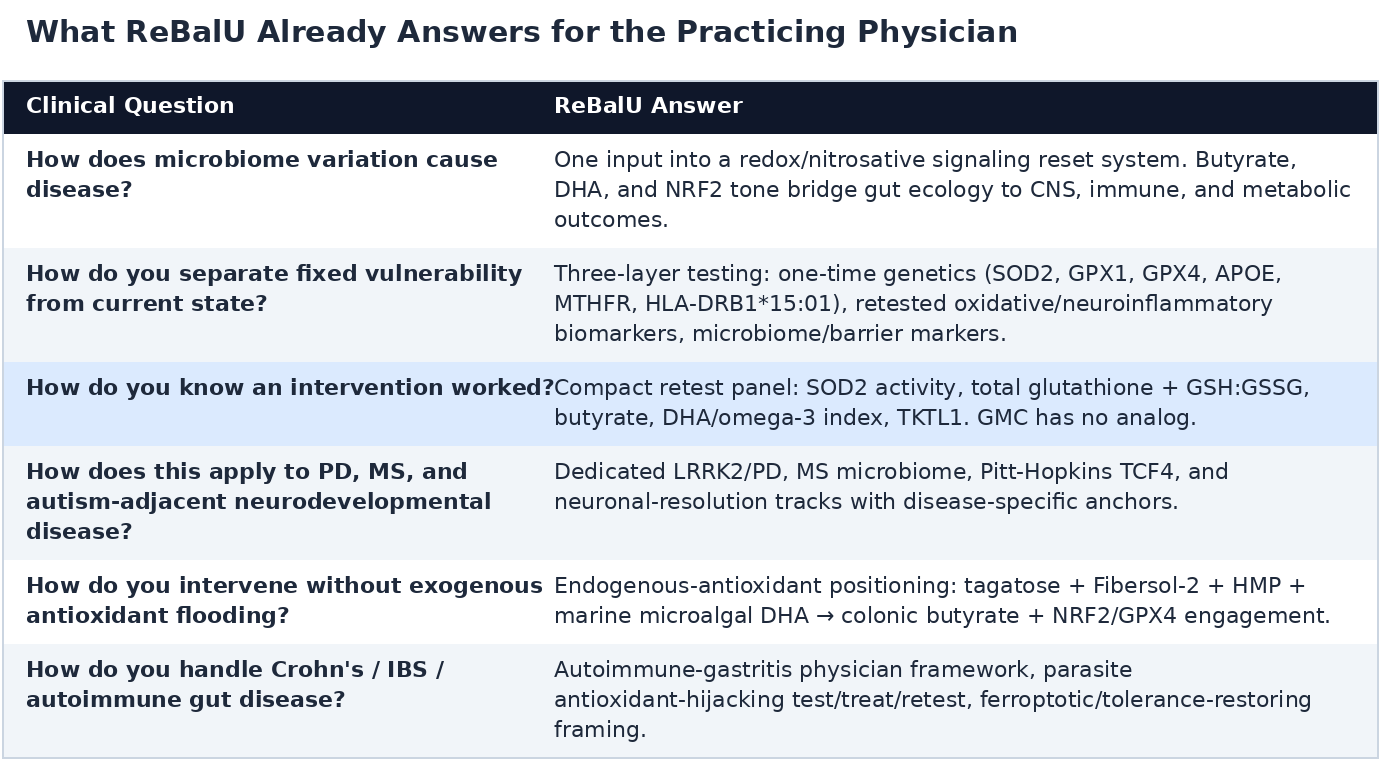
The clinical questions a practicing physician actually asks are downstream of anything GMC will produce for years. "Is this patient at risk? What should I test? What should I recommend? How will I know it worked?" None of those have answers in a catalog without an intervention arm. ReBalU answers all four now.
2. The Four-Locus, 81-Genotype Architecture
ReBalU's stratification rests on four antioxidant-and-lipid-delivery loci with well-established mechanistic roles. The architecture is deliberately parsimonious — four loci, chosen because they are well-characterized, clinically measurable, and mechanistically linked through the same PPP/NADPH bottleneck.
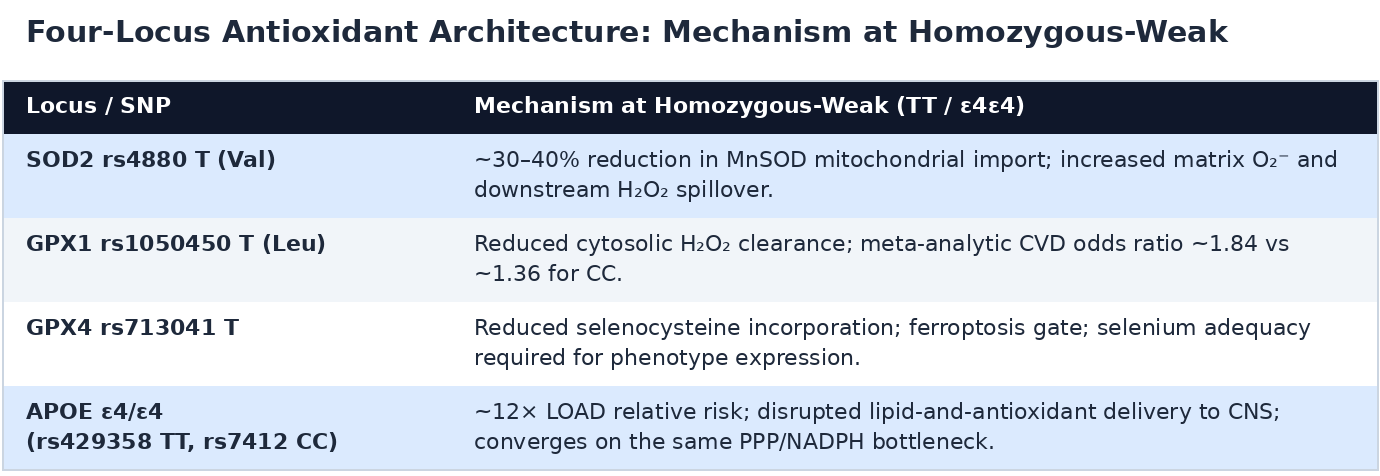
Each locus contributes 0, 1, or 2 weak alleles. Four loci to the third power yields 81 genotype combinations, with a weak-allele burden ranging from 0 to 8. That burden collapses onto five clinical lanes, each with a defined retest cadence and intervention intensity:
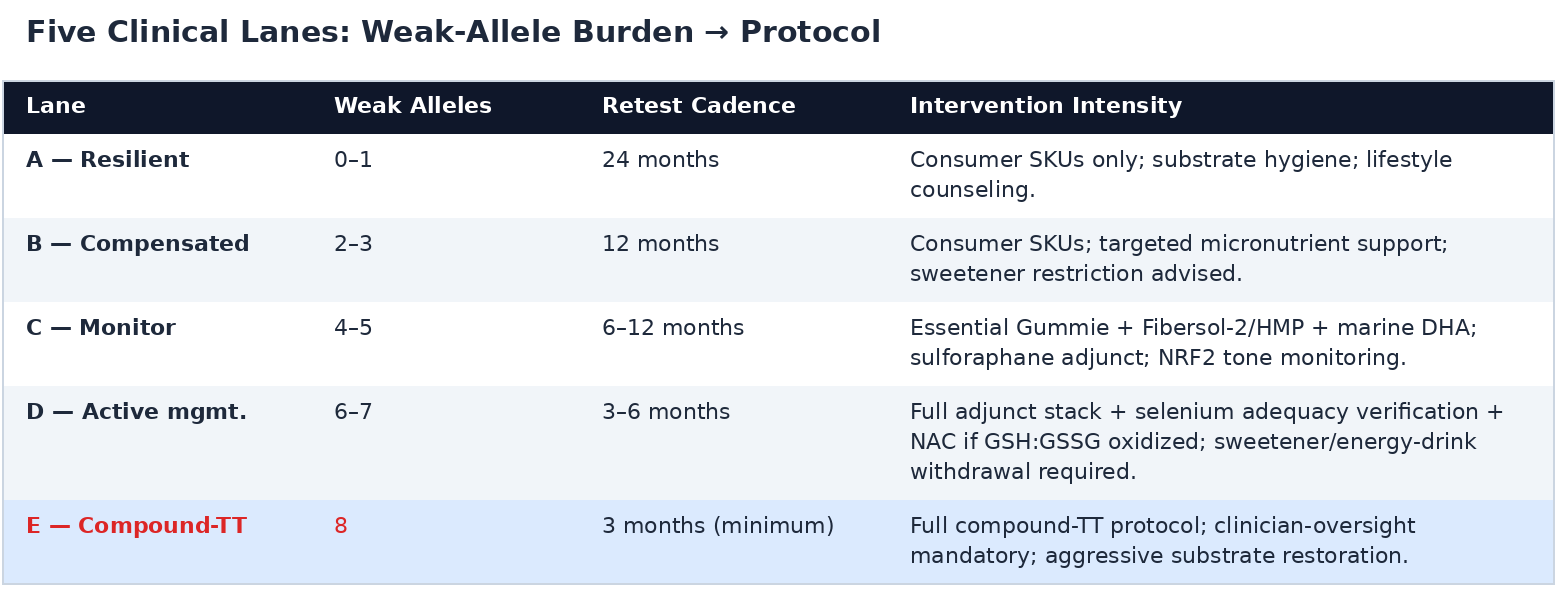
The lanes are not a blunt tool. Lane A patients get lifestyle counseling and consumer SKUs. Lane E patients — the compound-TT profile with all eight weak alleles — require clinician oversight, an aggressive substrate restoration protocol, and a three-month minimum retest floor. The same architecture, applied at very different intensities, to very different patients.
3. East Asian Nutrition Transition — the Natural-Experiment Validation
Any credible validation of the ReBalU thesis requires a cohort in which the substrate stream shifts sharply while the underlying antioxidant genotype stays constant. The East Asian nutrition transition, running from roughly 1985 to the present, is that cohort. The genotype configuration is distinctive: SOD2 rs4880 T (Val) runs at 82–90% (dominant weak allele), with SOD2-TT at 72–81% of the population; GPX1 rs1050450 T (Leu) sits at just 5–9% (a rare weak allele), with GPX1-TT well under 1%; and APOE ε4 at 9–10%, lower than Europeans at 14%, though the effect size on LOAD is actually higher in Japanese cohorts (ε4/ε4 OR ~33 vs ~12 in Caucasians).
Applying these frequencies under Hardy–Weinberg independence and renormalizing against European midpoints produces a distribution with a materially different center of mass.
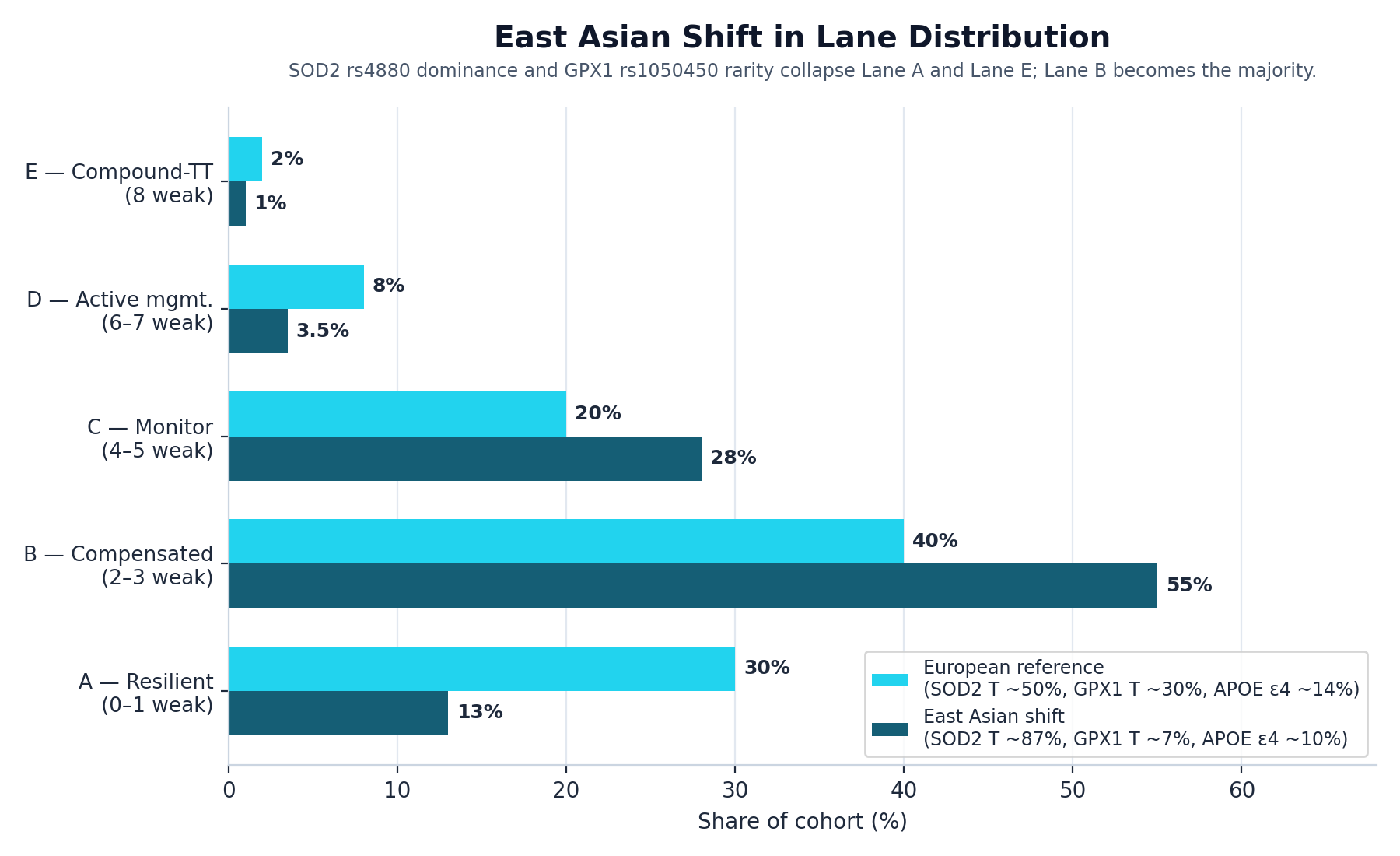
Figure 1. Lane distribution shift, European vs East Asian cohorts. Lane A collapses (~30→13%) under SOD2 dominance. Lane B becomes the majority (~40→55%). Lane C expands modestly (~20→28%). Lane D and Lane E contract (~8→3.5%; ~2→<1%) because GPX1 TT is rare in East Asians and compound-TT requires it. Illustrative, not clinical.
East Asian cohorts are not a scaled-down European distribution. They have a different center of mass. And the natural experiment is already visible: as traditional substrate streams — fish, seaweed, fermented foods, modest starch — are displaced by industrial sweeteners, seed oils, and ultraprocessed food, the SOD2-TT-dominant, GPX1-TT-rare genotype configuration is precisely the profile the ReBalU model predicts should decompensate first. And it is. Metabolic syndrome, MASLD, and early-onset cardiometabolic disease in East Asian populations under Westernized substrate load track the model with uncomfortable precision.
4. Three-Layer Testing and the Compact Retest Panel
ReBalU separates fixed vulnerability from current state from ecosystem input. Each layer has a distinct role and cadence — and the distinction matters clinically. Knowing that a patient carries SOD2-TT tells you their terrain. Knowing their GSH:GSSG ratio and butyrate level tells you whether that terrain is currently compensated. Knowing their microbiome butyrate output tells you whether the substrate engine is running.
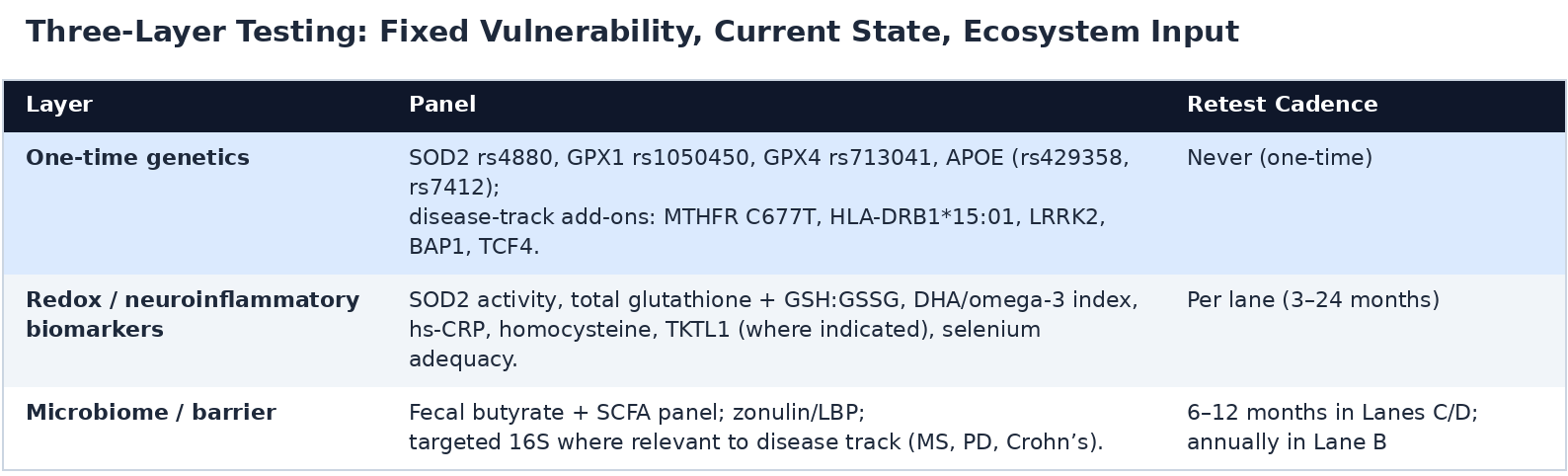
The compact retest panel — SOD2 activity, total glutathione plus GSH:GSSG, butyrate, DHA/omega-3 index, TKTL1 — is the closed-loop readout the GMC lacks. It answers the "did the intervention move the biology?" question in a defined, affordable, longitudinal format. That is not a small thing. Without a retest panel, a clinician has no way to distinguish a patient who is responding from one who isn't.
5. Disease-Track Anchors and Intervention Stack
Each of the following disease tracks has a companion whitepaper with mechanistic anchors, lane-triggered decision rules, and product-stack composition. All ReBalU products are food-grade and nature-derived. There is no high-dose synthetic antioxidant flooding — the entire architecture is built around supporting the patient's own antioxidant machinery through substrate, not overwhelming it with exogenous agents.
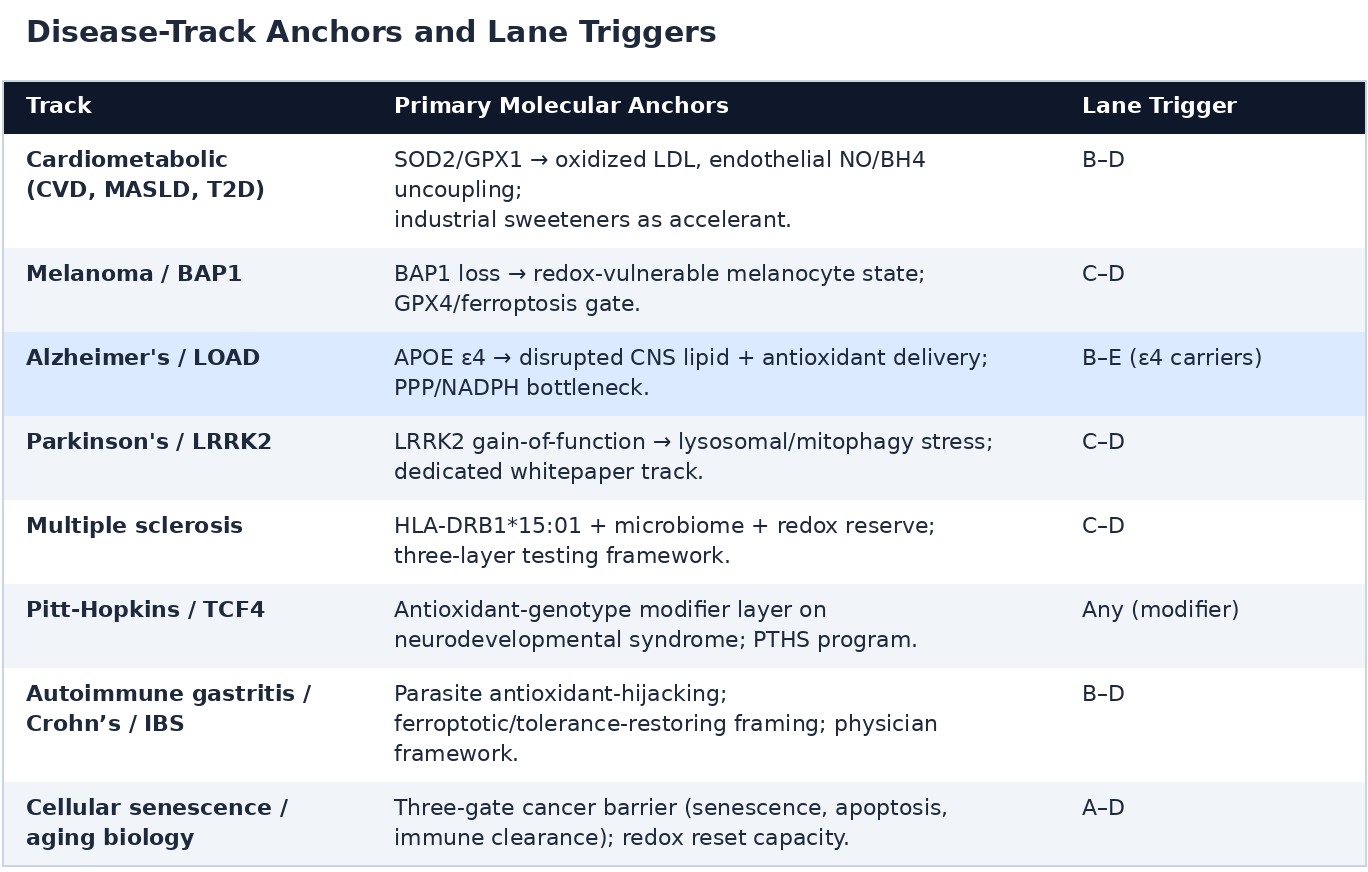
The intervention stack follows the same lane logic. All patients receive substrate hygiene: reduce or eliminate industrial sweeteners (especially aspartame and sucralose), high-omega-6 seed oils, and ultraprocessed food. Lane A and B patients add the Essential Gummie with tagatose, Fibersol-2, honey, and marine microalgal DHA, plus broccoli-sprout-derived sulforaphane and selenium adequacy from food sources. Lane C and D patients add the full adjunct stack — glucoraphanin/sulforaphane titration and NAC if GSH:GSSG is oxidized — with clinician co-management. Lane E requires aggressive substrate restoration and a complete ban on non-nutritive sweeteners and energy-drink exposure, with a three-month retest floor as the minimum meaningful interval.
6. Guardrails, Honest Gaps, and the Physician Workflow
Guardrails
ReBalU has not been evaluated by the FDA for the diagnosis, treatment, or prevention of any disease. Patient-facing language avoids therapeutic claims. The five-lane system is ancestry-informed, not race-based medicine — the same lanes apply to every population; only the frequencies within each lane shift. Clinician oversight is required for Lane D and E patients, and for any patient on prescription therapy where a supplement or diet change could interact. The stack is endogenous, not exogenous: it supports the patient's own antioxidant machinery via substrate, not synthetic flooding.
Honest Gaps
Genotype-to-microbiome mapping has been validated primarily in Western cohorts. The East Asian nutrition-transition natural experiment closes the biggest single gap; prospective cohorts in South Asian, African, and Latin American ancestries are planned. Lane E is a small population — roughly 1–3% of European cohorts, under 1% of East Asian cohorts — but carries the highest per-subject clinical stakes; the compound-TT protocol is where clinician oversight is least optional, not most. And the compact retest panel is not yet reimbursed by all payors; SOD Sciences is pursuing coverage under existing precision-prevention codes.
Physician Workflow
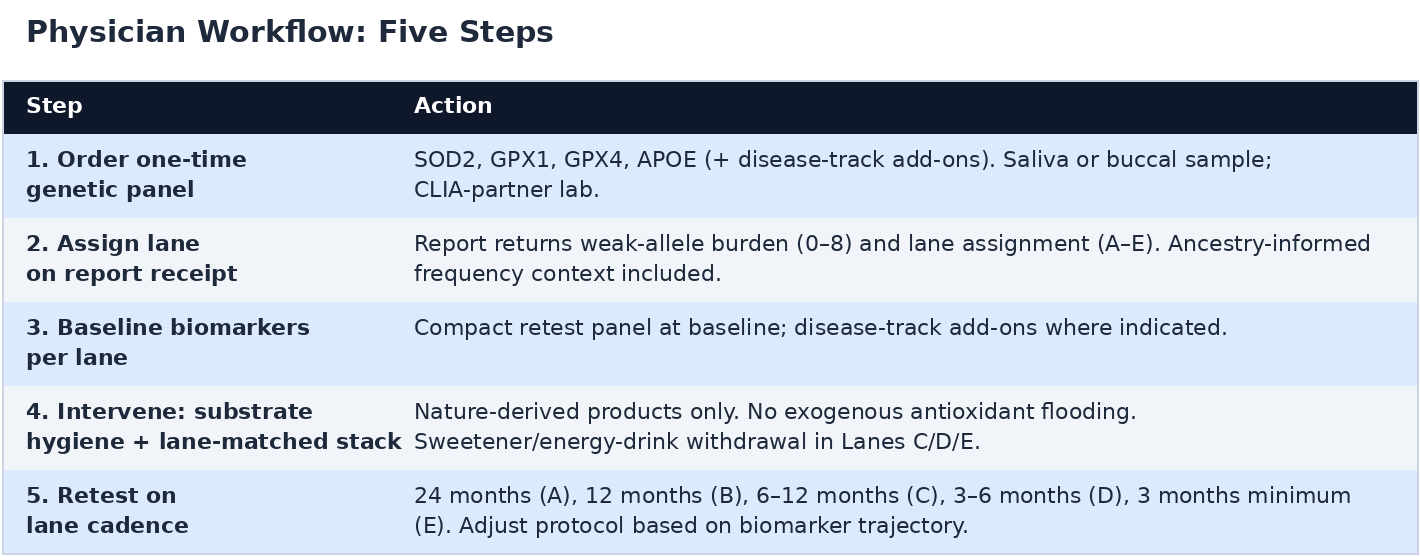
Clinician disclaimer: This brief is a working scientific position document for the practicing physician. It is not medical advice for any individual patient and is not a diagnostic claim. ReBalU protocols, Essential Gummie, adjunct stacks, and retest panels describe working hypotheses of the ReBalU platform and are not statements of clinical efficacy for any regulated indication. The five-lane framework is ancestry-informed, not race-based medicine. Individual protocol assignment requires clinician oversight; interactions with prescription medications must be reviewed on a per-patient basis. ReBalU has not been evaluated by the FDA.
SOD Sciences Inc. · Vero Beach, Florida